
About Serafima Birman
Lived 1890 – 1976 (aged 85). Serafima Birman was a Russian actor, theatre director, film director and director.
Serafima Germanovna Birman (; – 11 May 1976) was a Soviet and Russian actress, theatre director and writer. She was named People’s Artist of the RSFSR in 1946.
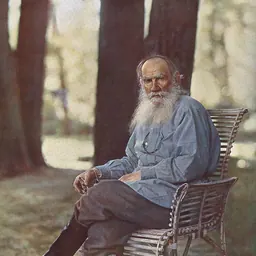
Biography Serafima Birman was born in Kishinyov in the Russian Empire (modern-day Chișinău, Moldova) into a Russian Orthodox family. Her father German Mikhailovich Birman was a Stabs-kapitan who served in the 51st reserve infantry battalion of the Imperial Russian Army. He came from raznochintsy, but was granted personal nobility after making a successful military career. He resigned rather early and died in 1908. Serafima described him as a "lonely, unsociable man... who had little success at finishing things, like the Moldovan-Russian dictionary he was writing for years". Her mother Elena Ivanovna Birman (née Botezat) "was a complete opposite". She came from a wealthy Moldovan family, studied in a finishing school and married as a teenager. At the time German met and married her, she was already a 19-year-old widow with two daughters. Serafima also had a younger brother, Nikolai. In 1943 she relaunched Vassa Zheleznova and directed other adaptations of classic plays such as Leo Tolstoy's The Living Corpse and Edmond Rostand's Cyrano de Bergerac. She served there until 1958 and then returned to the Mossovet Theatre where she stayed for the rest of her life.
She also published articles and several non-fiction books dedicated to her profession and Russian theatre in general: Actor and Character (1934), Actor's Labour (1939), The Path of an Actress (1959 and 1962), Meetings Granted by Fate (1971).
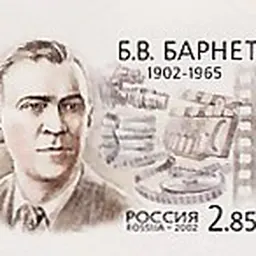
Cinema Birman's first roles in cinema date back to 1918: she played a small part in But He, Rebellious, Seeks for Tempest... crime drama and Lady Sophia Entwistle in the Buried Alive adaptation of Arnold Bennett's satirical book. Both films were directed by Alexandre Volkoff shortly before his emigration and are considered to be lost today. She returned to big screen during the mid-1920s and played several comedy roles and episodes in a number of silent films, most notably a neighbor in Yakov Protazanov's The Tailor from Torzhok (1925) and Madame Irène in Boris Barnet's The Girl with a Hatbox (1927). Her unusual appearance and expressive acting attracted comedy directors: between 1956 and 1957 she played two memorable grotesque characters in Andrey Tutishkin's Crazy Day and Alexander Stolbov's An Ordinary Man. She also voiced some animated films.
Yet her biggest success came with Ivan the Terrible directed by Sergei Eisenstein in 1944 during the war. Birman played the main antagonist – Yefrosinya Staritskaya, mother of Vladimir of Staritsa – who wanted to see him as a new Russian Tsar and led the plot against Ivan the Terrible. Eisenstein first planned Faina Ranevskaya for this part, but she was rejected by censors supposedly because of her "openly Semitic features". Either way, Birman's character has been widely praised since. In 1946 she was awarded the Stalin Prize and the rank of People's Artist of the RSFSR for it. As one of her close friends Rostislav Plyatt wrote in his memoirs, "She tried to stage The Blue Bird with her ward neighbors, hasting to demonstrate the work to her beloved Stanislavski! Irrepressible, she even died Birman-style – no day without theatre!.." She was buried at the Novodevichy Cemetery in Moscow near her husband. While biographers usually state the couple was childless,
Selected filmography
Don’t just read it —
keep it.
Full-length biographies made to live with: read them, listen on the way to work, watch them tonight.
- E-book
- Audio
- Video
Instant download · yours to keep · every purchase keeps this site free
Important facts
Family & relationships
People in Serafima Birman's life
Named in this biography and alive at the same time





Related people
Same field, nearest in time
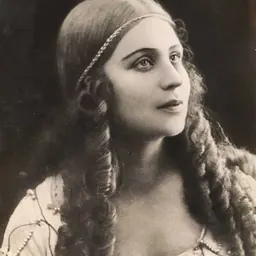

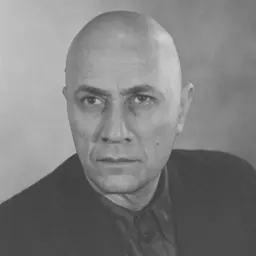
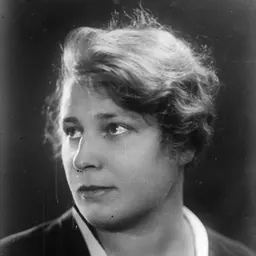
Contemporaries
People whose lives overlapped Serafima Birman's
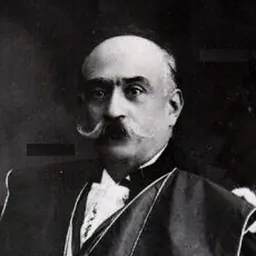




Frequently asked questions
Who was Serafima Birman?
Russian actor and theatre director (1890-1976)
When was Serafima Birman born?
Serafima Birman was born on 29 July 1890 in Chișinău.
When did Serafima Birman die?
Serafima Birman died on 11 May 1976 in Moscow.
What was Serafima Birman's occupation?
Serafima Birman was an actor, theatre director, film director and director.
What nationality was Serafima Birman?
Serafima Birman was Russian.
Sources & further reading
Cite this page
APA: Biography.guide. (2026). Serafima Birman. https://biography.guide/serafima-birman/
MLA: "Serafima Birman." Biography.guide, https://biography.guide/serafima-birman/.
Chicago: "Serafima Birman." Biography.guide. https://biography.guide/serafima-birman/.
Data last updated: 2026-09-22 · Spot an error? Report a correction.
Page generated 2026-09-27 05:18 UTC