
About Sep Ruf
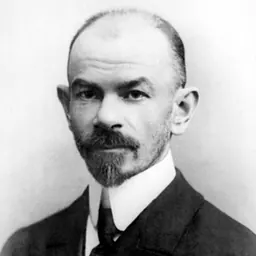
Lived 1908 – 1982 (aged 74). Sep Ruf was a German architect and university teacher.
Sep Ruf (full name Franz Joseph Ruf; 9 March 1908, in Munich – 29 July 1982, in Munich) was a German architect and designer strongly associated with the Bauhaus group. He was one of the representatives of modern architecture in Germany after World War II. His elegant buildings received high praise in Germany and Europe and his German pavilion of the Expo 58 in Brussels, built together with Egon Eiermann, achieved worldwide recognition. He attended the Interbau 1957 in Berlin-Hansaviertel and was one of the three architects who had the top secret order to create the governmental buildings in the new capital city of the Federal Republic of Germany, Bonn. His best known building was the residence for the Federal Chancellor of the Federal Republic of Germany, built for Ludwig Erhard, the so-called Chancellor's Bungalow.
Personal life
His father was Josef Ruf and his mother was Wilhelmine Mina Ruf (née Scharrer). The family of his father came from Dinkelsbühl and his mother's family lived in Weißenburg in Bayern, both in middle Franconia. During this time he met his later fiancée, Aloisia Ruf, née Mayer, born in Munich, 2 April 1910, a daughter of a factory owner. They married 1938, built a home in Gmund am Tegernsee and had two children. His bureau was in Munich. Ruf loved to travel and he visited Austria, Italy, Greece, France, Belgium, Switzerland, the United States and Norway. 1969 he bought a winery in Italy and renovated the house. He became friend with many artists like Marino Marini and Bruno Pulga and had guests in Italy such as Henry Moore. He also kept in touch with Walter Gropius, Ludwig Mies van der Rohe, Richard Neutra and Romano Guardini. He is called to be the German architect, who realized the ideas of the Bauhaus most consequent. In 1982 he died in Munich and was buried at the mountain cemetery of Gmund am Tegernsee.
Early career
He studied architecture and city planning at the Technical University of Munich from 1926 until 1931. Then he opened his own bureau. One year later his brother spent a year in his bureau before he opened his own. Ruf began to build houses for doctors, actors and manufacturers and they loved his light and bright buildings. In 1933, when he was 23 years old, he built a flat-roof house for Karl Schwend in Munich and was cautioned from the new authorities, because from 1933 on the building of a flat-roof house was forbidden. He continued building houses and now he had to build them with pitched roofs, but the interior did not change and was still bright and had wide rooms and large windows. From 1936-1938 he was ordered to build parts of the Werdenfels and the Kemmel barracks in Murnau, after the war they were used by the US army and German troops. As soon as possible he went back to the building of private houses. In 1939 Ruf had to go to war. From 1940 to 1942 he was allowed to stay at home because he worked as an independent architect with the family of Hugo Junkers. From 1934 to 1936, one year before his death, Junkers had allowed the 26-year-old architect to build an estate for his workers in Grünwald, Bavaria. Hugo Junkers, who had lost nearly all of his inventions and his factory in Dessau to the new authorities and now lived near Munich under surveillance, now did research for metal-housing. In 1942 Ruf had to go to the Russian front and after the war had ended, he went back to Germany by foot and directly began his work of rebuilding Germany with the Church Christkönig in Munich.
First modern buildings
One of his first works were buildings for the HICOG (High Commissioner of Germany), the Allied High Commission at the palace Deichmannsaue in Bad-Godesberg/Bonn together with the architects Otto Apel, Rudolf Letocha, Rohrer and Herdt. The tower-building of the HICOG went to be the Embassy of the United States in Bonn from 1955 until 1999. After the Embassy moved to Berlin the two parts became two ministries. They also built the residential estates of Plittersdorf, Tannenbusch and Muffendorf, where the German and American staff lived. Every estate had about 400 houses, wide streets and an apartment tower in the middle. Ruf made the development plan.
From 1949 till 1951 he built the Bayerische Staatsbank in Nuremberg an atrium-building with a large glass-ceiling.
Professorship and teaching
In 1947 Ruf became a professor at the Academy of Fine Arts, Nuremberg. The original building was destroyed, so the first academy was in the residence of Ellingen. Ruf later built the new pavilions for the Academy of Fine Arts at Bingstreet. In 1953 he went to the Academy of Fine Arts, Munich and was the president from 1958 to 1961. In 1971 he was pronounced as an honorary member. He was one of the founders of the Academy of Fine Arts, Berlin (west), Akademie der Künste, he was a member of the academy from 1955 until 1982.
Academy of Fine Arts Nuremberg
During 1952-1954 he built the Academy of Fine Arts, Nuremberg. The pavilions were connected with open, roofed passageways all in white in a green park with old trees. The flat-roofed light seeming building is the only campus in the world, made in this way. The only high building is the auditorium, on both sides open with glass-walls. The way to build these pavilions was later used again for the pavilions of the Expo 58 in Brussels. The studios and ateliers are looking to the atrium, so the students can work inside as well as outside in the green patio. It was the first building in southern Germany that became heritage-protected.
Neue Maxburg Munich
One of his most elegant buildings was the Neue Maxburg in Munich. William V., Duke of Bavaria, built the residence from 1593 to 1596. In the 17th century it was called the Herzog-Max-Burg. After it was destroyed in World War II., only the renaissance-tower was still standing. The city asked some architects to find ideas for the place and allowed to destroy the old tower. Only Ruf and Theo Pabst were the two architects, who wanted to save it. So both got the order to build the Neue Maxburg. The steel skeleton building followed the structure of the tower and in the middle of the buildings is a green meadow and a fountain. The building of Justice is one of the most elegant buildings in Europe, like Nikolaus Pevsner wrote. Especially the Atrium with the glass-ceiling and the curved stair is impressing.
World fair Brussels 1958
The sign of the Expo 58 in Brussels was the Atomium. 41.454.412 people visited the exhibition. Ruf and Egon Eiermann made plans for the German pavilion and it was decided they should work together. They decided to build eight glass-pavilions that were connected with open pathways, like Ruf had designed for the Academy of Fine Arts, Nuremberg. They were placed within a garden of 6000 m2 and in the middle was a little pond. The garden was designed by the landscape architect Walter Rossow from the Deutscher Werkbund. There was a 57 m long steel-bridge with a 50 m high pylon. The newspapers of the world gave the best critics. The Times, London, wrote: "It is the most elegant pavilion of the exhibition".
Chancellor's Bungalow Bonn
In 1962 Ruf, Egon Eiermann and Paul Baumgarten got the top secret order to design and build the government buildings of the new capital city of the western part of Germany, Bonn. Every architect got his own part to realize, such as the new upper house of the German parliament, the tower building of the delegates, the private and representative house of the chancellor of the Federal Republic.
In 1963 and 1964 Ruf built the house for the chancellor. It was to be a house to live in and also to be a representative building to welcome guests of state. In a park beside the river Rhine he built a flat-roofed house with large glass-windows, that should show the open democratic way, the new Germany was thinking. The bungalow is designed with two quadrates with two atriums and one part of the house is wide open to the park and the other private part into one atrium with a small swimming pool. When Ludwig Erhard got the keys he said: "You can understand me better, when you look at this house, as if you would listen to a political speech of mine". Ludwig Erhard and Helmut Schmidt liked and used the modern building, whereas Willy Brandt, who had young children, used it for state visitors, preferring to remain in his private residence. Helmut Kohl lived there nearly 16 years, until Berlin became the new capital city. Today it is a museum and can be visited. The Chancellor's Bungalow may be the world's most open, public official residence.
Ruf realized a lot of buildings in Bonn, for example the Federal Ministry of Food, Agriculture and Consumer Protection is part of the UN-Campus. 2014 the Chancellor's Bungalow was the central part of the German contribution at the 14th International Architecture Exhibition in Venice. It was built 1:1 into the German pavilion.
Further modern buildings
Ruf made development plans for the cities, of Nuremberg, Munich, Fulda and Bonn.
1960-1966 he built the tower building of the BHF Bank, with 82 m and 23 stories, 1966 it was the highest tower building of the financial metropolis.
In 1852 Hans von und zu Aufseß had the idea to realize a museum for a "well-ordered compendium of all available source material for German history, literature and art". Parts of the former Nuremberg Charterhouse, dissolved in 1525, were used for the museum. During World War II. great parts of the museum were destroyed. So Ruf and Harald Roth made the development plans. They began to rebuild the museum from 1953 until 1978 and Ruf designed several modern exhibition areas. The first was the Theodor Heuss -Bau. The first Federal President Theodor Heuss came to the opening and said, he was happy to see, that there was conceived something new, than to try to imitate the old.
St. Johann von Capistran is a round Church and it is called to be the last cathedral in Munich. Ruf built it 1958–60. The building is designed with two crescent-shaped shells, in the inside there are the sacred rooms. The flat roof is lying upon a circlet of glass and has a glass-dome. Outside 22 pillars hold the roof free above the open room.
The Bavarian State Library is one of Europe's most important universal libraries. With its collections currently comprising around 9.81 million books. The legal deposit law has been in force since 1663, regulating that two copies of every printed work published in Bavaria have to be submitted to the Bayerische Staatsbibliothek. This law is still applicable today. The Bayerische Staatsbibliothek furthermore is Europe's second-largest journals library (after the British Library). Parts of the Library were destroyed in World War II.
1953-1966 the professors Hans Döllgast and Ruf had to plan and realized the reconstruction of the eastern wing, a new area behind historic walls, and the extension building of the Bavarian State Library, a glass-steel frame construction for the bibliotheca. They made an available surface of 17,000 m2 and a volume of 84,000 m3. In 1967 a jury with Hans Scharoun gave the price of the BDA Bayern to the extension building.
1956–1957 he built the royal picture palace am Goetheplatz in Munich, in those days one of the two picture palaces in Europe, playing Todd-AO, and Michael Todd came to the opening and they showed the German first broadcast of the musical Oklahoma!.
In Berlin he was part of the historic International Building Exhibition, the Interbau 1957 in Berlin. On the area of the Hansaviertel 53 architects from 13 countries made 35 drafts, that were realized by Alvar Aalto, Paul Baumgarten, Egon Eiermann, Walter Gropius, Arne Jacobsen, Oscar Niemeyer, Max Taut, Pierre Vargo and Ruf and others. 1160 living quarters, tower buildings and flat roofed houses, churches, cinema, library, kindergarten and a subway station. Walter Rossow, a landscape gardener from Berlin planned with a team the green areas. Three buildings of the exhibition were built by Le Corbusier, Hugh Stubbins (US) and Bruno Grimmek. Some of the artists were Henry Moore, Fritz Winter and Bernhard Heiliger. Ruf built two flat roofed houses.
Further buildings were the Max Planck Institute for Physics with the Werner Heisenberg -institute for Physics, in Munich-Freimann and the German University of Administrative Sciences Speyer.
The baroque town of Fulda called him to be part of the committee of art of the city. He designed the frontage of the storage- building of Karstadt and built the Patronatsbau, he also designed the Universitäts- and Borgiaplatz. The design incorporates modern architectural elements intending to complement the surrounding baroque structures. He also built the modern Church for the catholic seminary students in Fulda.
Ruf formed the , named after Hans Christoph Freiherr von Tucher (1904-1968), lawyer, executive spokesman of the Bayerischen Vereinsbank. There he built the technical centre and some administration buildings of the HypoVereinsbank at the Eisbach, from 1964 until 1974 the buildings for IBM and the Hilton Park Hotel. At Lake Tegernsee he designed the museum for the painter and graphic artist Olaf Gulbransson. 1978–1982 another building for a museum was his hall for aviation- and space flight for the Deutsches Museum Munich.
Furniture
Beneath his architectural works he designed a large schedule of furniture. He designed for every house he built and he made different works, belonging to the house and to the inhabitants. He used every material and worked with wood, glass and chrome. He made steel-tube furniture as well as lamps with basketwork.
His furniture designs transitioned from using wood to including materials such as glass and metal.
He designed for living, official areas and churches, even the sacred parts.
Mostly known he got with the furniture of the living- and representative house, the so-called chancellor's bungalow for Chancellor Ludwig Erhard in Bonn.
Studies
The oeuvre of Ruf lead onto several academic studies and presentations about his buildings and his life and work in Germany, Switzerland, Italy and the US.
List of works (selection)
1931: house of the fabricant of sweets Wilhelm Suwelack in Billerbeck 1931–1933: flat roof construction, house for Dr. Karl Schwend in Munich, because of the flat roof he was cautioned by the new authorities. 1932: house for Dr. med. Sepp Ruf in Ahlen, same name, not related 1932: house for the lawyer Willy Rosenbusch in Ingolstadt 1933: atelier-house for the painter Max Rauh in Munich, 1937 one of his pictures was part of the Degenerate Art Exhibition. 1933: house for Dr. med. Alfred Schönwerth in Grafrath 1933–1934: together with his brother Franz Ruf part of the residential estate in Ramersdorf, they built 16 of 192 houses 1934–1937: house for a friend Alois Johannes Lippl, director, author, on 25 January 1948 the US military government in Munich gave him the license to start the Bavarian radio, Bayerischer Rundfunk 1934: house Dr. Ernst Haß, Munich -Harlaching 1934–1936: residential estate Herrenwies for Hugo Junkers (today called: Hugo-Junkers-estate) in Grünwald, Bavaria 1935: house Brand, Munich-Bogenhausen 1935: house Karl and Maria Eder, Munich-Laim 1936: house of the poet Josef Martin Bauer in Dorfen 1936: house for the director Otto Falckenberg in Grünwald, Bavaria near by Munich, he founded the Otto Falckenberg School of the Performing Arts 1936–1940: primary school in Munich-Allach, today a secondary modern school 1936–1938: barracks for German mountain troops „Kemmel-Kaserne“ in Murnau am Staffelsee, 1946 - 1990 used by the US army. 1937-1938 house for himself in Gmund am Tegernsee, marriage 1938 1938: Oberland-residential-estate together with his brother Franz Ruf an der Einhornallee in Munich 1938–1939: barracks for German mountain troops Murnau am Staffelsee, Weilheimer Straße, Werdenfels-barracks, today used by the German troops. 1939: extension building for the primary school Allach, in München-Allach, planned 1936, while it was built the new authorities changed some rules and it was ended as a "Hochlandheim". Today it is part of the secondary modern school. 1945: house for the owner of a brick factory, Mr. Meindl, St. Wolfgang, Hofgut Reit 1946: house of Mr. Holzner in Dorfen 1946–1947 house of Siegfried Vetter in Feldkirchen bei München 1947–1948: house of Pius Egner in Notzing 1950–1952: First apartment tower in Munich, Theresienstraße 46-48 1951: American Embassy in Bonn-Bad Godesberg 1952–1954: Academy of Fine Arts, Nuremberg. 1952–1955: Bungalows in Gmund am Tegernsee, three flat-roof buildings, one for the later chancellor Ludwig Erhard and for himself. 1952–1957: New Maxburg in Munich 1953–1969: Building of the Deutschen Forschungsgemeinschaft, Bonn-Bad-Godesberg 1953–1954: residential- estate Hirschelgasse 36-42 in Nuremberg 1953–1954: Katholic church To the twelve apostles in Munich-Laim 1953–1978: Germanisches Nationalmuseum Nürnberg: re- and newbuilding, Theodor-Heuss-Bau, Bibliotheksbau 1954–1956: archiepiscopal ordinariate, Munich 1956–1957: „Interbau 57“, Berlin-Hansaviertel, two houses 1956: Bavarian representation in Bonn 1956–1957: Royal picture palace am Goetheplatz in Munich, in those days one of the two picture palaces in Europe, playing Todd-AO 1957–1959: Consulate General of the United States, Munich 1957–1960: Max Planck Institute for Physics, with the Werner-Heisenberg-Institut in Munich-Freimann ( especially built for Werner Heisenberg) 1957–1960: Church St. Johann von Capistran, in Munich-Bogenhausen, a round church 1958: German University of Administrative Sciences Speyer in Speyer 1958: German Pavilions for the Expo 58 in Brussels 1960–1963: house for Nicolas Hayek at Hallwilersee, Switzerland 1961: department store Bilka am Friedrichsplatz in Kassel 1963–1966: department store Karstadt, Fulda, urban conception construction of the frontage, new-building of the university-place, part of the "Denkmaltopographie Fulda“, 1963–1965: Patronatsbau, Fulda, with the conception of the Borgia-place and the fountain of Bonifatius, part of the "Denkmaltopographie Fulda“ 1963–1966: house and residence of the Chancellors of the Federal Republic of Germany, Chancellor's Bungalow in Bonn 1964–1966: Olaf-Gulbransson-Museum for the painter and graphic artist Olaf Gulbransson in Tegernsee 1966–1970: extension building for the Federal Ministry for the Treasury (Federal Ministry of Finance (Germany)) Haus Carstanjen, Bonn-Bad Godesberg, Ruf and Manfred Adams 1966: extension building/eastern part of the Bavarian State Library in Munich, work of the professors Hans Döllgast and Ruf (1953-1966) and Georg Werner (1953-1960), later Hellmut Kirsten (1957-1966), BDA-Price of Bavaria (Association of German Architects) 1966–1968: chapel for the catholic seminary students in Fulda 1968: office tower-building for the Federal Ministry of Defence (Germany), Bonn 1968–1970: Technical Centre of the HypoVereinsbank "Am Tivoli", Tucherpark in Munich 1968–1972: IBM in Munich 1970: BHF Bank tower-building in Frankfurt-on-Main, when it was built, it was the highest tower-building in Frankfurt 1970–1972: Hilton Park Hotel in Munich 1972–1977: Antico Podere Gagliole, vineyard estate for the publisher Rolf Becker, Toskana 1973–1974: house Mr. Dohrn, Bad Homburg v.d. Höhe 1974: renovation and expansion of Hermersberg Palace for the businessman Reinhold Würth, Niedernhall, Hermersberg 1978–1979, 1980: administration building for the DATEV, Nuremberg 1978–1982: Hall for aviation- and space flight for the Deutschen Museums Munich
Exhibitions In memoriam Sep Ruf, 1985/86, Ausstellungen: Neue Sammlung, Munich, Akademie der Bildenden Künste, Berlin and Bayerische Vereinsbank, Nuremberg. Sep Ruf 1908–1982 – Sep Ruf 1908-1982 Modernism with Tradition im Architekturmuseum der Technischen Universität München in der Pinakothek der Moderne, München (31. Juli bis 5. Oktober 2008) Sep Ruf 1908–1982. Sep Ruf 1908-1982 Modernism with Tradition./ 1. Oktober 2009 – 22. November 2009 / Architekturgalerie am Weißenhof | Stuttgart Die Architekturgalerie am Weißenhof zeigt Teile der Ausstellung des Architekturmuseum der Technischen Universität München. Sep Ruf - Planungen und Bauten für Bonn in den 50er und 60er Jahren, GKG-Gesellschaft für Kunst und Gestaltung Bonn Sep Ruf 1908–1982 | Sep Ruf 1908-1982 Modernism with Tradition, ergänzt um: Wie die Quadrate auf den Uniplatz kamen ... – Sep Ruf in Fulda im Vonderau Museum | Fulda (15. Juni – 25. September 2011) The Architect - History and Present of a Profession, 27.09.2012 - 03.02.2013 Pinakothek der Moderne 100 años de arquitectura y diseño en Alemania, Deutscher Werkbund 1907 – 2007, Museo Nacionale de Artes Decorativas, Madrid 22.05.2012 - 29.09.2012; Further exhibitions 2012 and 2013 in Spain: Las Naves, Valencia; Museo de Bellas Artes | Coruna, Spain. Der Kanzlerbungalow Photography by Igmar Kurth, Vernissage Friday 23.4.2010 06.00 p.m., Fondation Gutzwiller, Räffelstraße 24/7, 8045 Zürich, 24.4.-30.4.2010 Switzerland Architecture in the Realm of the Arts – 200 Years of the Academy of Fine Arts Munich 15.02.2008 - 18.05.2008 Architekturmuseum der TU München in der Pinakothek der Moderne 100 Years German Werkbund 1907|2007, 19.04.2007 - 26.08.2007, Architekturmuseum der Technischen Universität München in der Pinakothek der Moderne; Further Exhibitions i 100 Years German Werkbund: Architekturmuseums in der Akademie der Künste, Hanseatenweg, Berlin; Muzeum Architektury | Architekturmuseum Breslau; Cagdas Sanatlar Galerisi | Ankara; Mimar Sinan Güzel Sanatlar Üniversitesi | Istanbul; Macedonian Museum of Modern Art | Thessaloniki; Benaki Museum | Athens. Architektur der Wunderkinder, Ausstellung in Berlin, 09.12.2005 - 11.02.2006, Im Schinkelzentrum, Technische Universität Berlin, Fakultätsforum im Architekturgebäude am Ernst-Reuter-Platz Architektur der Wunderkinder: Aufbruch und Verdrängung in Bayern 1945 bis 1960, 03.02.2005 - 30.04.2005, Architekturmuseum der Technischen Universität München in der Pinakothek der Moderne Begreifbare Baukunst - Die Bedeutung von Türgriffen in der Architektur Museum August Kestner 30159 Hannover Trammplatz 3 Laufzeit: 13. Oktober 2011 bis 08. Januar 2012 Türgriffe und -knäufe u.a. von Walter Gropius, Le Corbusier und Sep Ruf "Begreifbare Baukunst - Die Bedeutung von Türgriffen in der Architektur" Termin: 29.11.2012 - 13.01.2013, Türgriffe und -knäufe u.a. von Karl Friedrich Schinkel, Josef Maria Olbrich, Walter Gropius, Sep Ruf und Le Corbusier, zudem Modelle u.a. prägender und lehrender Professoren der TU Dortmund. Dortmunder U - Zentrum für Kunst und Kreativität Leonie-Reygers-Terrasse, 44137 Dortmund Begreifbare Baukunst zur Bedeutung von Türgriffen in der Architektur, vom 20.November 2009 bis 13.Dezember 2009 im Roten Salon der Bauakademie, Schinkelplatz 1, Berlin Artur Pfau - Fotograf und Zeitzeuge Mannheims Reiss-Engelhorn-Museen. Museum Weltkulturen D5 68159 Mannheim Termin: 03.06.2012 - 29.07.2012 - Verlängert bis 27.01.2013 Baukunst aus Raum und Licht - Sakrale Räume in der Architektur der Moderne, Museum Moderner Kunst - Wörlen Bräugasse 17 94032 Passau Termin: 24.03.2012 - 10.06.2012 Nürnberg baut auf! Straßen. Plätze. Bauten Stadtmuseum Fembohaus Burgstraße 15 90403 Nürnberg Ausstellung vom 29.1.-20.6.2010 60 Jahre "Wie wohnen?" und 10 Jahre Markanto. Place of the exhibition: Markanto Depot, Mainzer Strasse 26, 50678 Köln Öffnungszeiten: September 2009, jeden Samstag von 11.00 bis 16.00 Uhr Based on zhe exhibition "Wie wohnen?" from 1949 in Stuttgart and 1950 in Karlsruhe, where examples of furnishing, constructional engineering and furniture of Egon Eiermann, Eduard Ludwig, Gustav Hasenflug, Hugo Häring, Sep Ruf or Jens Risom were shown. 100 Jahre Deutscher Werkbund 1907|2007 100 ANOS DE ARQUITETURA E DESIGN NA ALEMANHA 1907–2007 17.05.2013 - 27.07.2013 Fábrica Santo Thyrso | Santo Tirso, Portugal
Awards
1952: Price of the city of Nuremberg 1958: Officer of the Order of Leopold (Belgium) 1973: Bavarian Order of Merit 1976: Theodor Heuss-Medaille 1976: Officer Cross of the Order of Merit of the Federal Republic of Germany 1978: Bonifatius-Medaille des Bistums Fulda 1980: Price of architecture of the city of Munich
Don’t just read it —
keep it.
Full-length biographies made to live with: read them, listen on the way to work, watch them tonight.
- E-book
- Audio
- Video
Instant download · yours to keep · every purchase keeps this site free
Important facts
People in Sep Ruf's life
Named in this biography and alive at the same time



Related people
Same field, nearest in time
Contemporaries
People whose lives overlapped Sep Ruf's



Frequently asked questions
Who was Sep Ruf?
German architect (1908-1982)
When was Sep Ruf born?
Sep Ruf was born on 9 March 1908 in Munich.
When did Sep Ruf die?
Sep Ruf died on 29 July 1982 in Munich.
What was Sep Ruf's occupation?
Sep Ruf was an architect and university teacher.
What nationality was Sep Ruf?
Sep Ruf was German.
Sources & further reading
Cite this page
APA: Biography.guide. (2026). Sep Ruf. https://biography.guide/sep-ruf/
MLA: "Sep Ruf." Biography.guide, https://biography.guide/sep-ruf/.
Chicago: "Sep Ruf." Biography.guide. https://biography.guide/sep-ruf/.
Data last updated: 2026-09-20 · Spot an error? Report a correction.
Page generated 2026-09-27 04:58 UTC