
About Selig Perlman
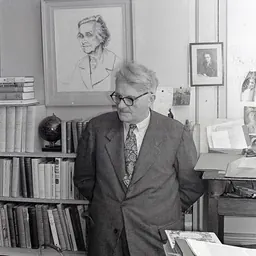
Lived 1888 – 1959 (aged 70). Selig Perlman was an American historian and educator.
Selig Perlman (December 9, 1888 – August 14, 1959) was an American economist and labor historian at the University of Wisconsin–Madison.
Background Perlman was born in Białystok in Congress Poland (then part of the Russian Empire) in 1888. His father, Mordecai, was a Jewish merchant who supplied yarn and thread to home weavers and was a friend of Maxim Litvinov's father.
Perlman had a stutter and was extremely shy, which didn't stop him from excelling in the "Cheder" (the local Jewish religious school), and won a scholarship to attend a state-owned high school (or "gymnasium"). While in high school, he learned Russian and a number of other European languages, and his teachers introduced him to the work of Georgi Plekhanov. Thereafter, Perlman became an ardent Marxist.
He never joined a political party or radical movement, however, and his advocacy remained more theoretical than practical. Perlman graduated in 1905.
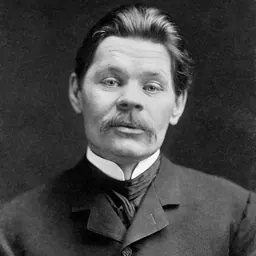
As a Jew, Perlman was largely barred from obtaining a higher education in Russia. So he left for Turin, Italy, to study at the University of Turin. He came down with bronchitis and transferred to the University of Naples Federico II, because Naples had a warmer climate. He studied medicine, learned Italian, joined the General Jewish Labor Union, and spent weekends with other students talking politics, languages, and literature at Maxim Gorky's home (although Gorky was rarely present for these meetings).
Although Perlman is often considered a close friend and associate of Commons, the two were not very close. Commons was anti-Semitic and reacted negatively to Perlman's strong Yiddish accent and constant poverty. It was Commons' wife, Ella, who championed Perlman to her husband and others. (She even helped Perlman with his English grammar). were persecuted by the Russian police, and heavily fined by Russian authorities for having an expatriate in the family. Ely blocked him from getting an appointment at the University of Wisconsin–Madison, but in the summer of 1918 Ely was removed as chairman of the department of economics. The instigator of the rebellion was Ella Commons, who coordinated a series of promotions, votes and organizational changes which forced Ely out and permitted Perlman to obtain an assistant professor position.
Perlman's theoretical approach was politically detached and relied heavily on data collection, a model which would dominate labor history well into the 1960s. However, Perlman did show signs of breaking away from the Wisconsin school's emphasis on organizations. His study of Marx had left him with an understanding of the importance of class in social movements, although his sense of the concept was limited to an economic understanding and not as broad as British labor historian E. P. Thompson's.
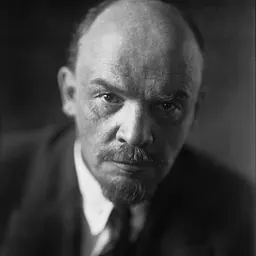
In 1928, Perlman published his most famous work, A Theory of the Labor Movement. Karl Marx and Vladimir Lenin had argued that unions too often pursued improvements in wages and working conditions rather than advocating revolution. Intellectuals, it was argued, had to take over labor unions to prevent such bourgeois inclinations. Perlman criticized this theory by arguing that workers in the United States were not, in fact, alienated as they were in Europe. Rather, in the U.S., the source of owner-worker conflict was not capitalism per se but the downward pressure on wages exerted by a marketplace free from internal tariffs. Unions formed, Perlman argued, as a means for workers to maintain high wages. It was correct, not an aberration, for unions to focus solely on wages and working conditions, he wrote. In response, Perlman developed the "business unionism" model of labor, where the goals of unions are defined by their members. It was an ingenious and effective critique, and one which had a large impact on the American labor movement.
In time, a chair was named for Commons in the economics department, and Perlman appointed to that position. Perlman taught a number of students who later went on to influential careers as economists, historians and politicians in their own right. One of his most notable students was two-term Wisconsin governor Philip La Follette.
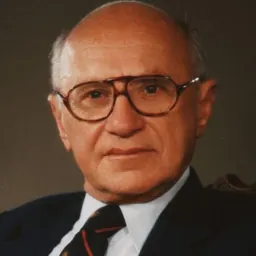
Perlman also continued to exercise his religious beliefs throughout his academic career. Although his extreme shyness kept him out of university politics or the media, he worked extensively with the university's Hillel Foundation. And, despite the disparity in their economic views, Perlman became good friends with economist Milton Friedman.
In 1929, Eva Perlman died. Selig Perlman subsequently married Eva's younger sister Fannie, and had two daughters, Eva and Rachel.
At the end of 1958, Perlman turned 70, which was the mandatory retirement age at the university, and he was forced to retire the following June. Perlman received an appointment as a visiting professor at the Wharton School of the University of Pennsylvania. Earlier that year, he had undergone prostate surgery, which had left him weak. In August, he suffered a stroke which may have been related to his prior surgery. He lingered for seven days, then died on August 14, 1959, aged 70.
Assessment Perlman is recognized as one of the leading labor historians of the first half of the 20th century. His book, A Theory of the Labor Movement, "left an indelible impression on a generation of teachers and trade union personnel."
Nevertheless, many scholars have questioned Perlman's conclusions. They challenge his conclusion that American workers were not and are not radical. Perlman condemned the role of intellectuals in the US labor movement. They were outsiders, guilty of leading workers astray in pursuit of utopian (that is, communist) visions. Perlman did not believe that people from the working class who became intellectuals would be taken in by the likes of Marx and Engels. Labor's real, "home-grown" or "organic" intellectuals, were pragmatic, accepting of capitalism and content to win for workers as much as they could gain within its framework. But Perlman was profoundly wrong. For these critics, business unionism has not only proven to be a failure but in fact has been supplanted by social movement unionism in the last six decades. Practitioners of the "new labor history", in particular, see the role of academics as assisting in the growth and development of labor unions rather than as sort of Marxist Svengali leading it to its doom.
Other critics point out that Perlman's work contains biases not readily apparent. Perlman may have held some racist views (particularly toward Asians) which limited his understanding of the evolution of the labor movement. It is fairly clear that his concept of class was limited to economics, and did not include race, status, ethnicity, or other sociological factors. Selig Perlman, himself an immigrant and a labor historian in the pioneering "Wisconsin school" of historiography, praised the Chinese Exclusion Act of 1882: "Without it," he wrote in The History of Trade Unionism in the United States (1922), "the entire country might have been overrun by Mongolian labor and the labor movement might have become a conflict of races instead of one of classes." These theoretical blinders, critics argue, led Perlman to focus on grand theories about the rise of labor unions rather than to document and analyze the broader social, cultural and economic trends at work in history.
Nevertheless, critics agree that Perlman holds a significant and meaningful place in the development of labor history.
Perlman and Taft's 1935 History of Labor in the United States, 1896-1932 is a thoroughly researched descriptive account of the wide-ranging tactics and strategies of labor conflicts during this period. In particular, they detail that contrary to mainstream accounts the refusal of corporations to negotiate, government institutions and officials in owners' pockets, and facing the use of legal and military repression workers were forced to escalate their tactics in self-defense.
Memberships Selig Perlman was notorious for never attending university meetings, or participating in professional or academic conferences. He never held any memberships in professional organizations.
Family Selig Perlman's niece is the writer and etiquette authority Judith Martin, better known as "Miss Manners."
Published works
Solely authored books A History of Trade Unionism in the United States. New York: Macmillan, 1922. Lectures on Capitalism and Socialism. A.L. Riesch, ed. Madison: University of Wisconsin Press, 1976. A Theory of the Labor Movement. New York: Macmillan, 1928.
Co-authored books Perlman, Selig and Philip Taft. "History of Labor in the United States, 1896-1932." Volume IV, Labor Movements. New York: Macmillan, 1935. Commons, John R. and Perlman, Selig. The Economics of Collective Action. Kenneth H. Parsons, ed. New York: Macmillan, 1950. Commons, John R., et al. A History of Labor in the United States. Vols. 1-4. New York: Macmillan, 1918–1935.
Solely authored articles "The Basic Philosophy of the American Labor Movement." Annals of the American Academy of Political and Social Science. 274 (March 1951).
Don’t just read it —
keep it.
Full-length biographies made to live with: read them, listen on the way to work, watch them tonight.
- E-book
- Audio
- Video
Instant download · yours to keep · every purchase keeps this site free
Important facts
People in Selig Perlman's life
Named in this biography and alive at the same time

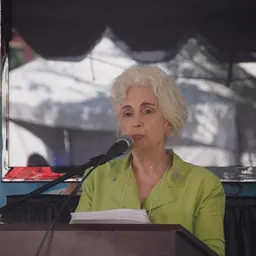
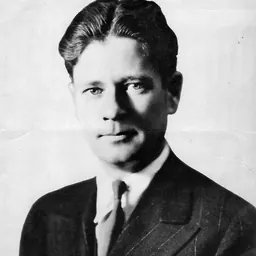

Related people
Same field, nearest in time
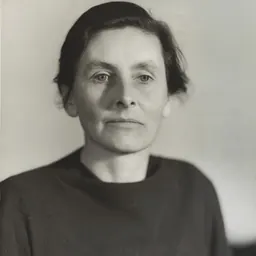

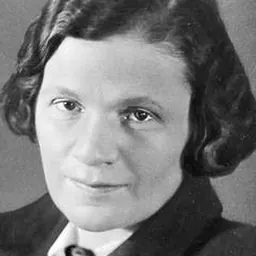

Contemporaries
People whose lives overlapped Selig Perlman's




Frequently asked questions
Who was Selig Perlman?
American historian and economist
When was Selig Perlman born?
Selig Perlman was born on 9 December 1888 in Białystok.
When did Selig Perlman die?
Selig Perlman died on 14 August 1959.
What was Selig Perlman's occupation?
Selig Perlman was a historian and educator.
What nationality was Selig Perlman?
Selig Perlman was American.
Sources & further reading
Cite this page
APA: Biography.guide. (2026). Selig Perlman. https://biography.guide/selig-perlman/
MLA: "Selig Perlman." Biography.guide, https://biography.guide/selig-perlman/.
Chicago: "Selig Perlman." Biography.guide. https://biography.guide/selig-perlman/.
Data last updated: 2026-09-20 · Spot an error? Report a correction.
Page generated 2026-09-27 05:07 UTC