
About Seleucus of Seleucia
Lived 190 BC – 150 BC (aged 39–40). Seleucus of Seleucia was an astronomer, mathematician and philosopher.
Seleucus of Seleucia ( Seleukos; born c. 190 BC; fl. c. 150 BC) was a Hellenistic astronomer and philosopher. Coming from Seleucia on the Tigris, Mesopotamia, the capital of the Seleucid Empire, or, alternatively, Seleukia on the Erythraean Sea, he is best known as a proponent of heliocentrism and for his theory of the causes of tides.
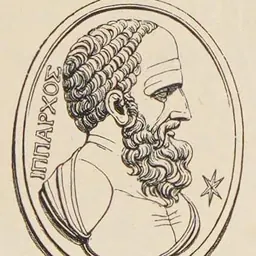
Heliocentric theory Seleucus is known to have supported the heliocentric theory of Aristarchus of Samos, which stated that the Earth rotated around its own axis which in turn revolved around the Sun. According to Plutarch, Seleucus was the first to demonstrate the heliocentric system through reasoning, but it is not known what arguments he used. According to Bartel Leendert van der Waerden, Seleucus may have constructed his heliocentric theory by determining the constants of a geometric model and by developing methods to compute planetary positions using this model, as Nicolaus Copernicus later did in the 16th century. He may have used trigonometric methods that were available in his time, as he was a contemporary of Hipparchus.
Since the time of Heraclides Ponticus (387 BC–312 BC), the inferior planets Mercury and Venus have been at times named solar planets, as their positions diverge from the Sun by only a small angle.
According to the Greek geographer Strabo, Seleucus was also the first to assume the universe to be infinite.
Tides
According to Lucio Russo, Seleucus' arguments for a heliocentric theory were probably related to the phenomenon of tides. The annual cycle of tides (which was studied by Seleucus) can indeed hardly be explained in a geocentric system. Seleucus correctly theorized that tides were caused by the Moon, explaining that the interaction was mediated by the pneuma. He noted that the tides varied in time and strength in different parts of the world. According to Russo, Seleucus ascribed tides both to the Moon and to a whirling motion of the Earth, which could be interpreted as the motion of the Earth around the Earth-Moon center of mass.
According to Strabo (3.5.9), Seleucus was the first to state that the tides are due to the attraction of the Moon, and that the height of the tides depends on the Moon's position relative to the Sun.
Don’t just read it —
keep it.
Full-length biographies made to live with: read them, listen on the way to work, watch them tonight.
- E-book
- Audio
- Video
Instant download · yours to keep · every purchase keeps this site free
Important facts
People in Seleucus of Seleucia's life
Named in this biography and alive at the same time
Related people
Same field, nearest in time




Contemporaries
People whose lives overlapped Seleucus of Seleucia's

Frequently asked questions
Who was Seleucus of Seleucia?
ancient Greek astronomer
When was Seleucus of Seleucia born?
Seleucus of Seleucia was born in 190 BC in Seleucia.
When did Seleucus of Seleucia die?
Seleucus of Seleucia died in 150 BC.
What was Seleucus of Seleucia's occupation?
Seleucus of Seleucia was an astronomer, mathematician and philosopher.
Sources & further reading
· Wikipedia: Seleucus of Seleucia
· DBpedia: Seleucus of Seleucia
Cite this page
APA: Biography.guide. (2026). Seleucus of Seleucia. https://biography.guide/seleucus-of-seleucia/
MLA: "Seleucus of Seleucia." Biography.guide, https://biography.guide/seleucus-of-seleucia/.
Chicago: "Seleucus of Seleucia." Biography.guide. https://biography.guide/seleucus-of-seleucia/.
Data last updated: 2026-09-20 · Spot an error? Report a correction.
Page generated 2026-09-27 05:03 UTC