
About Seiichi Niikuni
Lived 1925 – 1977 (aged 51). Seiichi Niikuni was a Japanese painter and poet.
was a Japanese poet and painter. He was one of the foremost pioneers of the international avant-garde concrete poetry movement, creating works of calligraphic, visual and aural poetry. He is recognized as one of the most important poets of recent times in Japanese and German textbooks.
It is said that during his later years, he started to prefer the old kanji orthography form of his name.
Life
Time in Sendai Niikuni was born on December 7, 1925, in Sendai, Miyagi Prefecture, Japan. He entered the Sendai Technical School (now Sendai Technical High School) and studied architecture. The motifs and audiovisual presentation that he would later become famous for, could already be seen in the works he submitted to Bungei Tōhoku. and decided to move to Tokyo. He worked for a while at a design studio, and moved on to work for an NHK art department. He also married painter Kiyo Miura ( Miura Kiyo) the same year. The title Zero-on was picked by his wife Kiyo from a list of several candidate names.
Founding of ASA and international attention In 1964, Niikuni participated in the E. E. Cummings study group held in Yukinobu Kagiya's house, and met Yasuo Fujitomi while there. and Vinholes in turn introduced the French poet Pierre Garnier (fr) to Niikuni. Requests from abroad to display his works kept increasing, and Niikuni gradually started to set his sights on foreign exhibitions. In 1974, he held a one-man exhibition at the Whitechapel Art Gallery in London. and Niikuni also admitted himself that Hagiwara was his starting point. Niikuni also wrote that he paid attention to the works of Shirō Murano and Junzaburō Nishiwaki. In addition, he was fascinated by surrealism, new objectivity and existentialism among others. and to reappropriate words' meaning into poetry that was constructed out of shapes and sounds. However, he was not able to immediately move from the modernism of Nishiwaki and Hagiwara, but took a number of years of hesitation to be able to gradually move to visual and aural poetry. With this transition, Niikuni did not completely reject metaphors, but included metaphor-like modernism and on top of it pursued poetry's essence in analogies. Furthermore, as was already visible from his works at the time of Hyōga, Niikuni was particular about carnal expression such as using sexual kanji like (danjo, men and women) and (kuchibiru, lips). The work was divided into two parts, the first half consisting of calligraphic poetry and second half being aural poetry. A note calling readers to read the poems aloud accompanied the first half. exemplified by a public performance of reading aloud of the poems in December 1963.
The works in Zero-on, especially those of calligraphic poetry, that were created out of spatially emphasized characters, are thought to be the influenced by the French poet Stéphane Mallarmé's Un coup de dés.
Vinholes advocated the importance of audio to Niikuni, after which Niikuni started to actively experiment with aural poetry. At the same time, reel to reel audio technology and phototypesetting were developed, and are seen to have had an effect on the style of expression in Zero-on and later works.
ASA and going international
Although at the time of Zero-on Niikuni was not yet aware of the international avant-garde poetry movement, he arrived at the same methodology as the concrete poetry movement in countries that used the alphabet. When Pierre Garnier saw Zero-on, he was amazed at how similar works they strove for and produced although the languages they spoke differed so much. This was the beginning of their friendship. Later, Garnier and Niikuni collaborated on Nichifutsu Shishū , producing works such as the Micropoem. Niikuni was noted abroad as an example of a writer that relied on ideographs (kanji), and requests to display his works kept coming in. but he would not budge from expressing through kanji characters. In Yami , the character for sound would be seen breaking away from the character of darkness . Niikuni also started using the Gothic typeface instead of Minchō. It is thought that this kind of breaking kanji into its parts and varying the shape of characters was done with Western audiences in mind. This was in response to requests from abroad.
Niikuni himself disliked the fact that these visual poems were regarded as being borderline art, and also denied that they were based on photography. However, in actuality his works were often talked about from the point of view of there being a relation between the pictures and poems, and it was often opined that it cannot be avoided that poems that utilized spatiality approach the realm of art.
Reception Niikuni rejected the mix of poetry and other fields of expression, and insisted on expressing himself only through words. However, in the 1970s, the concrete poetry movement started adding elements of visual arts, moving away from purely word-based concretism and becoming closer to visual poetry. and Niikuni's works were soon forgotten. but they never got recognition as works of poetry.
Don’t just read it —
keep it.
Full-length biographies made to live with: read them, listen on the way to work, watch them tonight.
- E-book
- Audio
- Video
Instant download · yours to keep · every purchase keeps this site free
Important facts
People in Seiichi Niikuni's life
Named in this biography and alive at the same time
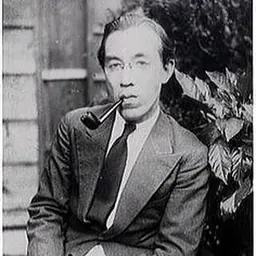
Related people
Same field, nearest in time


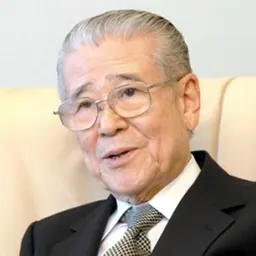


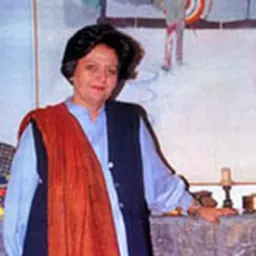
Contemporaries
People whose lives overlapped Seiichi Niikuni's

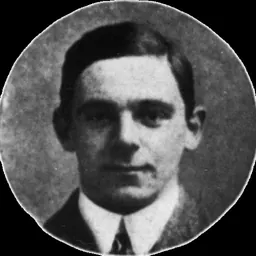


Frequently asked questions
Who was Seiichi Niikuni?
Japanese writer (1925-1977)
When was Seiichi Niikuni born?
Seiichi Niikuni was born on 7 December 1925 in Sendai.
When did Seiichi Niikuni die?
Seiichi Niikuni died on 23 August 1977 in Tokyo.
What was Seiichi Niikuni's occupation?
Seiichi Niikuni was a painter and poet.
What nationality was Seiichi Niikuni?
Seiichi Niikuni was Japanese.
Sources & further reading
Cite this page
APA: Biography.guide. (2026). Seiichi Niikuni. https://biography.guide/seiichi-niikuni/
MLA: "Seiichi Niikuni." Biography.guide, https://biography.guide/seiichi-niikuni/.
Chicago: "Seiichi Niikuni." Biography.guide. https://biography.guide/seiichi-niikuni/.
Data last updated: 2026-09-20 · Spot an error? Report a correction.
Page generated 2026-09-27 04:59 UTC