
About Sebastian Aguilera de Heredia
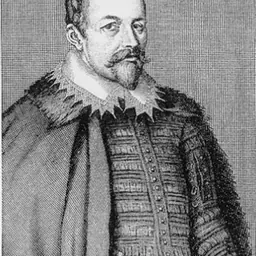
Lived 1560 – 1620 (aged 59–60). Sebastian Aguilera de Heredia was a Spanish composer and organist.
Sebastian Aguilera de Heredia (August 1561 – 16 December 1627) was a Spanish monk, musician and composer of the Renaissance period.
Life Aguilera was the first organist at the cathedral in Huesca from 1585 to 1603. During this time, he assisted in the construction of a new organ. In 1603, Aguilera moved to a more prestigious position as maestro de música at Cathedral of the Savior of Zaragoza in Zaragoza. He remained there until his death in 1627. He published a collection of works in 1618, and eighteen of his keyboard works survive. Aguilera is considered the first major figure of the Aragonese School of music centered on Zaragoza.
Music and Influence Aguilera composed both organ and vocal music. His work was written specifically for the church. While Aguilera's organ works do follow Spanish traditions, they also introduce new innovations. He created different types of tientos, including pieces that explored heavy dissonance, slow tempos, and unusual harmonies. He referred to this type of music as falsas. Aguilera's monothematic tientos use various contrapuntal and rhythmic techniques in order to develop a single theme. One of the most regarded techniques used in Aguilera's organ pieces is the medio registro technique. This highlights the left hand as a solo by giving it repeated, complex phrases while each half of the keyboard maintains its own registration. Aguilera also composed works based on Spanish hymn melodies, including contrapuntal and cantus firmus settings of well-known pieces. These settings used various asymmetrical and lively rhythmic patterns.
Aguilera gained recognition for his collection of 36 Magnificat settings titled Canticum Beatissimae Virginis deiparae Mariae. The collection includes four main groups: five, six, eight, and four voices. Each group has eight settings for each liturgical tone. The final four pieces of this collection are full double-choir settings.
Organ music
Pange lingua a 3 sobre bajo por Ce-sol-faut; Pange lingua a 3 sobre tiple; Salve de Lleno de 1.er tono; Salve de 1.er tono por De-la-sol-re; Primera obra de 1.er tono; Segunda obra del 1.er tono; Primer registro de bajo del 1.er tono; Segundo registro de bajo del 1.er tono; Tercer registro de bajo del 1.er tono; Primer tiento de falsas del 4º tono; Segundo tiento de falsas del 4º tono; Tiento grande del 4º tono; Falsas del 6º tono; Tiento del 8º tono por De-la-sol-re; Obra de 8º tono por Ge-sol-re-ut; Obra de 8º tono alto: Ensalada; Dos bajos de 8º tono; Discurso sobre los saeculorum; [?] Tiento de Batalla de 8º Tono.
Vocal music Canticum Beatissimae Virginis Deiparae. Octo modis seu tonis compositium, quaternis vocibus, quinis, senis et octonis concinendum (Zaragoza, Tip. Pedro Cabarte, 1618).
Discography Hora, Joaquim Simões da (1994), Órgãos Históricos Portugueses: Évora & Porto, Lusitana Musica, Volume I, EMI Classics / Valentim de Carvalho. CD 777 7 547 55 2 4. Uriol, Jose Luis González (1990), Antología de obras para órgano: Sebastián Aguilera de Heredia, Ministerio de Educación y Ciencia: Centro de Publicaciones, 1032 CD.
Score editions Anglés, Higinio, (1965–68), Antología de Organistas Españoles del siglo XVII, Diputación Provincial de Barcelona: Biblioteca Central, Barcelona, 4 vols. Apel, Willi (1971), Spanish Organ Masters After Antonio de Cabezón, Corpus of Early Keyboard Music n.º 14, American Institute of Musicology. Doderer, Gerhard (1981), Tientos de medio registro: Organa Hispanica, Heft V, Heidelberg, Willy Muller, pp. 5–9. Gay, Claude (1979), L'Ouvre d'Orgue, Paris, Editions Alphonse Leduc & C.ª, 2 vols. Kastner, Macário Santiago (1965), Silva Ibérica, Volume 2, Mainz, Schott, pp. 34–39. Pedrell, Felipe (1908), Antologia de Organistas Clásicos Españoles, Madrid, Ildefonso Alier, Volumen Primero, p. V e pp. 64–76. Perez, José Sierra (2001), Música para Órgano: Siglo XVII: Fr. Cristóbal de San Jerónimo; P. Pedro de Tafalla; P. Diego de Torrijos, Escorial, Ediciones Escurialenses, pp. 157–163. Rubio, Samuel (1971), Antologia de Organistas Clásicos, Madrid, Union Musical Española. [Reedition of 1914's edition from Pe. Luis Villalba Muñoz]. Siemens Hernández, Lothar (1978), Obras para Organo, Madrid, Editorial Alpuerto.
Don’t just read it —
keep it.
Full-length biographies made to live with: read them, listen on the way to work, watch them tonight.
- E-book
- Audio
- Video
Instant download · yours to keep · every purchase keeps this site free
Important facts
Related people
Same field, nearest in time

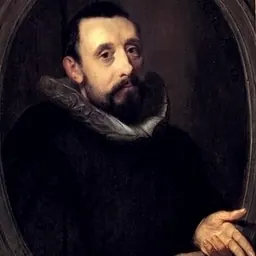
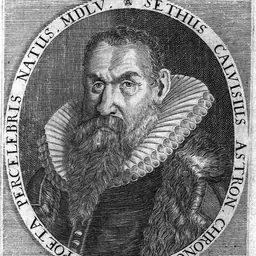

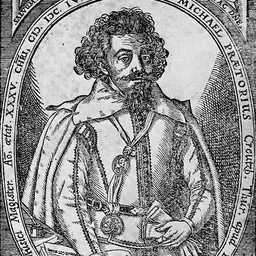
Contemporaries
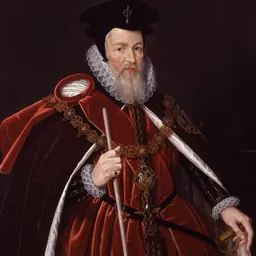
People whose lives overlapped Sebastian Aguilera de Heredia's




Frequently asked questions
Who was Sebastian Aguilera de Heredia?
Spanish monk, musician and composer
When was Sebastian Aguilera de Heredia born?
Sebastian Aguilera de Heredia was born in 1560 in Zaragoza.
When did Sebastian Aguilera de Heredia die?
Sebastian Aguilera de Heredia died in 1620 in Zaragoza.
What was Sebastian Aguilera de Heredia's occupation?
Sebastian Aguilera de Heredia was a composer and organist.
What nationality was Sebastian Aguilera de Heredia?
Sebastian Aguilera de Heredia was Spanish.
Sources & further reading
· Wikipedia: Sebastian Aguilera de Heredia
· DBpedia: Sebastian Aguilera de Heredia
Cite this page
APA: Biography.guide. (2026). Sebastian Aguilera de Heredia. https://biography.guide/sebastian-aguilera-de-heredia/
MLA: "Sebastian Aguilera de Heredia." Biography.guide, https://biography.guide/sebastian-aguilera-de-heredia/.
Chicago: "Sebastian Aguilera de Heredia." Biography.guide. https://biography.guide/sebastian-aguilera-de-heredia/.
Data last updated: 2026-09-20 · Spot an error? Report a correction.
Page generated 2026-09-27 05:12 UTC