
About Seaman Asahel Knapp
Lived 1833 – 1911 (aged 77). Seaman Asahel Knapp was an American agronomist.
Seaman Asahel Knapp (December 16, 1833 – April 1, 1911) was an American physician, college instructor, and administrator. —from 1883 to 1884; his interest in agricultural demonstration work began in 1886 when he moved to Louisiana and began developing a large tract of agricultural land in the western part of the state. He founded Vinton, Louisiana, naming the town after his hometown, Vinton, Iowa.
The boll weevil caused trouble for southern farmers after it entered the United States in 1892, creating an interest in farm demonstrations as a way to show farmers how to deal with the pest most effectively. This provided the foundations for formal Cooperative Extension work, which followed in 1914.
Knapp could neither persuade local farmers to adopt the techniques he had perfected on his farm, nor could he enlist farmers from the North to move to the region to help teach them. Thus, he decided to provide incentives for farmers to settle in each township on the condition that each would demonstrate the results of his farming methods to other farmers. Northern farmers began moving into the region, and native farmers began using Knapp's methods. By 1902, Knapp was employed by the government to promote good agricultural practices in the South.
In 1903, the U.S. Department of Agriculture hired Knapp to lead a response to an emergency caused by the boll weevil, which feeds on cotton and contributed to widespread crop losses. He planned to select a representative from each affected community to implement a recommended method for boll weevil control and demonstrate the results.
A farm demonstration at the Walter G. Porter farm, now a National Historic Landmark in Terrell, Texas, was set up by the Department of Agriculture at the urging of concerned merchants and growers. This demonstration of Knapp's techniques was the first in a series of steps that eventually led to the passage of the legislation that formalized Cooperative Extension work.
Knapp is commemorated in Washington, D.C., by a bridge linking the U.S. Department of Agriculture Administration Building to the U.S. Department of Agriculture South Building across Independence Avenue.
Death and legacy Seaman A. Knapp died in 1911, aged 77, and is interred at Iowa State University Cemetery, Ames, Iowa.
November 27, 1912 was named "Knapp Agricultural Day" in all public schools in memory of Knapp. His work continued to be recognized with special honors long after his death.
His son, Bradford Knapp, was the president of the Alabama Polytechnic Institute, now known as Auburn University, from 1928 to 1933, and the second president of Texas Tech University in Lubbock, Texas.
Don’t just read it —
keep it.
Full-length biographies made to live with: read them, listen on the way to work, watch them tonight.
- E-book
- Audio
- Video
Instant download · yours to keep · every purchase keeps this site free
Important facts
People in Seaman Asahel Knapp's life
Named in this biography and alive at the same time
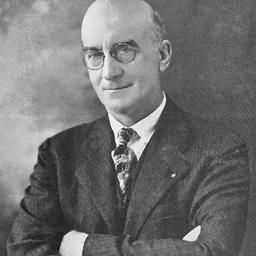
Related people
Same field, nearest in time
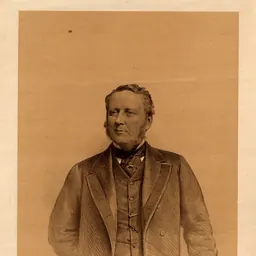

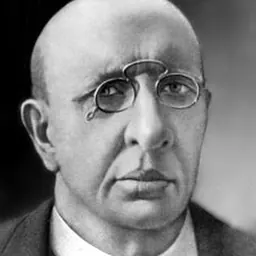

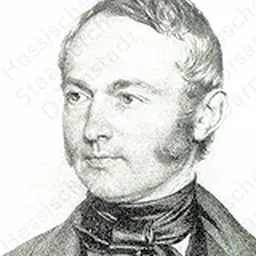
Contemporaries
People whose lives overlapped Seaman Asahel Knapp's



Frequently asked questions
Who was Seaman Asahel Knapp?
American university administrator (1833–1911)
When was Seaman Asahel Knapp born?
Seaman Asahel Knapp was born on 16 December 1833 in Schroon.
When did Seaman Asahel Knapp die?
Seaman Asahel Knapp died on 1 April 1911 in Washington, D.C..
What was Seaman Asahel Knapp's occupation?
Seaman Asahel Knapp was an agronomist.
What nationality was Seaman Asahel Knapp?
Seaman Asahel Knapp was American.
Sources & further reading
· Wikipedia: Seaman Asahel Knapp
Cite this page
APA: Biography.guide. (2026). Seaman Asahel Knapp. https://biography.guide/seaman-asahel-knapp/
MLA: "Seaman Asahel Knapp." Biography.guide, https://biography.guide/seaman-asahel-knapp/.
Chicago: "Seaman Asahel Knapp." Biography.guide. https://biography.guide/seaman-asahel-knapp/.
Data last updated: 2026-09-20 · Spot an error? Report a correction.
Page generated 2026-09-27 05:21 UTC