
About Scipione Gentili
Lived 1563 – 1616 (aged 52–53). Scipione Gentili was a jurist and university teacher.
Scipione Gentili (; 1563 – August 7, 1616) was an Italian law professor and a legal writer. One of his six brothers was Alberico Gentili, one of the fathers of international law.
Biography Born at San Ginesio, Scipione Gentili left Italy at the age of 16 when he had to emigrate together with his father and his brother Alberico because of their Protestant beliefs. Together with his brother and his father, he settled in England, and, in the early 1580s, published several books with the London printer John Wolfe, all dedicated to Sir Philip Sidney. Of them, the most important was a partial Latin translation of Torquato Tasso's Jerusalem Delivered. Scipione spent his life in Germany. He studied law at the universities of Tübingen, Wittenberg, Leiden, Heidelberg and Basel.
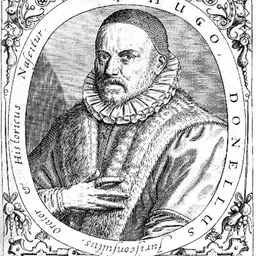
He reached the doctorate in 1589 and started to teach law at the university of Heidelberg. Quarrels with his Italian compatriot Giulio Pace made him leave Heidelberg and go to the German university in Altdorf bei Nürnberg. There, the famous jurist Hugues Doneau (Hugo Donellus, 1527–1591), who had been among his teachers at Leiden, procured him a professorship, which Scipione kept until his death.
While Alberico Gentili was, at least at the outset of his career, a staunch supporter of the traditional bartolist method of legal interpretation, Scipione was influenced by French jurists like Doneau and Jacques Cujas, who applied the methods of humanist philology to legal texts. Gentili's works, which fills eight quarto volumes in the 1763 edition, have not only legal writings but also wrote commentaries on St. Paul's Epistle to Philemon and on the Apologia of Lucius Apuleius as well as a translation into Latin of and Annotazioni (in Italian) on Torquato Tasso's epic Jerusalem Delivered. Among his legal works are two voluminous treatises De donationibus inter virum et uxorem (on donations between husband and wife, which were illegal and void under Roman law) and De jurisdictione (on jurisdiction). Gentili also edited the final part of Doneau's Commentarii de Iure Civili, thereby securing the completion of the influential work, which the author had not been able to finish before his death. Gentili rendered a similar service to his brother Alberico, whose Hispanica Advocatio he edited in 1613.
During his lifetime, Scipione Gentili was held in high esteem all over Europe. His fame probably even surpassed that of his brother. Pope Clement VIII is said to have offered him the possibility to return to Italy and to teach at Bologna without having to give up his Protestant beliefs, an offer that Gentili did not accept. However, after his death, Scipione Gentili was quickly forgotten. Unlike his brother Alberico, who was rediscovered in the 19th century, Scipione Gentili is still waiting for a re-evaluation of his work.
Don’t just read it —
keep it.
Full-length biographies made to live with: read them, listen on the way to work, watch them tonight.
- E-book
- Audio
- Video
Instant download · yours to keep · every purchase keeps this site free
Important facts
People in Scipione Gentili's life
Named in this biography and alive at the same time





Related people
Same field, nearest in time





Contemporaries
People whose lives overlapped Scipione Gentili's




Frequently asked questions
Who was Scipione Gentili?
Italian legal scholar
When was Scipione Gentili born?
Scipione Gentili was born in 1563 in San Ginesio.
When did Scipione Gentili die?
Scipione Gentili died on 7 August 1616 in Altdorf bei Nürnberg.
What was Scipione Gentili's occupation?
Scipione Gentili was a jurist and university teacher.
Sources & further reading
Cite this page
APA: Biography.guide. (2026). Scipione Gentili. https://biography.guide/scipione-gentili/
MLA: "Scipione Gentili." Biography.guide, https://biography.guide/scipione-gentili/.
Chicago: "Scipione Gentili." Biography.guide. https://biography.guide/scipione-gentili/.
Data last updated: 2026-09-20 · Spot an error? Report a correction.
Page generated 2026-09-27 05:22 UTC