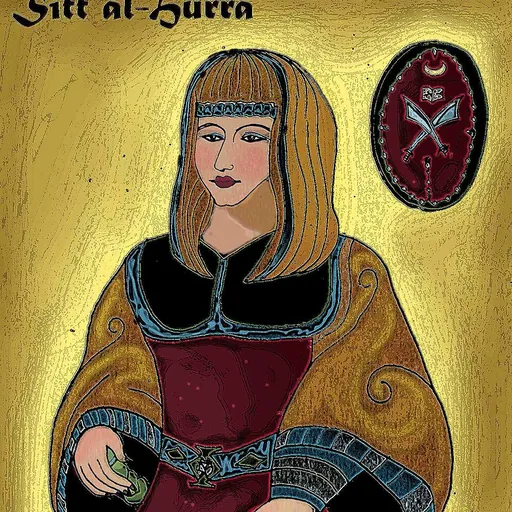
Sayyida al-Hurra
16th-century Moroccan ruler of Tétouan and privateer
About Sayyida al-Hurra
Lived 1485 – 1561 (aged 75–76). Sayyida al-Hurra was a Moroccan politician, sultana and privateer.
issue = issue_link = issue_pipe = father = Ali ibn Rashid al-Alami mother = Lalla Zohra Fernandez signature = religion = Sunni Islam succession1 = Governor of Tétouan reign_type1 = Rule reign1 = 1515/1519 – 1542 pre_type1 = Predecessor predecessor1 = Sidi al-Mandri II dynasty = Wattasid (by marriage)
Lalla ʿĀʾisha bint ʿAlī ibn Rāshid al-ʿAlamī , commonly known as Sayyida al-Ḥurra (, ), was a Moroccan privateer who governed the city of Tétouan from 1515 to 1542. Likewise, there is a lot of discussion surrounding her death; some say she died in 1552, while others place her death a decade later (1561, 1562).
The era of her life and career was largely marked by a widespread struggle between the Christian world and the Muslim world: the Ottoman Empire had conquered Constantinople in 1453, ending the Eastern Byzantine Empire; the Portuguese Empire had begun conquering ports along the western Moroccan coast around 1487; and the Reconquista had returned the Iberian Peninsula to European Christian rule by 1492, eventually leading to the expulsion or forced conversion of Muslims in Spain.
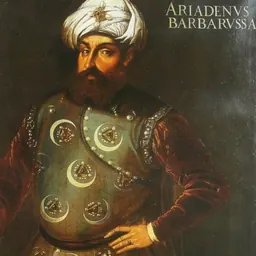
Al-Hurra split control over the Mediterranean Sea with her ally Hayreddin Barbarossa, an Ottoman corsair who operated in the east while she operated in the west. In 1515, she became the last person in Muslim history to legitimately hold the title "al-Hurra" following the death of her first husband Sidi al-Mandri II, who ruled Tétouan. Her marriage to her second husband marks the only time in Moroccan history that a king married away from the capital city Fez, as al-Hurra refused to leave Tétouan. to a prominent Muslim family of Andalusian nobles, who were expelled to Morocco after the fall of Granada, at the end of the Reconquista and settled in Chefchaouen.
Sayyida's childhood was happy and secure, yet clouded by constant reminders of the forced exile from Granada. During her childhood, she was exposed to a first-class education, and involved with the fate of her people. She was fluent in several languages which included Castilian Spanish and Portuguese. The famous Moroccan scholar Abdallah al-Ghazwani was one of her many teachers. She was promised to her husband when she was still a child.
Career
Governor of Tétouan An intelligent woman, Al Hurra learned much whilst assisting her husband in his business affairs. She was a de facto vice-governor, with her husband entrusting the reins of power to her each time he made a trip outside the city. When he died in 1515, the population, who had become accustomed to seeing her exercise power, accepted her as a governor of Tétouan, giving her the title of al-Hurra. From Tétouan al-Hurra held a strategic position not only for helping Moorish refugees, but also in enabling the city to become a privateering hub.
Spanish and Portuguese sources describe al-Hurra as "their partner in the diplomatic game".
In 1541, she accepted a marriage proposal from Ahmed al-Wattasi, a Sultan of the Moroccan Wattasid dynasty, who traveled from Fez to Tétouan to marry her. Her marriage with him was the only recorded instance of a Moroccan king marrying outside of his capital. This occurred because al-Hurra was not ready to give up her role as ruler of Tétouan or even to leave the city for the marriage ceremony, forcing al-Wattasi to come to her. Besides the unique choice for the location of their marriage ceremony, it was an uncommon practice for a man to marry a widowed woman.
Barbary piracy Coming from Andalusian beginnings, Sayyida became a true symbol for the Northern Moroccan frontier in the ongoing struggle against the Iberian expansionism. According to the Yemen Times, "she was stripped of her property and power".
Legacy Muslim female historical figures such as Sayyida al-Hurra, despite their prominence are often reduced to historical footnotes, or even written out of history.
Don’t just read it —
keep it.
Full-length biographies made to live with: read them, listen on the way to work, watch them tonight.
- E-book
- Audio
- Video
Instant download · yours to keep · every purchase keeps this site free
Important facts
Family & relationships
People in Sayyida al-Hurra's life
Named in this biography and alive at the same time
Related people
Same field, nearest in time


Contemporaries
People whose lives overlapped Sayyida al-Hurra's

Frequently asked questions
Who was Sayyida al-Hurra?
16th-century Moroccan ruler of Tétouan and privateer
When was Sayyida al-Hurra born?
Sayyida al-Hurra was born in 1485 in Chefchaouen.
When did Sayyida al-Hurra die?
Sayyida al-Hurra died in 1561 in Chefchaouen.
What was Sayyida al-Hurra's occupation?
Sayyida al-Hurra was a politician, sultana and privateer.
What nationality was Sayyida al-Hurra?
Sayyida al-Hurra was Moroccan.
Sources & further reading
Cite this page
APA: Biography.guide. (2026). Sayyida al-Hurra. https://biography.guide/sayyida-al-hurra/
MLA: "Sayyida al-Hurra." Biography.guide, https://biography.guide/sayyida-al-hurra/.
Chicago: "Sayyida al-Hurra." Biography.guide. https://biography.guide/sayyida-al-hurra/.
Data last updated: 2026-09-24 · Spot an error? Report a correction.
Portrait: Wikimedia Commons · author & licence
Page generated 2026-09-27 05:08 UTC