
About Satyen Barkataki
Lived 1908 – 1984 (aged 75–76). Satyen Barkataki was a writer.
Satyendra Nath Barkataki (1 September 1908 – 1984) was both the first Indian superintendent of the Lushai Hills district (now Mizoram) and the final one. Shortly after becoming superintendent his role would transition into a deputy commissioner. He was an Assamese civil servant who worked in multiple administrative roles from 1933 to 1968. He also authored books in both Assamese and English.
Early life Barkataki was born to Raisaheb Durgadhar Barkataki, a divisional inspector of Schools. His mother was Kalmini Devi. On his mother's side he claimed lineage to Anandaram Dhekial Phukan. He had a brother, Munin Barkataki, and was brother-in-law to Renuka Devi Barkataki.
Barkataki entered the Jorhat Government High School in 1917 and graduated in 1925. After matriculation he studied four years in the Presidential College Calcutta. He would pass BA with Honours in English in 1929. Barkataki was offered a scholarship to study abroad. However, due to his father's early retirement, bad financial investments and spending his savings to publish the Mahabharat in Assamese, the other expenses for studying abroad could not be fulfilled. This caused depression in Barkataki and nearly give up on his studies. He studied in Dacca University temporarily before leaving a month later and roaming north India for a full year. In 1930, Barkataki made a decision to study Law to become an advocate. Since the law course in Bombay was two years compared to three in Calcutta, Barkataki enrolled in Bombay. Barkataki studied for two years in the Government Law College, Bombay. He would also attend cases where Muhammad Ali Jinnah would work as a barrister. Barkataki would leave his education unfinished and enter the civil service in 1933.
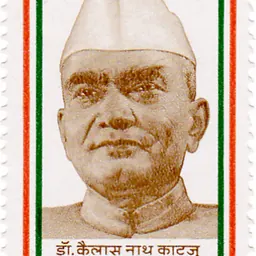
The southern Lushai Hills were more closely integrated with eastern Bengal and the Arakan Hills rather than Assam and the North Lushai Hills. The main trade route was from Chittagong, which was historically in Lunglei. After partition the routes were essentially closed in the southern Lushai Hills and economically declining the region. The economy of the southern Lushai Hills relied on coolies and government assistance. The road project began on Republic Day 1950. Barkataki worked towards a road construction project on a self-help basis. The project was featured in news article but Barkataki accredited the Assam Rilfes Colonel, the Political Assistant and Engineer. The volunteers for the project came out to work outside of the harvest and busy jhumming periods. The road was 128 miles which linked Aizawl and Lunglei. The road was built with voluntary labour from the Mizos who built 90 miles of the road themselves. The slogan "see it through to Lungleh" was used throughout the project. The project was completed with an estimated equivalent of 1 crore worth of work. The first shovelling was ceremoniously performed by Reverend E.L. Mendus of the Welsh Mission in Aizawl. The road was designed for jeep traffic. A majority of volunteers were from the Assam Rifles Lushai Hills battalion. The home minister of India, Dr. Kailash Nath Katju, took a tour of the Lushai Hills and declared the project the ideal of India. The Lushai Hills had not seen a wheeled vehicle until World War Two and had only once route from Cachar. In an interview, Barkataki learnt the Mizo customs and discovered the impromotu roads to be near to the village jhums with churches, schools and clubhouses throughout the district. Barkataki realized the community centres of the Lushai Hills synergized with the cultural value of Tlawmgaihna. This led to the creation of the road project throughout the district.
In another event, a minister visited the Lushai Hills district. Barkatati arranged the minister to meet with a chief who arranged zu as a beverage. However, the minister refused and commented, "I never touch such things". Barkataki encouraged the minister to drink out of respect, but the minister made a scene in defiance. As a result, Barkataki poured himself a glass of zu and the secretary accompanying the minister while arranging tea for the minister instead. After sniffing the zu, the minister asked how much alcohol would induce drunkenness. In response Barkataki explained that the zu is treated like water with little effect. As a result, the minister did consume an amount of zu.
After the Mizo Union came to power in the district council several laws were passed to repeal chieftainship. Barkataki described the Mizo Union as a strong leftist party who viewed chiefs as reactionary institutions blocking progress. Bishnuram Medhi, who supported chieftainship, attempted to preserve it but failed. Barkataki exclaimed that the four years in Mizoram was the happiest years in his service life. He admired the qualities of cheerfulness, humour, hospitality, courage and truthfulness among the Mizos which he found had lacked in other era of his career. He appraised Tlawmgaihna as a respectable civic sense.
Naga Hills The increase in demand for Naga independence led to Barkataki being reassigned to the Naga Hills district. Within a few months, Zapu Phizo and his supporters termed Barkataki as the Plains Tiger of Assam. At the time the Naga Hills was in a state of turmoil. Barkataki did not see the issue as a political one but one of law and order. Barkataki was of the opinion that Phizo and the Naga National Council had a serious belief in independence but a majority of its members were careerists and opportunists who would terrorize and tax the villages.
However, Barkataki's career in the Naga Hills did not last long. He was transferred to the capital as Director of Supply before the year ended.
Later career After becoming Directory of Supply, Baraktaki was appointed Secretary to the Government in the Education and Medical Departments. In 1955 he received an offer from the Government of India to join the International Commission for Supervision and Control in Vietnam as Political Adviser to the Indian Delegation to the commission. This would be a diplomatic role as opposed to an administrative role in his career. Barkataki stated that the work in this role did not suit his temperament. He worked for 8 months in Hanoi, Vietnam before being transferred to Vientiane in Laos as Conference Secretary to the International Commission. He was later appointed Deputy Secretary General for another year.
After the commission in Laos was finished in 1958, he was appointed administrators in Mahe in Pondocherry which was de-jure French India. During this role the workload was intsenly light and afford a lot of time for Baraktaki to indulge into writing and publishing. After Mahe, Baraktaki became Secretary to the Government of Ponidcherry. However, in 1961 Baraktaki was recalled back to Assam as the Hills Division Commissioner. This role was also light in work allowing Barktaki to publish books in the hill tribes of the northeast Indian regions. He maintained the role for four years. Barkataki during this tenure also oversaw the humanitarian crisis of the Chakma refugees crossing into the Mizo district and the Garo Hills. During his tenure, Barkataki in a report submitted in 1963 discusses regional tensions in Assam. He classified the issues under three categories: Hindu-Muslim, Assamese-Bengali and Hills-Plains. He argued the Assamese Bengali issue to be a historical issue perpetuated by the British administrations. The Hills-Plains issue was seen as a consequence of the sixth schedule which differentiated the northeast from the Indian Union. Issues such as the Assamese Language Crisis, the Hill State demands aggravated tensions. Baraktaki mentioned in the report that the Mizo National Front at the time was not a force worth taking seriously as they did poorly in the general elections. The lack of infrastructure and connections with the wider Indian community was also a cause for concern as they isolated the northeast and cut off communication. Barkataki advocated improvement in education and building of schools to integrate the hill tribes academically. Baraktaki was against involving the military in the northeast as he argued that most issues are a law and order issue. He advocated for military withdrawal from the hill states instead. The Hindu Muslim issue was seen as a communal issue that could intensify into a regional one. East Pakistani refugees however continued to enter Assam during the era and this became a cause of concern for the Assamese.
In April 1965, Barkataki was appointed Chairman of the Assam Public Service Commission, which he served until retirement. Barkataki retired from the IAS in September 1968.
Later life Barkataki began a multi-purpose farm specialising in pigs, poultry, fishery and cattle. However the project failed with serious financial loss. After closing the farm Barkataki committed to becoming a full time writer. In 1983 he would undergo a critical surgery. He would die in 1984 shortly after.
Publications Escapades of a Magistrate (1961) Fool Bibi (1961) Post Magisterial Assam (1969) Tribes of Assam (1969) Tribal Folk-tales of Assam-hills (1970) The Life of Napoleon (1977) Adolf Hitler The Khasis (1977)
Don’t just read it —
keep it.
Full-length biographies made to live with: read them, listen on the way to work, watch them tonight.
- E-book
- Audio
- Video
Instant download · yours to keep · every purchase keeps this site free
Important facts
People in Satyen Barkataki's life
Named in this biography and alive at the same time

Related people
Same field, nearest in time




Contemporaries
People whose lives overlapped Satyen Barkataki's


Frequently asked questions
Who was Satyen Barkataki?
assamese civil servant (1908-1984)
When was Satyen Barkataki born?
Satyen Barkataki was born on 1 September 1908.
When did Satyen Barkataki die?
Satyen Barkataki died in 1984.
What was Satyen Barkataki's occupation?
Satyen Barkataki was a writer.
Sources & further reading
Cite this page
APA: Biography.guide. (2026). Satyen Barkataki. https://biography.guide/satyen-barkataki/
MLA: "Satyen Barkataki." Biography.guide, https://biography.guide/satyen-barkataki/.
Chicago: "Satyen Barkataki." Biography.guide. https://biography.guide/satyen-barkataki/.
Data last updated: 2026-09-20 · Spot an error? Report a correction.
Page generated 2026-09-27 05:31 UTC