
About Sardul Singh Guraya
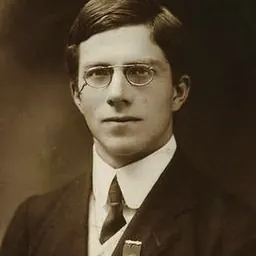
Lived 1930 – 2012 (aged 81). Sardul Singh Guraya was an Indian biologist, zoologist, physiologist and university teacher.
Sardul Singh Guraya (12 October 1930 – 8 July 2012) was an Indian biologist, known for his contributions in the fields of reproductive physiology and Developmental biology. He was an elected fellow of the Indian National Science Academy, National Academy of Sciences, India and National Academy of Agricultural Sciences. The Council of Scientific and Industrial Research, the apex agency of the Government of India for scientific research, awarded him the Shanti Swarup Bhatnagar Prize for Science and Technology, one of the highest Indian science awards, in 1973, for his contributions to biological sciences.
Biography Sardul Singh Guraya was born on 12 October 1930 to Banta Singh Guraya and Nihal Kaur at Kot Majlas village in Gurdaspur district of Punjab in British India. He graduated in science (BSc hons) in 1954 from Punjab University from where he also obtained his master's (MSc) and doctoral (PhD) degrees in 1956 and 1959 respectively and started his career as an assistant professor at Gorakhpur University in 1960. Two years later, he moved to the US and did his post doctoral studies at the Population Council from 1962 to 1964. Returning to India in 1965, he joined the Council of Scientific and Industrial Research as a pool officer and stayed at the council for one year till he returned to academics as the reader of Mohanlal Sukhadia University (then known as Udaipur University) in 1966. His next move was as a professor to Punjab Agricultural University in 1971 where he served out his career till his superannuation in 1992; in between, holding the positions of the dean of the College of Basic Sciences and Humanities and of the director of Advance Regional Research Center in Reproductive Biology (an Indian Council of Medical Research sponsored initiative) from 1982 to 1991. During the course of his career, he secured a Doctor Science degree from Punjab University, Chandigarh in 1971. His studies dealt with the correlation between the structure and function of reproductive organs and elucidated its evolutionary aspects, with special emphasis on the ovarian and testicular compartments. His findings on the developmental traits of crops was reported to have assisted in crop improvement with regard to disease resistance, productivity and grain quality. He published his research findings in several articles and over 10 books; PubMed, an online article repository has listed 215 of his articles. His body of work includes The Cell and Molecular Biology of Fish Oogenesis, Cellular and Molecular Biology of Gonadal Development and Maturation in Mammals: Fundamentals and Biomedical Implications, Comparative Cellular and Molecular Biology of Ovary in Mammals: Fundamental and Applied Aspects, Comparative Cellular and Molecular Biology of Testis in Vertebrates: Trends in Endocrine, Paracrine, and Autocrine Regulation of Structure and Functions, Cellular And Molecular Biology For Human, (all on Cell and Molecular biology), Biology of Spermatogenesis and Spermatozoa in Mammals, Biology of Spermatogenesis and Spermatozoa in Mammals, Buffalo bull semen: morphology, biochemistry, physiology and methodology (all on spermatogenesis) and Rodents: ecology, biology and control. He was associated with national and international organizations such as World Health Organization, UNESCO, Indian Council of Medical Research, Indian Council of Agricultural Research, Council of Scientific and Industrial Research and the University Grants Commission and served as the member of the council of Indian National Science Academy (INSA) from 1986 to 1988. He was also a member of the editorial boards of Journal of Biosciences, Himalayan Journal of Environment and Zoology and the journals of the INSA. he was elected as a fellow by the Indian Academy of Sciences in 1975 and by the Indian National Science Academy in 1980. He was also a fellow of the National Academy of Agricultural Sciences. His biography has been included in the volume 40 of the Biographical memoirs of fellows of the Indian National Science Academy, published by INSA in 2013.
Selected bibliography
Books
Articles
Don’t just read it —
keep it.
Full-length biographies made to live with: read them, listen on the way to work, watch them tonight.
- E-book
- Audio
- Video
Instant download · yours to keep · every purchase keeps this site free
Important facts
People in Sardul Singh Guraya's life
Named in this biography and alive at the same time

Related people
Same field, nearest in time


Contemporaries
People whose lives overlapped Sardul Singh Guraya's

Frequently asked questions
Who was Sardul Singh Guraya?
Indian biologist (1930-2012)
When was Sardul Singh Guraya born?
Sardul Singh Guraya was born on 12 October 1930 in Sialkot District.
When did Sardul Singh Guraya die?
Sardul Singh Guraya died on 8 July 2012.
What was Sardul Singh Guraya's occupation?
Sardul Singh Guraya was a biologist, zoologist, physiologist and university teacher.
What nationality was Sardul Singh Guraya?
Sardul Singh Guraya was Indian.
Sources & further reading
· Wikipedia: Sardul Singh Guraya
· DBpedia: Sardul Singh Guraya
Cite this page
APA: Biography.guide. (2026). Sardul Singh Guraya. https://biography.guide/sardul-singh-guraya/
MLA: "Sardul Singh Guraya." Biography.guide, https://biography.guide/sardul-singh-guraya/.
Chicago: "Sardul Singh Guraya." Biography.guide. https://biography.guide/sardul-singh-guraya/.
Data last updated: 2026-09-20 · Spot an error? Report a correction.
Page generated 2026-09-27 05:11 UTC