
Sarah Tuttle
Assistant professor of astrophysics
About Sarah Tuttle
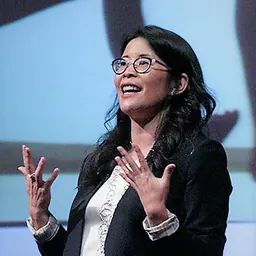
Sarah Tuttle was an American science communicator, astrophysicist, university teacher and podcaster.
Sarah Tuttle is an astrophysicist and assistant professor of astrophysics at the University of Washington. Tuttle builds spectrographs to detect nearby galaxies, including work on VIRUS (the Visible Integral-field Replicable Unit Spectrograph) installed on McDonald Observatory's Hobby–Eberly Telescope to study dark energy, and FIREBall (Faint Intergalactic medium Redshifted Emission Balloon), the world's first fiber fed ultraviolet spectrograph. studied physics at the University of California, Santa Cruz and graduated with a B.Sc in 2001. From 2001 to 2002, she worked for Add-Vision in Scotts Valley as a research scientist,
Tuttle received a M.Sc and M.Phil in astronomy from Columbia University in 2006 and 2007, and obtained her Ph.D in 2010, Tuttle built the world's first fiber fed ultraviolet spectrograph, which launched on FIREBall in 2009.
Research and career
Tuttle's research applies novel hardware approaches to spectrograph instrumentation design, particularly aimed to isolate star formation regulation in galaxies through emission and infall from the interstellar medium.
During her Ph.D. at Columbia, Tuttle built the spectrograph for FIREBall, a balloon-borne telescope that is coupled to an ultraviolet spectrograph and designed to discover the intergalactic medium (IGM) in emission. The instrument consists of 156 spectroscopic channels fed by 34944 fiberoptic channels, covering a 22 arcminute field of view. Tuttle and her colleagues' current astrophysics work still utilizes VIRUS data.
In 2016 she joined the University of Washington as an assistant professor.
Her science-outreach work includes appearances on the podcast 365 Days of Astronomy in 2009 and writing for The Toast in 2014. She regularly appears as an astronomy expert in articles in The Seattle Times, The Mercury News and Gizmodo. In 2014, the National Academy of Sciences honored her as a Kavli Fellow. Tuttle has also contributed to American Astronomical Society workshops and supported new guidelines to build a more diverse and inclusive environment.
Activism Tuttle was a board member and hotline operator for the Lilith Fund until 2016, a reproductive-rights nonprofit that provides Texas women with financial support for obtaining abortions. She currently serves on the board of Kadima, a Seattle-based Reconstructionist Jewish community.
Her 2015 response to Tim Hunt's statements about women in the laboratory drew international coverage and was featured on BuzzFeed. In an interview with Chanda Prescod-Weinstein during the buildup to the 2017 March for Science, The Washington Post cited a group statement by Tuttle, Prescod-Weinstein and Joseph Osmundson on The Establishment.
She has produced numerous studies on the gender bias within astrophysics, including one published in Nature in 2017 which found women's 1st author papers receive 10% fewer citations than similar papers led by male 1st authors. She furthermore emphasizes the importance of supporting scientists from underrepresented groups.
Don’t just read it —
keep it.
Full-length biographies made to live with: read them, listen on the way to work, watch them tonight.
- E-book
- Audio
- Video
Instant download · yours to keep · every purchase keeps this site free
Important facts
Related people
Same field, nearest in time




Frequently asked questions
Who was Sarah Tuttle?
assistant professor of astrophysics
When was Sarah Tuttle born?
Sarah Tuttle was born in Santa Cruz.
What was Sarah Tuttle's occupation?
Sarah Tuttle was a science communicator, astrophysicist, university teacher and podcaster.
What nationality was Sarah Tuttle?
Sarah Tuttle was American.
Sources & further reading
Cite this page
APA: Biography.guide. (2026). Sarah Tuttle. https://biography.guide/sarah-tuttle/
MLA: "Sarah Tuttle." Biography.guide, https://biography.guide/sarah-tuttle/.
Chicago: "Sarah Tuttle." Biography.guide. https://biography.guide/sarah-tuttle/.
Data last updated: 2026-09-20 · Spot an error? Report a correction.
Page generated 2026-09-27 05:34 UTC