
About Sarah Knox-Goodrich
Lived 1825 – 1903 (aged 78). Sarah Knox-Goodrich was an American suffragist and women's rights activist.
Sarah L. Knox-Goodrich (February 14, 1825 – October 30, 1903) was a women's rights activist who worked for women's suffrage in California in the late nineteenth century. Her first husband, William Knox, was a business man, banker, and state politician. Her second husband, Levi Goodrich, was an architect in Southern California. Knox-Goodrich used her wealth and her social position to push for equal employment, school suffrage, and voting rights.
Biography Sarah Louise Browning was born in Culpepper County, Virginia, U.S., on February 14, 1825, the daughter of William Winston Browning and Sarah Smith Farrow. When Sarah was 11, her family moved to a farm in Lincoln County, Missouri.
Marriage to William James Knox William J. Knox was born October 20, 1820, near Hopkinsville, Christian County, Kentucky, and married Sarah Browning on April 1, 1846. In 1850, they traveled to Nevada City, California by wagon train. Knox went into business selling water to gold miners during the California gold rush. In 1854, Knox was elected to the California Assembly.
In 1862, the Knoxes moved to San Jose in 1864. Knox was a co-founder and president of Santa Clara County's first bank. He was elected State Senator for Santa Clara county and, in 1866, introduced Senate Bill No. 252 that gave married women the right to control their own estate.
Knox died in San Francisco on November 13, 1867.
Marriage to Levi Goodrich Levi Goodrich was born in New York City on January 1, 1822. He studied architecture in the studio of R. G. Hatfield in New York before moving to San Jose in 1849. Goodrich was one of the first licensed architects in California. The buildings he designed include the Santa Clara County Courthouse and jail, the State Normal School, the Bank of San Jose, and the courthouses of Monterey and San Diego counties. Goodrich died in 1886 in San Diego.
Knox-Goodrich died on October 30, 1903, at her home, leaving an estate worth more than $500,000. She is buried between her two husbands.
Suffragist activities Knox-Goodrich had wealth and social position, and used them both in state campaigns for equal employment, school suffrage, protests of taxation without representation, and voting rights. Clara Shortridge Foltz, the first female lawyer on the West Coast, said of her, "Mrs. Knox is a widow of commanding personal appearance, an abundance of bank stock, and a wealth of . . . common sense, which she displayed at the polls on last Wednesday by protesting against 'taxation without representation.'"
Knox-Goodrich worked with her first husband in getting the Senate Bill 252 passed in the state legislature. On the Fourth of July in 1876, Knox, "determined to make a manifestation", filled her carriage with prominent friends carrying signs that read "We are the disfranchised Class", "We are Taxed without being Represented", and "We are governed without our Consent". In 1877, Knox-Goodrich nominated herself for an Assembly seat.
The petition failed.
Knox-Goodrich was an officer in the California Suffrage Constitutional Amendment Campaign Association (formed in 1895) and the joint campaign committee (formed in 1896). Both committees were formed to direct and support the campaign to amend the California state constitution, giving women the vote. Knox-Goodrich hosted Susan B. Anthony at her home, and then accompanied Anthony to Sacramento as a member of the woman suffrage delegation for the state Republican convention.
Knox-Goodrich was a frequent contributor to Woman's Journal, the San Jose Mercury, and the New Northwest. website = mpsub =
Knox-Goodrich commissioned a building on property left to her by her first husband. The building, designed by George W. Page, was commercial on the first floor, and a rooming house on the second and third floors. Its Romanesque Revival features include rusticated masonry walls, massive stone piers, carved stone detailing, and Byzantine capitals. There is a parapet over the third-floor windows with a carved 'G' and a 'K' intertwined, and the date '1889' is carved over the second story windows.
A plaque on the building states,
In 2019, the building was purchased by Urban Catalyst as part of a development plan for the Fountain Alley area. The project includes construction of a mixed retail/office building that will renovate the Knox-Goodrich building and incorporate it as an entrance.
Don’t just read it —
keep it.
Full-length biographies made to live with: read them, listen on the way to work, watch them tonight.
- E-book
- Audio
- Video
Instant download · yours to keep · every purchase keeps this site free
Important facts
People in Sarah Knox-Goodrich's life
Named in this biography and alive at the same time




Related people
Same field, nearest in time

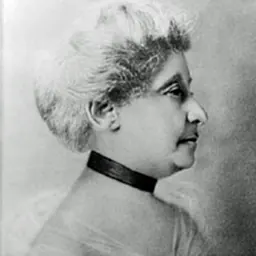

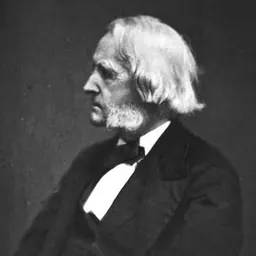
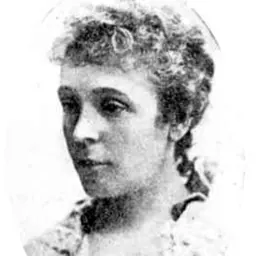
Contemporaries
People whose lives overlapped Sarah Knox-Goodrich's



Frequently asked questions
Who was Sarah Knox-Goodrich?
American suffragist
When was Sarah Knox-Goodrich born?
Sarah Knox-Goodrich was born on 14 February 1825 in Culpeper County.
When did Sarah Knox-Goodrich die?
Sarah Knox-Goodrich died on 30 October 1903 in San Jose.
What was Sarah Knox-Goodrich's occupation?
Sarah Knox-Goodrich was a suffragist and women's rights activist.
What nationality was Sarah Knox-Goodrich?
Sarah Knox-Goodrich was American.
Sources & further reading
· Wikipedia: Sarah Knox-Goodrich
· DBpedia: Sarah Knox-Goodrich
Cite this page
APA: Biography.guide. (2026). Sarah Knox-Goodrich. https://biography.guide/sarah-knox-goodrich/
MLA: "Sarah Knox-Goodrich." Biography.guide, https://biography.guide/sarah-knox-goodrich/.
Chicago: "Sarah Knox-Goodrich." Biography.guide. https://biography.guide/sarah-knox-goodrich/.
Data last updated: 2026-09-22 · Spot an error? Report a correction.
Page generated 2026-09-27 05:23 UTC