
About Sarah Brown Ingersoll Cooper
Lived 1835 – 1896 (aged 60). Sarah Brown Ingersoll Cooper was an American teacher, writer, evangelist, philanthropist, civil rights advocate and abolitionist.
Sarah Brown Ingersoll Cooper (December 12, 1835 – December 11, 1896) was an American educator, author, evangelist, philanthropist, and civic activist. She is remembered as a religious teacher and for her efforts to increase the interest in kindergarten work. Cooper was the first president of the International Kindergarten Union, president of the National Kindergarten Union, president and vice-president of the Woman's Press Association, president of the Woman's Suffrage Association, and president of the Woman's Christian Temperance Union.
She was vice-president of the Century Club, treasurer of the World's Federation of Woman's Clubs, a director of the Associated Charities, and one of the five women elected to the Pan-Republican Congress. At the 1893 World's Fair, she delivered thirty-six addresses, and on her return, helped to organize the Woman's Congress of which she was president for two years and at the time of her death. Several years before her death, Cooper became a convert to equal suffrage and was president of the Amendment Campaign Committee. Col. Robert G. Ingersoll was a cousin.
When twelve years old, she appeared in print in the village paper, the Madison County Whig, and from that time, she was more or less engaged in literary work on papers and magazines. When but fourteen years of age, she opened a Sunday-school class in Eagle Village, from Cazenovia, and that class was the start of what became a church congregation. When she started the school, some of the committeemen came to her and told her that, while they believed her to be qualified in every way to teach, at the same time they would all like it better if she would go home and lengthen her skirts.
She was graduated from the Cazenovia Seminary in 1853, the first coeducational institution in the U.S., and numbering among its graduates Leland Stanford, Phillip Armour, and Charles Dudley Warner—all lifelong friends of Mrs. Cooper. They settled briefly in Washington, D.C., then moved to Memphis, Tennessee in 1863, where Mr. Cooper was appointed assessor of internal revenue. There, Mrs. Cooper was elected president of the Society for the Aid of Refugees. She taught a large Bible class, which comprised from 100 to 300 soldiers. In 1864, after Mollie died, Mrs. Cooper began to suffer from depression and illness. For two years, she attempted to recuperate in Saint Paul, Minnesota. She recovered when the family moved to San Francisco, California in 1869, where Mr. Cooper worked for the IRS.
In 1882, Mrs. Leland Stanford, who had been an active helper in the work from the very first, dedicated a large sum for the establishment of free kindergartens, in San Francisco and in adjacent towns, in memory of her son. Then other memorial kindergartens were endowed. By 1892, 32 kindergartens were under the care of Mrs. Cooper and her daughter, Harriet. Over was donated to Mrs. Cooper to carry on this work in San Francisco, and over 10,000 children were trained in these schools. Her notable and historical trial for heresy in 1881 made her famous as a religious teacher and did much to increase the wide interest in her kindergarten work. Mrs. Cooper is a philanthropist and devotes all her time to benevolent work.
Cooper served as a director of the Associated Charities, vice-president of the Pacific Coast Women's Press Association, member of the Century Club and the leader of one of the largest Bible classes in the United States. Considered to be one of the best-known and best-loved women on the Pacific coast, she was elected a member of the Pan-Republic Kindergarten Congress of 1893, one of five women of the world who had that distinguished honor, along with Mary Simmerson Cunningham Logan, Mary Virginia Ellet Cabell, president of the Daughters of the American Revolution, Frances Willard, and Clara Barton, of the American Red Cross. She was also a speaker while at the World's Columbian Exposition (Chicago, 1893).
She was elected treasurer of the World's Federation of Women's Clubs in 1894.
In 1895, she served as president of the National Kindergarten Union. She was the first president of the International Kindergarten Union.
Personal life In 1879, Halsey lost his job as Deputy Surveyor and the family suffered financial difficulties. As a result of the strain, he committed suicide in 1885. After attempting to clear her husband's name, Sarah continued her philanthropic career. She taught both the Bible School and Kindergarten, and was involved with women's rights groups. Her daughter, Harriet had quit her teaching job to assist Sarah, but suffered from bouts of depression, especially following the death of her father. Harriet asphyxiated her mother and herself on December 11, 1896, by turning on the gas, with suicidal intent, after her mother (who would have turned 61 the following day) had fallen asleep.
Don’t just read it —
keep it.
Full-length biographies made to live with: read them, listen on the way to work, watch them tonight.
- E-book
- Audio
- Video
Instant download · yours to keep · every purchase keeps this site free
Important facts
People in Sarah Brown Ingersoll Cooper's life
Named in this biography and alive at the same time
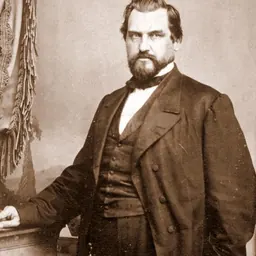
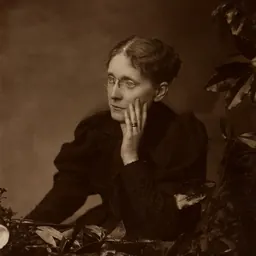
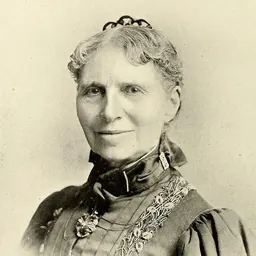
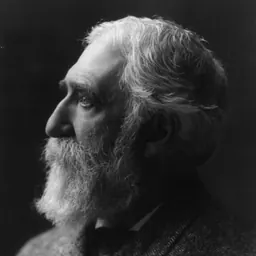



Related people
Same field, nearest in time


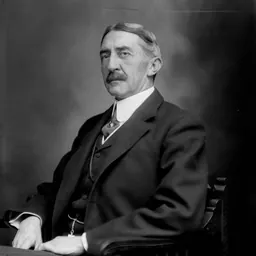
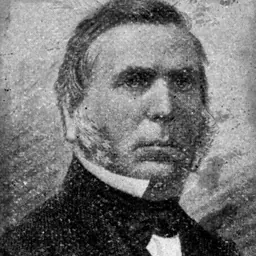
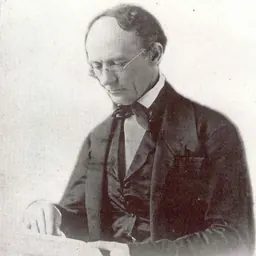
Contemporaries
People whose lives overlapped Sarah Brown Ingersoll Cooper's




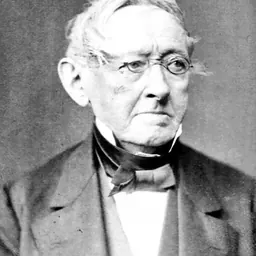

Frequently asked questions
Who was Sarah Brown Ingersoll Cooper?
American educator, author, evangelist, philanthropist, civic activist, suffragist (1835-1896)
When was Sarah Brown Ingersoll Cooper born?
Sarah Brown Ingersoll Cooper was born on 12 December 1835 in Cazenovia.
When did Sarah Brown Ingersoll Cooper die?
Sarah Brown Ingersoll Cooper died on 11 December 1896.
What was Sarah Brown Ingersoll Cooper's occupation?
Sarah Brown Ingersoll Cooper was a teacher, writer, evangelist, philanthropist, civil rights advocate and abolitionist.
What nationality was Sarah Brown Ingersoll Cooper?
Sarah Brown Ingersoll Cooper was American.
Sources & further reading
· Wikipedia: Sarah Brown Ingersoll Cooper
· DBpedia: Sarah Brown Ingersoll Cooper
Cite this page
APA: Biography.guide. (2026). Sarah Brown Ingersoll Cooper. https://biography.guide/sarah-brown-ingersoll-cooper/
MLA: "Sarah Brown Ingersoll Cooper." Biography.guide, https://biography.guide/sarah-brown-ingersoll-cooper/.
Chicago: "Sarah Brown Ingersoll Cooper." Biography.guide. https://biography.guide/sarah-brown-ingersoll-cooper/.
Data last updated: 2026-09-20 · Spot an error? Report a correction.
Page generated 2026-09-27 05:30 UTC