
About Santu Casanova
Lived 1850 – 1936 (aged 86). Santu Casanova was a French writer and poet.
Santu Casanova is a Corsican poet originally from Riventosa on his father's side and Arbori on his mother's side. He was born on July 3, 1850 in Azzana and died in Livorno (Italy) on December 27, 1936. His ashes were transferred to Arbori in 1962.
He was one of the first to dissociate Corsican from Italian, and to campaign for Corsican to be considered a language in its own right and no longer a familiar level of Italian. He participated in the beginnings of a regionalism led against France and its republic, caused in part by a catastrophic economic and social situation, pushing a growing number of Corsicans into exile to escape poverty. This protest movement included the preservation of the Corsican language and culture in opposition to "French acculturation", in other words colonization, aimed at dispossessing the Corsicans of their culture in order to better integrate them into that of the French republic (Corsica became French following a military invasion ending its independence in 1769 and its democratic regime founded by Pasquale Paoli, before being placed under military government for a century). Like most Corsican intellectuals, Santu Casanova intended to resist this forced Frenchification of the Corsican nation through letters and the arts.
Santu Casanova was the founder, in 1889, of the first newspaper in the Corsican language: A Tramuntanella, Fresca e Zitella, which became A Tramuntana, Fresca e Sana in 1896. This weekly dealt with politics and literature but also practiced humor and satire and refused publications sent in Italian. Its publication stopped in 1919. Santu Casanova was known for being a feared political polemicist but also a gifted storyteller and a fine poet.
Two collections of his poems were published: Primavera corsa (1927) which is a collection of short stories and Fiori di Cirnu (1930) which brings together lyrical and satirical pieces. He published A primavera in Arburi in 1923 in the Annu Corsu.
At the end of his life, Santu Casanova was accused by the French authorities of being an irredentist in favour of the union of Corsica with Italy. In fact, at the end of the thirties in Corsica his sympathy for Italy reached unimaginable heights and Santu Casanova produced writings and poems celebrating the Ethiopian war. He was also given a pension by the Italian fascist government which financed his work on the Corsican language, he eventually settled in Livorno in Tuscany, where he died in 1936.
Works Meraviglioso testamento di Francesco, morto in Cargese il 18 maggio 1875 (1876) Dialetto còrso : Contrasto curioso tra un Guagnese e un Chiglianese (1876) La morte e i funerali di Spanetto (1892) Primavera Corsa (1927) Fiori di Cirnu (1930)
Don’t just read it —
keep it.
Full-length biographies made to live with: read them, listen on the way to work, watch them tonight.
- E-book
- Audio
- Video
Instant download · yours to keep · every purchase keeps this site free
Important facts
Related people
Same field, nearest in time
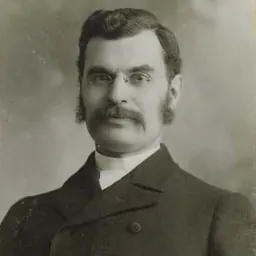
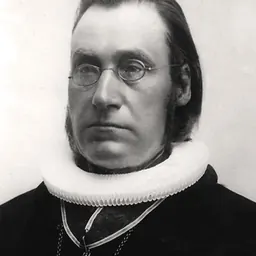

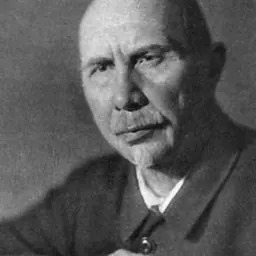
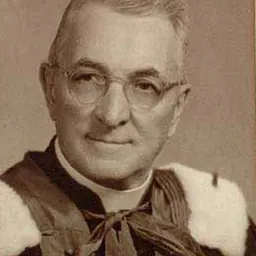
Contemporaries
People whose lives overlapped Santu Casanova's




Frequently asked questions
Who was Santu Casanova?
French writer and poet (1850–1936)
When was Santu Casanova born?
Santu Casanova was born on 3 July 1850 in Azzana.
When did Santu Casanova die?
Santu Casanova died on 27 December 1936 in Livorno.
What was Santu Casanova's occupation?
Santu Casanova was a writer and poet.
What nationality was Santu Casanova?
Santu Casanova was French.
Sources & further reading
Cite this page
APA: Biography.guide. (2026). Santu Casanova. https://biography.guide/santu-casanova/
MLA: "Santu Casanova." Biography.guide, https://biography.guide/santu-casanova/.
Chicago: "Santu Casanova." Biography.guide. https://biography.guide/santu-casanova/.
Data last updated: 2026-09-22 · Spot an error? Report a correction.
Page generated 2026-09-27 05:03 UTC