
Sanghapāla
Khmer monk who traveled to Southern and Northern Dynasties China
About Sanghapāla
Lived 506 – 518 (aged 11–12). Sanghapāla was a buddhist monk, missionary and translator.
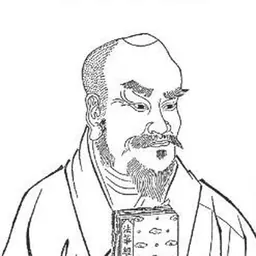
Sanghapāla (466–524 CE) was a famous Khmer monk who traveled to Southern and Northern Dynasties China.
He, along with the fellow Funan monk, Mandrasena, translated Buddhist scriptures such as the Vimuttimagga or Path to Freedom into Chinese.
He is one of the only two Cambodian monks whose translations currently figure in the ChineseTripitaka.
Identification In Chinese, he is known as Sengjia-Poluo (僧伽婆羅). Sanghapala's Khmer name can also rendered as two possible Sanskrit equivalents, Sanghabara or Sanghavarman.
Biography Sanghapala was born in Funan in the year 460 AD, He acquired the knowledge of many languages including Pali, Sanskrit and classical Chinese.
He was then sponsored by the court of Jiankang to translate new works into Chinese as early as 506. Among others, Sanghapala was ordered to write a new translation known as Ayuwang jing, or the Scripture of King Aśoka (T.2043) from the original Ashokavadana, an Indian Sanskrit-language text that describes the birth and reign of the third Mauryan Emperor Ashoka. He worked as an official translator for 16 years and established offices in five different locations, one of which was now as "The Funan Desk".
Legacy: the Chinese translation of lost Pali texts Edwin G. Pulleyblank suggests that Sanghapala dictated his Chinese translations of the dharani to two of his collaborators known as Fayun and Baochang. His rendition of Sanskrit was probably influenced by his mother-tongue which was Old Khmer, though his discipleship with an Indian master guarantees that his knowledge of the language was checked. He translated the Maha Asoka Sutra, Vimoksa-Marga-sastra, and others, but most notoriously, his Chinese translation is a canonical reference for the Vimuttimagga or Path to Freedom. According to the catalogue of the Chinese translations of the Buddhist Tripitaka established by Nanjō Bun'yū in 1883, all of the texts translated by Sanghamala are relative to the Mahayana, which was practised in Cambodia until the end of the reign of Jayavarman VII, until it was replaced by a majority Theravada Buddhism until this day.
Don’t just read it —
keep it.
Full-length biographies made to live with: read them, listen on the way to work, watch them tonight.
- E-book
- Audio
- Video
Instant download · yours to keep · every purchase keeps this site free
Important facts
Related people
Same field, nearest in time



Frequently asked questions
Who was Sanghapāla?
Khmer monk who traveled to Southern and Northern Dynasties China
When was Sanghapāla born?
Sanghapāla was born in 506.
When did Sanghapāla die?
Sanghapāla died in 518.
What was Sanghapāla's occupation?
Sanghapāla was a buddhist monk, missionary and translator.
What nationality was Sanghapāla?
Sanghapāla's recorded nationality: Kingdom of Funan.
Sources & further reading
Cite this page
APA: Biography.guide. (2026). Sanghapāla. https://biography.guide/sanghapala/
MLA: "Sanghapāla." Biography.guide, https://biography.guide/sanghapala/.
Chicago: "Sanghapāla." Biography.guide. https://biography.guide/sanghapala/.
Data last updated: 2026-09-20 · Spot an error? Report a correction.
Page generated 2026-09-27 04:58 UTC