
About Sandy Hill
Born 1955. Sandy Hill is an American mountaineer, known for 1996 Everest disaster and Seven Summits.
Sandra Hill (born April 12, 1955, formerly Sandra Hill Pittman) is a mountaineer, author, former fashion editor, and socialite. She survived the 1996 Mount Everest disaster shortly after becoming the 34th woman to reach the Mount Everest summit and the second American woman to climb the Seven Summits.
Personal life Sandy Hill grew up in Los Gatos, California. Her father ran a successful business that rented portable toilets to construction sites. Hill met snowboarder Stephen Koch while climbing Mount Everest in April 1996, and they lived together in New York until 1997.
In 1998, Hill attended the Columbia Graduate School of Architecture, Planning and Preservation in New York to study architectural preservation and restoration. She graduated in 2000.
Hill married commodities trader Thomas Dittmer in April 2001, and they purchased a ranch and vineyard in the Santa Ynez Valley. Hill filed for divorce in 2008, and attempted unsuccessfully to legally invalidate the couple's prenuptial agreement. In 1994 she raised corporate sponsorship with $250,000 from Chesebrough-Ponds for an attempt climbing the difficult Kangshung Face, with her film production partner at the time, filmmaker David Breashears, and climbers Alex Lowe, Barry Blanchard and Steve Swenson but the expedition was turned back by avalanche danger above 25,000 feet.
1996 Everest disaster Hill, known as Sandy Pittman at the time, survived the 1996 Mount Everest disaster. As part of the Mountain Madness expedition headed by Scott Fischer, during what was her third attempt to climb Mount Everest, she was in agreement with NBC Interactive Media to stream journalistic dispatches from Base Camp to schoolchildren in the United States. The technology required to transmit this blog included a laptop computer and a 20-pound satellite phone. The phone was carried as high as Camp IV by Sherpas, but it did not work there. Online, the website was referred to as The "NBC Everest Assault.” Due to her assertive personality, fellow Everest climber Lene Gammelgaard thought of her as "Pit Bull" rather as Pittman.
On May 10, 1996, at roughly 2:30 pm, Hill summited with others on the peak before descending the Hillary Step. Hill had reportedly been short-roped up the mountain by Lopsang Jangbu Sherpa for five to six hours at the outset of the ascent. Pittman would later contest this claim after surviving the disaster, stating she was short-roped by Lopsang for only 45 minutes. Facing backlash following the massive success of Jon Krakauer's Into Thin Air, Pittman further insisted that the connecting line between her and Lopsang was a loose belay rather than a short-rope.
Eighteen hours later, Mountain Madness guide Neal Beidleman descended the Hillary Step with Hill and her teammates, including Tim Madsen and Charlotte Fox, to find camp. Descending, “Sandy got her crampons tangled in the ropes,” Beidleman recalls. Stopping to check on others, Beidleman noticed Fox giving Hill a shot of dexamethasone that she asked for. Beidleman asked teammate Lene Gammelgaard to trade oxygen tanks with Hill, as Gammelgaard's tank had more oxygen left and unlike Hill, she could walk on her own. On the way to a saddle called the South Col, Hill and others slid down the fixed lines. At the bottom, the group joined Mike Groom, a guide from Adventure Consultants, and his client Yasuko Namba, who was brought down the lines by Beidleman, and Beck Weathers, who had not summited due to poor eyesight, but had been waiting for Rob Hall, an Adventure Consultants guide, to return, along with Klev Schoening from Mountain Madness and two sherpa.
Groom tethered himself to Weathers after Hall did not return from higher up the mountain. Not knowing which direction to go due to the storm, they huddled in the snow. Around midnight, stars came out as the storm subsided, prompting Beidleman, Schoening, Gammelgaard, and Groom to make it to camp and find help, leaving Namba and Weathers, who were unconscious, and Fox and Hill, who were too exhausted to continue with Madsen. Upon reaching Camp IV, the group alerted Anatoli Boukreev, a guide for Hill's team, Mountain Madness, on the location of the rest of the climbers. Reaching the group, Boukreev brought Hill tea, left her with Madsen, and assisted Fox to the camp before returning to Madsen, who walked while Boukreev carried Hill to Camp IV. After returning, Boukreev collapsed with exhaustion, leaving unconscious climbers Namba and Weathers in the snow. Weathers unexpectedly awoke from his unconscious state and despite frostbite, climbed to Camp IV alone. On May 12, Camp IV was evacuated for Camp III, where three days earlier, Chen Yu-Nan, an expedition member of a Taiwanese group led by Malaku Gau Ming-Ho, had fallen off the Lhotse Face from strong winds without crampons or a tie-in. Descending between Camp III and Camp II, a sherpa was hit by a falling rock. While descending to Camp III, Hill asked Fox to give her another dexamethasone shot. On May 13, they reached base camp. The morning of May 14, they hiked to Pheriche, the town below base camp, where Hill, Fox and Madsen departed in a chartered helicopter to Kathmandu. later expanded his September 1996 Outside Magazine article into a book with the same title, Into Thin Air (1997). However, Hill and the others all had previous climbing experience. Highly visible in the media before the climb, she believed she was "pigeonholed as a rich New Yorker", which "painted such an easy picture of a villain right there."
Boukreev was given an award for heroism by the American Alpine Club, and he recounted his story in the book, The Climb: Tragic Ambitions on Everest (1997), which was at least partly a response to Krakauer's account, in which Krakauer had laid some of the blame for the disaster on Boukreev, Hill, and a few others.
In the August 1997 issue of Vogue, Hill wrote about the whole experience, and went into detail about her long history as a climber and her passion for mountain climbing that developed when she was young.
David Breashears interviewed Hill in the documentary film Storm Over Everest (2008), which was aired on PBS Frontline on May 13, 2008.
In the 2015 feature film Everest, Hill is portrayed by Vanessa Kirby.
Books Hill is the main author of the book Fandango: Recipes, Parties, and License to Make Magic (2007), which talks about Sandy Hill's lifestyle and includes various recipes co-authored by Stephanie Valentine and advice on how to decorate and host, using 18 parties that Hill designed and hosted as examples.
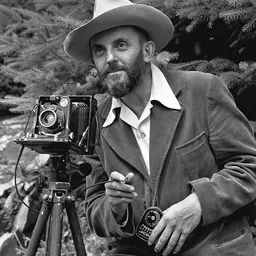
Hill's second book, Mountain: Portraits of High Places (2011), is a compilation of photographs and art with rarely seen images from prominent nature photographers, including Galen Rowell, Peter Beard, Ansel Adams, and Frank Smythe.
Don’t just read it —
keep it.
Full-length biographies made to live with: read them, listen on the way to work, watch them tonight.
- E-book
- Audio
- Video
Instant download · yours to keep · every purchase keeps this site free
Important facts
Family & relationships
People in Sandy Hill's life
Named in this biography and alive at the same time





Related people
Same field, nearest in time




Contemporaries
People whose lives overlapped Sandy Hill's

Frequently asked questions
Who is Sandy Hill?
American mountain climber
When was Sandy Hill born?
Sandy Hill was born on 12 April 1955 in Los Gatos.
What is Sandy Hill's occupation?
Sandy Hill is a mountaineer.
What is Sandy Hill known for?
Sandy Hill is known for 1996 Everest disaster and Seven Summits.
What nationality is Sandy Hill?
Sandy Hill is American.
Sources & further reading
· DBpedia: Sandy Hill (mountaineer)
Cite this page
APA: Biography.guide. (2026). Sandy Hill. https://biography.guide/sandy-hill/
MLA: "Sandy Hill." Biography.guide, https://biography.guide/sandy-hill/.
Chicago: "Sandy Hill." Biography.guide. https://biography.guide/sandy-hill/.
Data last updated: 2026-09-22 · Spot an error? Report a correction.
Page generated 2026-09-27 05:09 UTC