
About Sanaa Seif
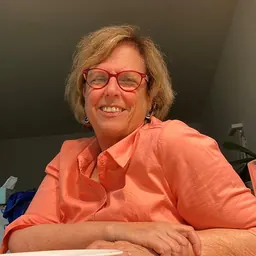
Born 1993. Sanaa Seif is an Egyptian and British human rights defender, filmmaker and political activist.
Sanaa Seif (; born 20 December 1993) is an Egyptian-British activist and film editor who became actively involved in the Egyptian revolution in 2011. She was a student of languages and translation at October 6 University until her arrest in 2014. She was granted a presidential pardon, along with 100 others, in September 2015.
Seif was again arrested in June 2020, and released in December 2021, after a year and a half sentence. Seif belongs to a politically active family. Her father Ahmed Seif was an activist and human rights attorney until his death in 2014. Sanaa's mother, Laila Soueif, is a professor at Cairo University and political activist promoting academic freedom in Egypt. Her two older siblings are also known in the activist community. Her brother Alaa Abd El-Fattah became an icon during the 2011 uprisings that toppled the Mumbarak regime. Her sister Mona Seif is a genetics researcher and political activist responsible for co-founding an Egyptian movement against military trials of civilians.
Seif began her activism in 2011 during the height of revolutionary protests in Egypt. Her first experience with protest happened when she became involved in a movement remembering Khaled Said. The demonstration was to protest the government's anti-demonstration laws. In a resulting trial, the Cairo Criminal Court sentenced the protestors to "two years imprisonment and two further years of surveillance". Since the time of the verdict, many international organizations including the African Commission on Human and Peoples' Rights, Amnesty International, the Human Rights Watch, and the Egyptian Initiative for Personal Rights have condemned the verdict. As of February 2015, none of the prominent activists from the movement were pardoned, despite rumors that pardons would be issued on the anniversary of the January 25th movement.
June 2020 arrest On 23 June 2020, the Amnesty International reported that Egyptian security forces kidnapped the human rights defender Sanaa Seif from outside the Public Prosecutor's office, New Cairo. The rights organization stated that she paid visit to the office to file a complaint against a violent assault, which she and her family suffered outside Tora Prison, a day earlier. The report stated that Sanaa was taken to the office of the Supreme State Security Prosecution in Cairo, where the prosecutors questioned her over the charges of "disseminating false news", "inciting terrorist crimes" and "misuse of social media".
In March 2021, Seif was sentenced to a year and a half in prison and had the right to appeal within 60 days. Upon the completion of her sentence, she was released on 23 December 2021.
Hunger strike Beginning on 4 September 2014, Seif and her brother, Alaa Abd El-Fattah, who was imprisoned in November 2013 for breaking the anti-demonstration law in addition to other charges, began a hunger strike from their respective prisons, while the rest of the family partook at home. The family has been known to go on frequent partial hunger strikes.
Image in popular culture Seif has become a symbol of the revolution through her activist work. In the years since 2011, Sanaa's image has become more of a symbol to revolutionaries in Tahrir Square than her connection to her family's activism. She has been highly involved on the ground since attending the protest in response to Khaled Said's beating and death at the hands of the Egyptian police. Seif's image is seen by some as the spirit of the revolution prompting artistic representations of her such as the mural in Rome, Italy, by artist Ammar Abo Bakr. and a website providing updates on her jail sentence and calls for her release. The hashtag #FreeSanaa has been used to spread awareness of her situation. According to her pages, hundreds of people have used both #FreeSanaa and #NoProtestLaw to show unity with her fight. The film was even the first Egyptian film to be nominated for an Academy Award. While it received positive commentary abroad, at home its release was strictly controlled. It was made available on Netflix in January 2014, however the first showing in Egypt did not occur until June 2014 without any promotion. The Square (2013) - Assistant Editor In the Last Days of the City (2016) - Assistant Editor Kiss me not (2017) - Assistant Editor About Her (2020) - Assistant Editor, Assistant Producer Daughters of Abdul-Rahman (2020) - Assistant Editor
Don’t just read it —
keep it.
Full-length biographies made to live with: read them, listen on the way to work, watch them tonight.
- E-book
- Audio
- Video
Instant download · yours to keep · every purchase keeps this site free
Important facts
Family & relationships
People in Sanaa Seif's life
Named in this biography and alive at the same time




Related people
Same field, nearest in time

Contemporaries
People whose lives overlapped Sanaa Seif's


Frequently asked questions
Who is Sanaa Seif?
Egyptian political activist
When was Sanaa Seif born?
Sanaa Seif was born on 20 December 1993 in Cairo.
What is Sanaa Seif's occupation?
Sanaa Seif is a human rights defender, filmmaker and political activist.
What nationality is Sanaa Seif?
Sanaa Seif is Egyptian and British.
Sources & further reading
Cite this page
APA: Biography.guide. (2026). Sanaa Seif. https://biography.guide/sanaa-seif/
MLA: "Sanaa Seif." Biography.guide, https://biography.guide/sanaa-seif/.
Chicago: "Sanaa Seif." Biography.guide. https://biography.guide/sanaa-seif/.
Data last updated: 2026-09-22 · Spot an error? Report a correction.
Page generated 2026-09-27 05:05 UTC