
About Samuel Rhoads Franklin
Lived 1825 – 1909 (aged 83). Samuel Rhoads Franklin was an American military officer.
Samuel Rhoads Franklin (August 24, 1825 – February 24, 1909) was a rear admiral in the United States Navy. He participated in the important Battle of Hampton Roads off the U.S. state of Virginia in 1862, served as the superintendent of the U.S. Naval Observatory in Washington, D.C., from 1884 to 1885, and was president of the International Marine Conference of 1889.
Early life Samuel Rhoads Franklin was born August 24, 1825, in York, Pennsylvania, to Walter S. and Sarah ( Buel) Franklin. His father was Clerk of the United States House of Representatives, and his paternal great-grandfather was Samuel Rhoads, who had served in the First Continental Congress and as Mayor of Philadelphia in 1774. The Franklins were a prominent Quaker family in New York state. One Franklin ancestor married Senator and New York Governor DeWitt Clinton, while another married New York Governor and Vice President George Clinton. Samuel was one of six children. His older brother, William Buel, was born in 1823. Another brother, Thomas, was born in 1828; a sister, Anne, in 1830; another brother, Frederick Buel, in 1832; and another brother, Walter Simonds Jr., in 1835.
Franklin attended several private schools as a youth before completing his education at York County Academy, a prep school.
Early naval career On February 18, 1841, Franklin enlisted at the age of 15 in the United States Navy as a midshipman. As the United States Naval Academy would not be established until 1844, "midshipmen were left to educate themselves and one another. Their schools were held in receiving ships and cruising vessels, in the midst of a thousand interruptions and impediments, which render[ed] the whole system of little or no value." He was assigned to the of the Pacific Squadron, serving aboard her until 1843. The United States believed war was imminent with Mexico, and the commander of the Pacific Squadron had standing orders to seize the Mexican Pacific port city of Monterey in Alta California (now part of the U.S. state of California). Hearing a false report that war had broken out, the Pacific Squadron left Lima, Peru, and seized Monterey without a fight October 19–20, 1842.
At the time, the United States had no ports on the Pacific coast of North America, and naval vessels relied on storeships—naval vessels loaded with supplies and fresh water which sat, stationary, at sea. About June 1844, Franklin left the United States to serve aboard the storeship .
Antebellum naval advancement In late 1844, at his own request, Franklin joined the sloop-of-war . The ship spent some months cruising the North Pacific and the coast of Central America, and Franklin and some of his fellow sailors took several days to explore the interior of Nicaragua near the port city of El Realejo. When the Mexican–American War broke out in the spring of 1846, the Levant joined the Pacific Squadron and sailed to Monterey again. Franklin took part in the landing party which captured the city (uncontested) on July 7.
The Levant was ordered to return to the United States shortly thereafter. The ship arrived in Norfolk, Virginia, on April 28, 1847. Although Franklin could have joined the Class of 1847 immediately, it would have left him just two months to prepare for his examination. He therefore decided to put off entrance at the Naval Academy until October, and spent the months of July, August, and September at home in York, Pennsylvania. Upon his entry to the Naval Academy, on August 10, 1847, Franklin was promoted to "passed midshipman". Instruction lasted nine months, and Franklin passed. He was assigned to the United States Coast Survey, which he joined in mid-July 1848. The survey team spent the autumn months surveying the coast beginning at Cape Henlopen, Delaware; moving south to the tip of the Delmarva Peninsula; and up and down the east and west coasts of Chesapeake Bay. The winter was spent in quarters in Washington, D.C., and survey work resumed in the spring of 1849.
In mid-spring 1849, Franklin was ordered to leave the U.S. Coast Survey and report to the razeed , then being fitted out in Norfolk as the flagship of the Mediterranean Squadron. The Independence sailed for the Mediterranean Sea on July 26, 1849. After an uneventful three-year cruise, the ship returned to Norfolk in June 1852 and was sent to drydock in New York City, where she arrived on July 3, 1852. Unhappy acting as a spy on midshipmen, he requested a transfer to the Department of Ethics and English Studies, which was granted in the fall of 1855. He was promoted to lieutenant on September 14, 1855, making his naval rank commensurate with his instructor's status.
At the end of the fall term of 1856, Franklin was assigned to the . The Falmouth was in drydock, and did not relaunch until January 12, 1857. She was assigned to the Brazil Squadron, During this time, the Falmouth participated in the Paraguay expedition, and cruised the Paraná River and Río de la Plata until April 1859. The Falmouth then returned to New York City on May 19, 1859, and was decommissioned. The American Civil War was on the verge of breaking out, and secessionists had seized the harbor at Pensacola, Florida. The ship stopped at the U.S. Navy base at Key West, Florida, and the Dry Tortugas. While at the Dry Tortugas, Franklin met Lieutenant Colonel Montgomery C. Meigs, then somewhat furtively taking stock of the various United States ports, forts, and harbors in the Deep South with an eye toward holding them if war broke out. Meanwhile, with the end of the Mexican-American War in 1847, Mexico had slid further into turmoil. With foreign intervention looming and a possible civil war, the Navy ordered the Macedonian to depart for the Mexican city of Veracruz to monitor events in that nation. Arriving at Veracruz, Franklin remained with the ship for some months before the Macedonian began patrolling the Gulf of Mexico and the West Indies. She received orders to sail for the Boston Navy Yard, reaching Massachusetts on January 16, 1862. destroying forts along the James River.
Franklin saw his first extensive action while with the West Gulf Blockading Squadron. Her first major action occurred on the night of December 15, when she gave chase to a blockade runner attempting to flee. Although Aroostook lost sight of the ship, the next day they discovered the schooner stranded on shoals and aflame. In another action on March 5, 1863, Aroostook and another Union vessel destroyed the blockade runner SS Josephine. Aroostook attempted to intercept a small blockade runner on the night of March 6, but it escaped them and made it into Mobile Bay. Aroostook exchanged fire with shore batteries on April 19, captured the blockade runner SS Sea Lion on the evening of May 9, assisted in the capture of the SS Hunter on May 18, and again exchanged shore fire on June 23. At about 1:00 AM on July 17, Aroostook assisted in the capture of the SS James Battle. Saginaw had spent the last six months of 1865 protecting American citizens and interests at various ports on Mexico's Pacific coast. Franklin traveled by ship to Panama, crossed the Isthmus of Panama by rail, and sailed to Acapulco to take up command of Saginaw. Saginaw reached San Francisco, California, in March 1866, and spent five months undergoing repairs at the Mare Island Naval Shipyard. She received orders to assist settlers in the Washington Territory, and said in August 1866 to Puget Sound. She then received orders to proceed to Esquimalt Harbour on Vancouver Island in Canada, where she spent several months assisting the Western Union in laying a telegraph cable across the Bering Strait. She returned to Mare Island in December 1866. Franklin met King Kamehameha V of the Kingdom of Hawaii, as well as the future queen, Liliuokalani. Mohican returned to Mare island on January 11, 1870.
Franklin was then given command of the in April 1873, and appointed chief of staff to Rear Admiral Augustus Case. He sailed on a civilian ship for the United Kingdom and spent time visiting London before sailing to France and touring Paris. He then traveled overland to Villefranche-sur-Mer on the Mediterranean coast of France, where he joined the Wabash. Franklin cruised the Mediterranean Sea until November 30, 1873, he received orders to head for Key West, Florida. The Virginius Affair had caused a war scare between the United States and Spain, and Wabash headed for Florida in case the Navy needed ships to invade Cuba. Wabash arrived in Key West on January 3, 1874. She never left port again, and was decommissioned on April 25, 1874.
Shore duties After a brief tenure as the executive officer of the Gosport Naval Yard in Norfolk, Virginia, during which time he was president of the Board for Promotion of Officers, Franklin spent similarly short periods of time as the executive officer of the New London Naval Station and then the Washington Navy Yard. In 1877, he was assigned as a hydrographer to the United States Hydrographic Office, and on June 1, 1878, was appointed by the president of the United States to a one-year term on the board of visitors of the United States Military Academy at West Point, New York. (He spent the last six months of 1880 on leave.)
At the end of 1880, Franklin was assigned to special duty in the Bureau of Equipment in the Navy Department. He was promoted to commodore on May 28, 1881, and in 1882 appointed to the board of visitors of the United States Naval Academy at Annapolis. He was named the board's president in June. On June 16, 1883, he was appointed president of the Board of Examiners again. His duty station changed when in February 1884 he was appointed superintendent of the Naval Observatory in Washington, D.C.
Final duties Franklin now had just three and a half years of service remaining before retirement, and fully expected to serve out his remaining years at the Naval Observatory. But on January 24, 1885, he was promoted to rear admiral, and from May 7 to May 28, 1885, he served as commander-in-chief of the U.S. Navy's Training Squadron, with his flagship aboard the . The following month he was named commander-in-chief of the European Squadron. He assumed his duties on June 10, 1885,
Franklin retired from the navy on August 24, 1887, at the age of 62. According to maritime historian Hans Van Tilburg, throughout his career Franklin was well liked and competent. But he was prone to sloth.
Personal life Likely sometime between 1860 and 1865, Franklin married Mathilde Atocha. Originally from New Orleans, Mathilde was the daughter of Alexander Jose Atocha, a Spaniard who helped negotiate the treaty of Guadalupe Hidalgo, and Eliza Atocha. Franklin and Mathilde had one son, Walter Franklin, who died on September 19, 1867. Mathilde died one year later, in 1868, from an unspecified illness. A California record of her death stated that "Mrs. Franklin, an invalid, with their only child joined her husband on the coast 12 months since. Soon after residence at Mare Island where her husband was stationed, their only child died. She did not recover from the shock. As progress of disease left little hope for recovery, Captain Franklin sailed for New York 2 months since. Mrs. Franklin died 18 days after their arrival."
On March 4, 1871, Franklin married Caroline Maria Keyes, daughter of Major General Erasmus D. Keyes. The pair remained married until Caroline's death in 1881 from Bright's Disease.
On January 10, 1883, Franklin married Marion Sands, daughter of Rear Admiral Benjamin F. and Helen M. ( French) Sands. Her maternal uncle was United States Army General William H. French.
Franklin converted to Roman Catholicism in 1880.
Retirement and death Franklin lived in Washington, D.C., in retirement. He joined the Metropolitan Club, the Sons of the Revolution, the Washington Monument Society, the Memorial Society of the City of Washington, the Society of Foreign Wars, the Society of the Cincinnati, the Pennsylvania Military Order, and the Chevy Chase Club. His funeral was held at the Cathedral of St. Matthew the Apostle, and he was buried at Arlington National Cemetery.
Don’t just read it —
keep it.
Full-length biographies made to live with: read them, listen on the way to work, watch them tonight.
- E-book
- Audio
- Video
Instant download · yours to keep · every purchase keeps this site free
Important facts
People in Samuel Rhoads Franklin's life
Named in this biography and alive at the same time
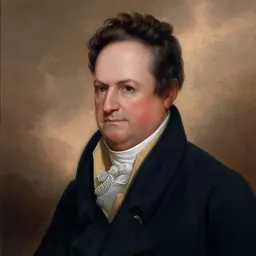



Related people
Same field, nearest in time

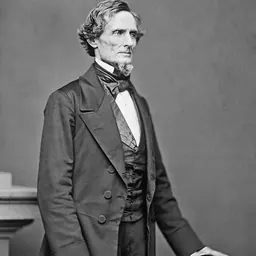
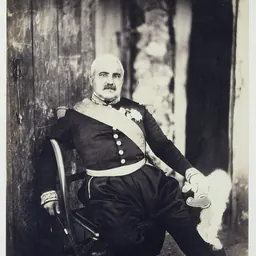
Contemporaries
People whose lives overlapped Samuel Rhoads Franklin's




Frequently asked questions
Who was Samuel Rhoads Franklin?
(1825-1909)
When was Samuel Rhoads Franklin born?
Samuel Rhoads Franklin was born on 24 August 1825 in York.
When did Samuel Rhoads Franklin die?
Samuel Rhoads Franklin died on 24 February 1909 in Washington, D.C..
What was Samuel Rhoads Franklin's occupation?
Samuel Rhoads Franklin was a military officer.
What nationality was Samuel Rhoads Franklin?
Samuel Rhoads Franklin was American.
Sources & further reading
· Wikipedia: Samuel Rhoads Franklin
· DBpedia: Samuel Rhoads Franklin
Cite this page
APA: Biography.guide. (2026). Samuel Rhoads Franklin. https://biography.guide/samuel-rhoads-franklin/
MLA: "Samuel Rhoads Franklin." Biography.guide, https://biography.guide/samuel-rhoads-franklin/.
Chicago: "Samuel Rhoads Franklin." Biography.guide. https://biography.guide/samuel-rhoads-franklin/.
Data last updated: 2026-09-20 · Spot an error? Report a correction.
Page generated 2026-09-27 05:27 UTC