
About Samuel Rea
Lived 1855 – 1929 (aged 73–74). Samuel Rea was an American engineer, civil engineer, businessperson and railway engineer.
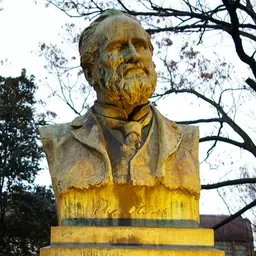
Samuel Rea (September 21, 1855 – March 24, 1929) was an American engineer and the ninth president of the Pennsylvania Railroad, serving from 1913 to 1925. He joined the PRR in 1871, when the railroad had hardly outgrown its 1846 charter to build from Harrisburg to Pittsburgh, and helped it grow to a 12,000-mile (19,000 km) system with access to Manhattan, upstate New York, and New England.
Rea was elected to the American Philosophical Society in 1913, awarded the Franklin Medal in 1926, and was elected as an honorary member of the Institution of Civil Engineers in 1928.
Early life and career Samuel Rea was born on September 21, 1855, in Hollidaysburg, Pennsylvania. His parents were James D. Rea and Ruth Blair Moore. His paternal grandfather, General John Rea, was the United States representative from Bedford and Franklin, Pennsylvania, during the terms of Thomas Jefferson and James Madison. Through the marriage of his father's siblings, he was related to the Asa Childs and the Henry Clay Frick families. His father died when Samuel was 13. and also became a vice president of the Maryland Central Railroad.
President of the Pennsylvania Railroad
Rea became president of the Pennsylvania Railroad in 1913. As head of the PRR system, which employed 250,000 men, he became one of the three or four dominating powers in American transportation. Rea was considered largely responsible for many features of the Esch-Cummins Act, whereby the railroads were returned to private control in 1920 after World War I.
Samuel Rea retired as PRR president in 1925 at the age of 70. He then served as president of the Long Island Rail Road, a PRR subsidiary, from 1923 to 1928.
Professional recognition Samuel Rea was awarded honorary degrees by the University of Pennsylvania, Princeton University and Lafayette College. He received the Franklin Medal in 1926, and was elected as an Honorary Member of the Institution of Civil Engineers in 1928.
Rea was a member of the exclusive South Fork Fishing and Hunting Club, whose earthen dam failed in May 1889, causing the Johnstown Flood. After the flood, Rea removed to Bryn Mawr, Pennsylvania, to an estate called "Waverly Heights," designed by architect Addison Hutton. Waverly Heights later became a lifecare community in Gladwyne.
Rea was reared in the Presbyterian faith and said he preferred reading Prof. James Moffatt's translation of the Bible.
Death He died at his home in Gladwyne, Pennsylvania on March 24, 1929.
Don’t just read it —
keep it.
Full-length biographies made to live with: read them, listen on the way to work, watch them tonight.
- E-book
- Audio
- Video
Instant download · yours to keep · every purchase keeps this site free
Important facts
People in Samuel Rea's life
Named in this biography and alive at the same time





Related people
Same field, nearest in time

Contemporaries
People whose lives overlapped Samuel Rea's




Frequently asked questions
Who was Samuel Rea?
American engineer (1855–1929)
When was Samuel Rea born?
Samuel Rea was born in 1855 in Hollidaysburg.
When did Samuel Rea die?
Samuel Rea died in 1929 in Philadelphia.
What was Samuel Rea's occupation?
Samuel Rea was an engineer, civil engineer, businessperson and railway engineer.
What nationality was Samuel Rea?
Samuel Rea was American.
Sources & further reading
Cite this page
APA: Biography.guide. (2026). Samuel Rea. https://biography.guide/samuel-rea/
MLA: "Samuel Rea." Biography.guide, https://biography.guide/samuel-rea/.
Chicago: "Samuel Rea." Biography.guide. https://biography.guide/samuel-rea/.
Data last updated: 2026-09-20 · Spot an error? Report a correction.
Page generated 2026-09-27 05:30 UTC