
About Samuel Hirszenberg
Lived 1865 – 1908 (aged 43). Samuel Hirszenberg was a painter, university teacher and artist.
Samuel Hirszenberg (also Schmul Hirschenberg; February 22, 1865 – September 15, 1908) was a Polish-Jewish realist and later symbolist painter active in the late 19th and early 20th century.
Biography Szmul (Samuel) Hirszenberg was born in Polish Łódź in 1865. He was the eldest son of a weaving mill worker. Against the will of his father, but thanks to the financial assistance of a doctor, he chose to be an artist. At the age of 15 he began his studies at the Academy of Fine Arts in Kraków, where he was heavily influenced by the realistic painting of Jan Matejko.
After two years of training in Kraków, he continued his studies from 1885 until 1889 at the Royal Academy of Arts in Munich.
Art career
His first major work to attract attention was Yeshiva (1887). After an exhibition at the Kunstverein Munich (1889), he showed at the art exhibition in Paris and was awarded a silver medal. In Paris, he completed his artistic training at the Académie Colarossi.
In 1891, Hirszenberg returned to Poland. In 1893 he resettled in his hometown of Łódź. While the images of the early years, like the paintings Talmudic Studies, Sabbathnachmittag, Uriel Acosta, and The Jewish cemetery show a certain kinship with the Jewish genre painting by Leopold Horowitz, Isidor Kaufmann, and Maurycy Gottlieb, his later works can be rather assigned to the symbolism. Themes of the "tearful" Jewish history came to the fore. Noteworthy are the three most famous pictures of this period: The Wandering Jew (1899), Exile (1904), and Czarny Sztandar / Black Banner (1905).
In 1900, after working on a large painting, The Eternal Jew, for over four years, it was exhibited in the Paris Salon. Disappointed by the poor response in Paris Munich and Berlin, he retired for health reasons.
In 1901, he went for a year on a trip to Italy. In 1904, Hirszenberg moved to Kraków. In 1907, he immigrated to Palestine and began to work as a lecturer at the newly founded Bezalel School in Jerusalem, headed by Boris Schatz. After a short and intense creative period, he died in 1908 in Jerusalem.
Selected paintings
Don’t just read it —
keep it.
Full-length biographies made to live with: read them, listen on the way to work, watch them tonight.
- E-book
- Audio
- Video
Instant download · yours to keep · every purchase keeps this site free
Important facts
People in Samuel Hirszenberg's life
Named in this biography and alive at the same time




Related people
Same field, nearest in time

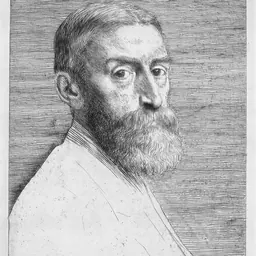
Contemporaries
People whose lives overlapped Samuel Hirszenberg's
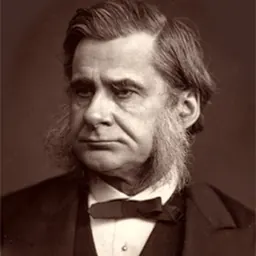

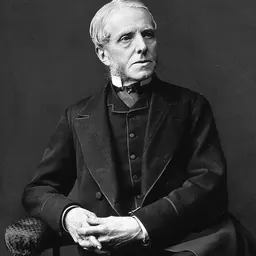
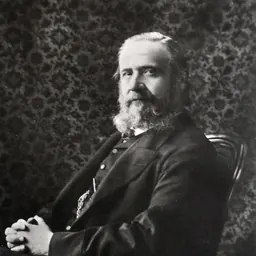
Frequently asked questions
Who was Samuel Hirszenberg?
Polish artist (1865-1908)
When was Samuel Hirszenberg born?
Samuel Hirszenberg was born on 22 February 1865 in Łódź.
When did Samuel Hirszenberg die?
Samuel Hirszenberg died on 15 September 1908 in Jerusalem.
What was Samuel Hirszenberg's occupation?
Samuel Hirszenberg was a painter, university teacher and artist.
What nationality was Samuel Hirszenberg?
Samuel Hirszenberg's recorded nationality: Congress Poland.
Sources & further reading
· Wikipedia: Samuel Hirszenberg
Cite this page
APA: Biography.guide. (2026). Samuel Hirszenberg. https://biography.guide/samuel-hirszenberg/
MLA: "Samuel Hirszenberg." Biography.guide, https://biography.guide/samuel-hirszenberg/.
Chicago: "Samuel Hirszenberg." Biography.guide. https://biography.guide/samuel-hirszenberg/.
Data last updated: 2026-09-20 · Spot an error? Report a correction.
Page generated 2026-09-27 05:22 UTC