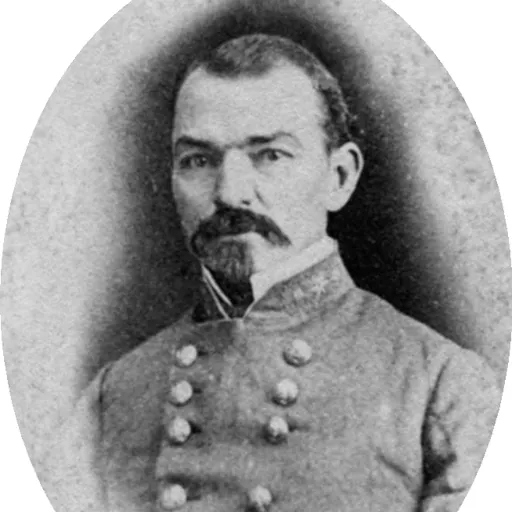
About Samuel Gibbs French
Lived 1818 – 1910 (aged 91). Samuel Gibbs French was an American military personnel.
Samuel Gibbs French (November 22, 1818 – April 20, 1910) was an American military officer from New Jersey. He graduated from the United States Military Academy in 1843, served as a captain in the U.S. Army in the Mexican-American War, and was wounded at the Battle of Buena Vista. In 1856, he resigned his commission to manage a plantation in Mississippi he obtained through marriage.
At the start of the American Civil War, he sided with the Confederacy, was commissioned lieutenant colonel, promoted to brigadier general and major general. He served in the Eastern Theater and commanded the Department of North Carolina and Southern Virginia. He was transferred to the Western Theater and commanded a division in the Army of Tennessee during the attempt to relieve the Siege of Vicksburg, the Atlanta campaign and the Franklin-Nashville campaign. Over the course of his military career, he served in thirty-five engagements.
In 1901, he published his autobiography Two Wars: an Autobiography of Gen. Samuel G. French, An Officer in the Armies of the United States and the Confederate States, A Graduate from the U.S. Military Academy, West Point 1843.
Early life and education French was born on November 28, 1818 He was given the brevet rank of second lieutenant and assigned to the 3rd U.S. Artillery. He was stationed in Fort Macon, North Carolina, Washington, D.C., West Point and Fort McHenry in Baltimore.
Mexican-American War In August, 1845, he sailed from Baltimore with Major Samuel Ringgold's battery of horse artillery to join General Zachary Taylor and the Army of Occupation in Aransas Pass, Texas.
He fought at the Battle of Palo Alto and received praise for his actions at the Battle of Resaca de la Palma. On June 18, 1846, he was promoted to second lieutenant. During the Battle of Monterrey, he commanded an artillery battery and was brevetted first lieutenant on September 23, 1846. He was wounded in the thigh by a musket ball during the Battle of Buena Vista but continued to lead his men in combat. He received a promotion to brevet captain and was sent home to recuperate.
Two ceremonial swords were given to French by the citizens and Legislature of New Jersey in recognition of his service in the Mexican American War. On July 4, 1847, he was presented a ceremonial sword from the citizens of New Jersey which contained the inscription "for distinguished service in the battles of Palo Alo, Resaca de la Palma and Buena Vista". On February 9, 1849, he was presented on resolution from the New Jersey Legislature a second sword with the inscription "For brave and gallant conduct displayed in the battles of Palo Alto, Resaca de la Palma, and Monterrey. Subsequently distinguished at Buena Vista, and promoted to the rank of Captain".
He became an original member of the Aztec Club of 1847. He was promoted to full captain on January 12, 1848, and commissioned as assistant quartermaster in the general staff of the army working under his former classmate, Rufus Ingalls. He led expeditions in 1849 and 1851 to El Paso and was assigned to Fort Smith, Arkansas at his request in 1854. He resigned his commission in May, 1856. He acquired a plantation through his marriage to Eliza Matilda Roberts along Deer Creek near Greenville, Mississippi, and left the army to manage it.
American Civil War Woodbury, New Jersey residents protested in front of and stormed French's summer house when they learned of his secession to the Confederacy. At the start of the Civil War, French joined the Confederacy. Residents of his home state of New Jersey were so incensed by his decision that they protested in front of his summer home in Woodbury, New Jersey, hanged him in effigy, stormed the house and threw items from his house into the street.
French was made a lieutenant colonel and chief of ordnance of the Army of Mississippi on February 12, 1861; and brigadier general in the provisional army of the Confederate States of America on October 23, 1861. He was assigned to the defense of the Potomac River near Evansport, Virginia. He built Camp French near Quantico, Virginia.
From July 21, 1862, to June, 1863, he commanded the Department of North Carolina and Southern Virginia. He oversaw improvements to Fort Fisher and built Fort St. Philips (later renamed Fort Anderson) in Brunswick Town, North Carolina to protect Wilmington, North Carolina.
On October 22, 1862, French was promoted major general with seniority backdated to August 31.
French's troops were at the Battle of Suffolk (Hill's Point), but he declined to attack Fort Huger since he believed the Union commander would quickly vacate the fort since he had no military support. Longstreet censured French's actions at Suffolk and tried to have him removed from command but Jefferson Davis vetoed the action. French was on medical leave in Columbus, Georgia, and Warm Springs, Arkansas, due to the lingering effects of dysentery from August 4 to October 1863.
French moved to the Western Theater and commanded a division in Jackson, Mississippi during General Joseph E. Johnston's Jackson Expedition to relieve the Siege of Vicksburg. Johnston initially expressed concern to Jefferson Davis that French's Northern heritage would make it difficult for the troops to accept him. Davis dismissed this concern and reminded Johnston that French was a wealthy plantation owner in Mississippi and served in the state militia after secession. French served under Lieutenant General Leonidas Polk in Mississippi during the retreat from Jackson from December 1863 to May 1864. He was officially attached to the Army of Tennessee on May 18, 1864. and was interred at St. John's Cemetery in Pensacola. For the burial, his body was wrapped in both the American and the Confederate flags. His family placed a cenotaph for him in the family plot in Laurel Hill Cemetery in Philadelphia, Pennsylvania. and Camp French near Quantico, Virginia, were named in his honor.
There is a bust and marker of French in the National Military Park, Vicksburg, Mississippi.
Don’t just read it —
keep it.
Full-length biographies made to live with: read them, listen on the way to work, watch them tonight.
- E-book
- Audio
- Video
Instant download · yours to keep · every purchase keeps this site free
Important facts
People in Samuel Gibbs French's life
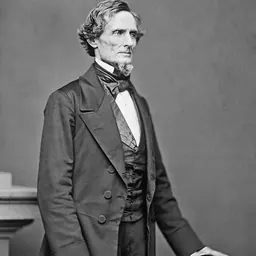
Named in this biography and alive at the same time




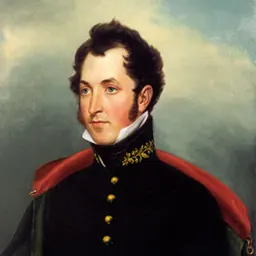
Related people
Same field, nearest in time

Contemporaries
People whose lives overlapped Samuel Gibbs French's





Frequently asked questions
Who was Samuel Gibbs French?
Confederate Army general (1818–1910)
When was Samuel Gibbs French born?
Samuel Gibbs French was born on 22 November 1818 in Gloucester County.
When did Samuel Gibbs French die?
Samuel Gibbs French died on 20 April 1910 in Florida.
What was Samuel Gibbs French's occupation?
Samuel Gibbs French was a military personnel.
What nationality was Samuel Gibbs French?
Samuel Gibbs French was American.
Sources & further reading
· Wikipedia: Samuel Gibbs French
· DBpedia: Samuel Gibbs French
Cite this page
APA: Biography.guide. (2026). Samuel Gibbs French. https://biography.guide/samuel-gibbs-french/
MLA: "Samuel Gibbs French." Biography.guide, https://biography.guide/samuel-gibbs-french/.
Chicago: "Samuel Gibbs French." Biography.guide. https://biography.guide/samuel-gibbs-french/.
Data last updated: 2026-09-22 · Spot an error? Report a correction.
Portrait: Wikimedia Commons · author & licence
Page generated 2026-09-27 05:04 UTC