
About Samuel Crawford
Lived 1820 – 1860 (aged 39). Samuel Crawford was an American lawyer, politician and judge.
Samuel Crawford (April 20, 1820 – February 28, 1861) was an Irish American immigrant, lawyer, and Wisconsin pioneer. He was one of the first elected justices of the Wisconsin Supreme Court in 1853. He was also the first incumbent Wisconsin Supreme Court justice to be defeated seeking re-election.
Early life
Born in Ballybay, Ireland—then part of the United Kingdom of Great Britain and Ireland—Crawford emigrated to New York City in 1840. In 1841, he moved to Galena, Illinois, where his brothers lived; he studied law and was admitted to the Illinois bar in 1844.
Later that year, he moved north into the Wisconsin Territory, arriving first at New Diggings—then part of Iowa County—and, in December, settling in Mineral Point. He established a law practice there, in partnership with Francis J. Dunn and David W. Jones, and became involved with local affairs.
Wisconsin Supreme Court
When an 1852 law established a new Wisconsin Supreme Court, Crawford was elected to serve as one of the first three justices, along with Abram D. Smith and Chief Justice Edward V. Whiton. The most significant case of his two years on the court was certainly Ableman v. Booth, which dealt with attempts by the federal government to prosecute Milwaukee abolitionist Sherman Booth. Booth had assisted Joshua Glover in his escape from slavery to freedom in Canada and was being prosecuted under the federal Fugitive Slave Act of 1850. The Wisconsin Supreme Court ruled, in 1854, that the Fugitive Slave Act was unconstitutional and freed Booth on a defective warrant. Judge Crawford dissented in part, concurring that the warrant was defective but dissenting that the Fugitive Slave Act was unconstitutional.
Though his opinion was ultimately validated by the Supreme Court of the United States in their 1859 decision on Ableman v. Booth, his dissent in the 1854 Booth case likely cost him re-election due to the strong anti-slavery sentiment in Wisconsin. He died of "congestion of the brain" at his home in Mineral Point on February 28, 1861.
Personal life
Crawford was married to Ms. Jane Milton Sweet, of Edgartown, Massachusetts, in 1848. They had four children. After Judge Crawford's death, in 1861, Jane remarried with John Montgomery Smith.
Electoral history
Wisconsin Supreme Court (1852, 1855)
U.S. House of Representatives (1856)
Wisconsin Attorney General (1859)
Don’t just read it —
keep it.
Full-length biographies made to live with: read them, listen on the way to work, watch them tonight.
- E-book
- Audio
- Video
Instant download · yours to keep · every purchase keeps this site free
Important facts
People in Samuel Crawford's life
Named in this biography and alive at the same time
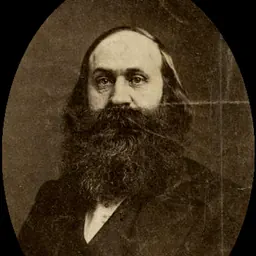

Related people
Same field, nearest in time


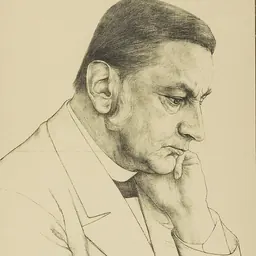

Contemporaries
People whose lives overlapped Samuel Crawford's
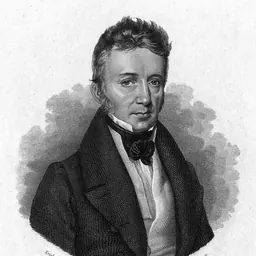


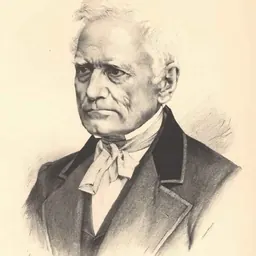
Frequently asked questions
Who was Samuel Crawford?
American judge (1820-1860)
When was Samuel Crawford born?
Samuel Crawford was born on 20 April 1820 in Ballybay.
When did Samuel Crawford die?
Samuel Crawford died on 28 February 1860 in Mineral Point, Wisconsin.
What was Samuel Crawford's occupation?
Samuel Crawford was a lawyer, politician and judge.
What nationality was Samuel Crawford?
Samuel Crawford was American.
Sources & further reading
· DBpedia: Samuel Crawford (jurist)
Cite this page
APA: Biography.guide. (2026). Samuel Crawford. https://biography.guide/samuel-crawford/
MLA: "Samuel Crawford." Biography.guide, https://biography.guide/samuel-crawford/.
Chicago: "Samuel Crawford." Biography.guide. https://biography.guide/samuel-crawford/.
Data last updated: 2026-09-20 · Spot an error? Report a correction.
Page generated 2026-09-27 05:21 UTC