
About Samuel Cohen
Lived 1870 – 1940 (aged 69–70). Samuel Cohen was a Russian composer.
Shmuel Cohen (1870–1940) was a Bessarabian-born Jewish musician who composed the music for the Israeli national anthem, "Hatikvah".
Biography Samuel (Shmuel) Cohen was born in a small town near Ungheni, Moldavia, then part of the Russian Empire. Motivated by a rising tide of Russian state-sponsored antisemitism and terrorism (pogroms), Cohen immigrated to Ottoman Palestine in 1887. He settled in Rishon LeZion as part of the Hovevei Zion movement. Rishon LeZion was established in 1882, as a Jewish agricultural cooperative on barren land purchased from two brothers, Musa and Mustafa el Dagani. Cohen was also a member of B'nai B'rith.
In Rishon LeZion, Cohen married Minya Papirmeister and made his living as a vintner. Cohen was an accomplished local violinist. He was given the nickname “Stempenu”, after the famous fictional klezmer violinist in Shalom Aleichem's book of the same name. In 1938, when Cohen wrote his biography, he titled it Stempenu.
Cohen was one of the founders of the first Keren Kayemet in Rishon LeZion in 1889. It predated the later national Keren Kayemet Le Yisrael (Jewish National Fund for Israel).
Cohen returned to Ungheni
Hatikvah Naftali Herz Imber's poem "Tikvatenu" (Our Hope), published in 1886, stirred Jews everywhere, especially those who lived under antisemitic oppression. Cohen's brother had immigrated to Ottoman Palestine, settling in c. 1883 in Yesud HaMa'ala, the first modern Jewish community and moshava in the Hula Valley. He sent a copy of Imber's poem to Cohen in Moldavia.
Imber lived in Palestine for six years, where his poem was greeted with enthusiasm by the farmers of the Jewish settlements. Cohen set the poem to music, based on a Moldavian/Romanian folk-song, "Carul cu boi" ("The Ox Cart"). The catalyst of Cohen's musical adaptation facilitated the enthusiastic spread of Imber's poem throughout the Zionist communities of Palestine. Within a few years, it spread globally to pro-Zionist communities and organizations, becoming the unofficial Zionist anthem. In 1933, at the 18th Zionist Congress in Prague, it was formally adopted and renamed "Hatikvah".
The Hatikvah widely permeated Jewish popular culture, promoted by famous singers such as the American Al Jolson.
Hatikvah was sung even outside the gas chambers. The British military made the most famous recording of the Hatikvah, when it was sung by survivors of the Bergen Belsen Concentration Camp. The Holocaust survivors onboard the famed American rescue ship, the SS Exodus, sang the Hatikvah as it pulled into the port of Haifa. The British arrested the Holocaust survivors and returned them to Germany for reinternment in DP camps.
British Mandate authorities banned the singing or musical broadcasting of Hatikvah, as it was considered provocative. A similar piece, Smetana's The Moldau, with its musical refrains reminiscent of Cohen's Hatikvah composition, was substituted for broadcast media by Zionist communities in Palestine. May 14, 1948, Hatikvah was played at the conclusion of the Israeli Declaration of Independence ceremony. November 2004, Imber-Cohen's Hatikvah was formally adopted through Israel's Flag, Coat-of-Arms, and National Anthem Law.
Death In Memory of Reb. Shmuel Cohen, from Haboker (the Morning) news
Cohen died on March 28, 1940. He was buried in the (Old) Rishon LeZion Cemetery. In 2020, after years of neglect, the Jewish American Society for Historic Preservation restored Cohen's and his wife Mina's gravesites per agreement with Rishon LeZion to reflect the original historic interment style. A sculpture was added in the form of a flame with a Star of David emerging from the middle. A musical clef is welded to the star. The sculpture was created by Israeli sculptor Sam Philipe who constructed the flame from metal fragments of Qassem rockets fired into Israel from the Gaza Strip.
Gravesite of Shmuel Cohen and his wife after restoration by the Jewish American Society for Historic Preservation.
Don’t just read it —
keep it.
Full-length biographies made to live with: read them, listen on the way to work, watch them tonight.
- E-book
- Audio
- Video
Instant download · yours to keep · every purchase keeps this site free
Important facts
People in Samuel Cohen's life
Named in this biography and alive at the same time

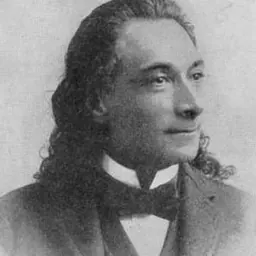
Related people
Same field, nearest in time




Contemporaries
People whose lives overlapped Samuel Cohen's

Frequently asked questions
Who was Samuel Cohen?
Moldovan composer; composer of the Israeli National Anthem (1870–1940)
When was Samuel Cohen born?
Samuel Cohen was born in 1870 in Ungheni.
When did Samuel Cohen die?
Samuel Cohen died on 28 March 1940 in Rishon LeZion.
What was Samuel Cohen's occupation?
Samuel Cohen was a composer.
What nationality was Samuel Cohen?
Samuel Cohen was Russian.
Sources & further reading
Cite this page
APA: Biography.guide. (2026). Samuel Cohen. https://biography.guide/samuel-cohen/
MLA: "Samuel Cohen." Biography.guide, https://biography.guide/samuel-cohen/.
Chicago: "Samuel Cohen." Biography.guide. https://biography.guide/samuel-cohen/.
Data last updated: 2026-09-20 · Spot an error? Report a correction.
Page generated 2026-09-27 05:21 UTC