
About Samuel Claggett Chew
Lived 1888 – 1960 (aged 71–72). Samuel Claggett Chew was an American literary scholar.
Samuel Claggett Chew (August 31, 1888 – January 16, 1960) was a scholar of English literature and drama who taught at Bryn Mawr College.
Education and teaching posts Chew hailed from a prominent American family and was born in Baltimore. He received his bachelor's degree from Johns Hopkins in 1909 and earned the doctorate there in 1913: while at the university, he was elected to the Phi Beta Kappa honor society. As a young man, he came into contact with Horace Howard Furness, who served as a role model for him; the younger man dedicated his 1915 book, The Dramas of Lord Byron, to Furness. He revered the editor of The New Variorum Shakespeare for his "wisdom and benevolence and large-heartedness and sense of humor."
Chew began his teaching career at the high school level at the Gilman Country School in Baltimore in 1909. For the next two years he was a fellow at Johns Hopkins while studying for his doctorate. In 1913 he taught at the Hotchkiss School in Salisbury, Connecticut.
Since Chew was well known in scholarly circles and published extensively, he was often invited to lecture at other universities, among them the University of Chicago, the University of Toronto, his alma mater Johns Hopkins, Western Reserve, and Harvard Universities. He also lectured at the Pierpont Morgan Library in New York. He was a visiting lecturer at Pomona College in 1954–55 and at the Claremont Graduate School from 1955 to 1957.
Popular writing and book reviews Chew was active as a critic and book reviewer. He wrote 3,000 book reviews in the field of English literature, many of them published in The New York Herald Tribune and The Nation. His last book review, concerning a two-volume edition of Coleridge's letters, appeared in the Herald Tribune the same day as his obituary.
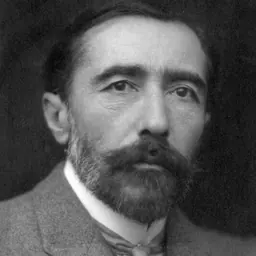
In 1925 Chew won first prize, offered by The Saturday Review of Literature, for the best discussion of the way in which Joseph Conrad might have finished his fragmentary novel titled Suspense.
The book that made him most well known for a popular audience was the anthology titled Fruit Among the Leaves. It included parts of famous books published by the D. Appleton & Company publishers on the occasion of their 125th year in business. The firm went out of business in 1973. Chew's 1921 book on Hardy, said one scholar, "enhanced Hardy's prestige".
Acknowledgements upon retirement Johns Hopkins University conferred upon him the honorary degree of Doctor of Literature in 1950. The next year he was elected to the American Philosophical Society; reviews of the era referred to Chew as an "eminent scholar".
Erwin Panofsky, then teaching at Princeton, held a special lecture in honor of Chew's retirement from Bryn Mawr in 1954; the title was "Galileo as a Critic of the Arts".
After his 1954 retirement as Professor of English Literature at Bryn Mawr, Chew continued to lecture occasionally at the college.
Book collector Chew was a collector of rare books. He willed that two late medieval manuscripts from his collection be donated to the Bryn Mawr Library. One was a psalter he had purchased during a sabbatical in Europe in 1921; other books were given to him by his friend Howard Gray, a history professor at the same college.
Major publications The Dramas of Lord Byron, 1915. Thomas Hardy, poet and novelist, 1921. Byron in England, 1924. The Crescent and the Rose (1937) was well received at the time of publication. Among literary scholars, the book is "usually seen as the pioneering discussion" of Islam in early modern English drama. It was reprinted five years (1965) after Chew's death and is still cited frequently. The Virtues Reconciled: An Iconographical Study, 1947. Literary History of England, 1948. Chew authored the fourth and last section: "Book IV: The Nineteenth Century and After". Chief Romantic Poets, 1950. The Pilgrimage of Life, 1962. Mrs. Chew oversaw the final editing process after her husband died. He had worked on the project over the course of 20 years.
He edited a volume of Tennyson's poems (titled Representative Poems) in 1941.
Don’t just read it —
keep it.
Full-length biographies made to live with: read them, listen on the way to work, watch them tonight.
- E-book
- Audio
- Video
Instant download · yours to keep · every purchase keeps this site free
Important facts
People in Samuel Claggett Chew's life
Named in this biography and alive at the same time



Related people
Same field, nearest in time



Contemporaries
People whose lives overlapped Samuel Claggett Chew's


Frequently asked questions
Who was Samuel Claggett Chew?
American literary scholar (1888–1960)
When was Samuel Claggett Chew born?
Samuel Claggett Chew was born in 1888.
When did Samuel Claggett Chew die?
Samuel Claggett Chew died in 1960.
What was Samuel Claggett Chew's occupation?
Samuel Claggett Chew was a literary scholar.
What nationality was Samuel Claggett Chew?
Samuel Claggett Chew was American.
Sources & further reading
· Wikipedia: Samuel Claggett Chew
· DBpedia: Samuel Claggett Chew
Cite this page
APA: Biography.guide. (2026). Samuel Claggett Chew. https://biography.guide/samuel-claggett-chew/
MLA: "Samuel Claggett Chew." Biography.guide, https://biography.guide/samuel-claggett-chew/.
Chicago: "Samuel Claggett Chew." Biography.guide. https://biography.guide/samuel-claggett-chew/.
Data last updated: 2026-09-20 · Spot an error? Report a correction.
Page generated 2026-09-27 05:16 UTC