
About Samuel Brooke
Lived 1575 – 1631 (aged 55–56). Samuel Brooke was a playwright.
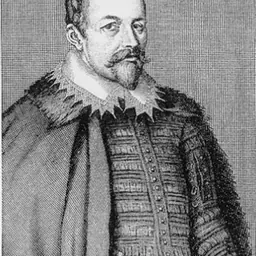
Dr Samuel Brooke (c. 1575–1631) was a Gresham Professor of Divinity (appointed 1612), a playwright, the chaplain of Trinity College, Cambridge and subsequently the Master of Trinity (1629–1631). He was known to be an Arminian and anti-Calvinist. In 1631 he was appointed archdeacon of Coventry.
Life He was the son of Robert Brooke of York, the brother of Christopher Brooke who appears in George Wither's eclogues under the pastoral name of Cuddie. Samuel Brooke was educated at Westminster School and Trinity College, Cambridge, where he was admitted in 1596; he proceeded M.A. 1604, B.D. 1607, and D.D. 1615.
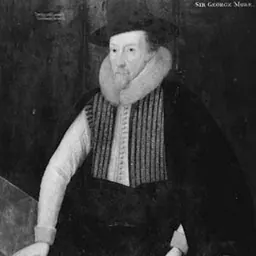
He was imprisoned for a short period, by the action of Sir George More, for secretly celebrating the marriage of John Donne with More's daughter. He was promoted to the office of chaplain to Henry Frederick, Prince of Wales, who recommended him (26 September 1612) as Gresham Professor of Divinity; he was later chaplain to both James I and Charles I. A central character in Melanthe is Nicander, the loutish heir of a rich father, who is mocked and teased by the shepherdess Ermilla, before she finally decides to accept him as her husband; the play also features a number of satyrs, who occasionally sing and dance.
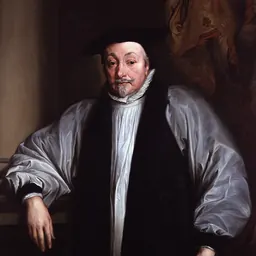
William Prynne in his Canterburie's Doome attacked Brooke as a disciple of William Laud, and stated that in 1630 Brooke was engaged on Arminian treatise on predestination. Laud encouraged him to complete this book, but afterwards declined to sanction its publication on account of a general prohibition on debating the subject. None of Brooke's works were printed. Beside the treatise already mentioned (a manuscript of the first three books of which is in the Library of Trinity College, Cambridge), he wrote a tract on the Thirty-nine Articles, and a discourse, dedicated to the Earl of Pembroke, entitled De Auxilio Divinæ Gratiæ Exercitatio theologica, nimirum: An possibile sit duos eandem habere Gratiæ Mensuram, et tamen unus convertatur et credat; alter non: e Johan. xi. 45, 46. Cambridge University Library, MS Additional 44, item 16. 'De Auxilio Divinæ Gratiæ Exercitatio theologica.'
Don’t just read it —
keep it.
Full-length biographies made to live with: read them, listen on the way to work, watch them tonight.
- E-book
- Audio
- Video
Instant download · yours to keep · every purchase keeps this site free
Important facts
People in Samuel Brooke's life
Named in this biography and alive at the same time





Related people
Same field, nearest in time

Contemporaries
People whose lives overlapped Samuel Brooke's



Frequently asked questions
Who was Samuel Brooke?
English cleric, Gresham Professor of Divinity, and playwright
When was Samuel Brooke born?
Samuel Brooke was born in 1575.
When did Samuel Brooke die?
Samuel Brooke died in 1631.
What was Samuel Brooke's occupation?
Samuel Brooke was a playwright.
Sources & further reading
Cite this page
APA: Biography.guide. (2026). Samuel Brooke. https://biography.guide/samuel-brooke/
MLA: "Samuel Brooke." Biography.guide, https://biography.guide/samuel-brooke/.
Chicago: "Samuel Brooke." Biography.guide. https://biography.guide/samuel-brooke/.
Data last updated: 2026-09-20 · Spot an error? Report a correction.
Page generated 2026-09-27 05:16 UTC