
About Samin Baghtcheban
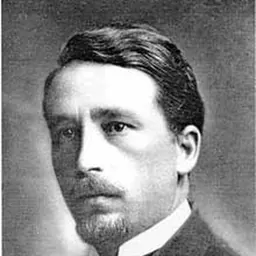
Lived 1923 – 2008 (aged 84). Samin Baghtcheban was an Iranian composer, linguist, poet, translator and writer.
Samin Baghtcheban (, ) (variations: Baghcheban, Baqcheban, Bahceban) (1923 – 19 March 2008) was an Iranian composer, author and translator.
Biography Samin Baghtcheban was born in 1925 in Tabriz, Iran, and grew up in Shiraz and Tehran, where his father established the first modern kindergartens and schools for the deaf in Iran. His father, Jabbar Baghtcheban, was a leading educator and pioneer of Persian cued speech.
Baghcheban started his music studies at the Tehran Conservatory of Music. In 1944 Samin Baghtcheban was awarded a scholarship to study composition in Ankara State Conservatory. He returned to Tehran in 1949 and started teaching at the Conservatory.
He was married to the opera singer, Evelyn Baghtcheban, whom he met while studying in Ankara.
In 1984 he moved to Turkey with his family where he continued his activities and composed several new pieces, some of which were performed by Manouchehr Sahbai in Switzerland.
Compositions Throughout his career he composed numerous pieces inspired by the Persian folk music or mythology. His most popular work is Rangin Kamoon (Rainbow), a collection of compositions for children (for choire and orchestra) which was recorded in 1978 in Vienna. Other Works: Persian Compositions for Voice and Piano (including 4 pieces: 1- Ruba'i No. 1: Do Zolfoonet (Your two braids) (1950) Text: Baba-Taher (11th-century Persian poet). 2- To Ra Mikham (I want you) (1952) Text: Folklore. 3- Sorood-e Saba (Saba's song) (1956) Text: Sa'di (13th-century poet). 4- Gahvareh-ye Khali (Empty cradle) (1957) Text: the composer), published in 2018, on the 10th death anniversary of the composer. The first two pieces, Ruba'i No. 1: Do Zolfoonet (Your two braids) and To Ra Mikham (I want you) were recorded on the album Sounds of Ancestors by Anousha Nazari. Sholeyl (for string orchestra) Boumivar (in 3 movements) for orchestra. Chaharshanbeh-Souri
Baghcheban also arranged various Persian folk songs for the choir. Some of his arrangements were performed by Tehran Choral Group and the Farah Choir in the 1960s and 1970s.
Literary works Between 1948 and 1979, in addition to his composition activities, he wrote and translated several books and articles. Baghtcheban translated several books by Turkish authors Nazim Hikmet, Yaşar Kemal and introduced the humorist Aziz Nesin to Iranians.
In 1963, along with a group of prominent teachers and educators, including Lily Ahi, Touran Mirhadi and Abbas Yamini Sharif, Baghtcheban confounded the Children's Book Council (CBC) of Iran. The council is an NGO focused on developing and promoting children's literature in Iran.
Don’t just read it —
keep it.
Full-length biographies made to live with: read them, listen on the way to work, watch them tonight.
- E-book
- Audio
- Video
Instant download · yours to keep · every purchase keeps this site free
Important facts
Family & relationships
People in Samin Baghtcheban's life
Named in this biography and alive at the same time
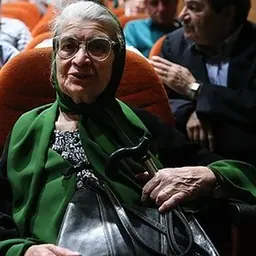



Related people
Same field, nearest in time
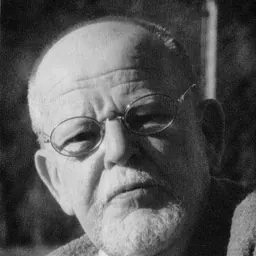



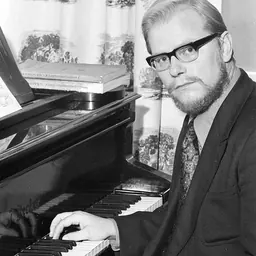
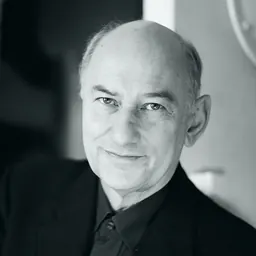
Contemporaries
People whose lives overlapped Samin Baghtcheban's
Frequently asked questions
Who was Samin Baghtcheban?
Iranian musician, poet, translator and writer (1925-2008)
When was Samin Baghtcheban born?
Samin Baghtcheban was born on 24 September 1923 in Tabriz.
When did Samin Baghtcheban die?
Samin Baghtcheban died on 19 March 2008 in Istanbul.
What was Samin Baghtcheban's occupation?
Samin Baghtcheban was a composer, linguist, poet, translator and writer.
What nationality was Samin Baghtcheban?
Samin Baghtcheban was Iranian.
Sources & further reading
· Wikipedia: Samin Baghtcheban
Cite this page
APA: Biography.guide. (2026). Samin Baghtcheban. https://biography.guide/samin-baghtcheban/
MLA: "Samin Baghtcheban." Biography.guide, https://biography.guide/samin-baghtcheban/.
Chicago: "Samin Baghtcheban." Biography.guide. https://biography.guide/samin-baghtcheban/.
Data last updated: 2026-09-26 · Spot an error? Report a correction.
Page generated 2026-09-27 05:16 UTC