
Sami Frashëri
Albanian writer, philosopher, playwright and activist
About Sami Frashëri
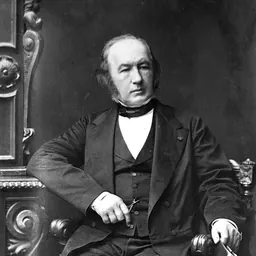
Lived 1850 – 1904 (aged 54). Sami Frashëri was a Turkish writer, philosopher, playwright, journalist, lexicographer and translator.
Sami bey Frashëri (; June 1, 1850 – June 18, 1904) or Şemseddin Sâmi was an Albanian writer, lexicographer, philosopher, playwright and a prominent figure of the Albanian National Awakening, together with his two brothers Abdyl and Naim. He also supported Turkish nationalism against its Ottoman counterpart, along with secularism (anti-clericalism or laicism) against theocracy.
Frashëri was one of the sons of an impoverished bey from Frashër (Fraşer during Ottoman rule) in the District of Përmet. He gained a place in Ottoman literature as a talented author under the name of Şemseddin Sami Efendi and contributed to the Ottoman Turkish language reforms.
Frashëri's message, however, as declared in his book "Albania - What it was, what it is, and what will become of it", published in 1899, became the manifesto of the Albanian National Awakening. He discussed the prospects for a united, free and independent republic of Albania. In this way, beginning with a demand for autonomy and struggle for their own alphabet and education, Frashëri helped the Albanian National Movement develop its claim for independence. His lifetime goal, as that of many other members of the Albanian renaissance, was the development and improvement of Albania's culture and eventual establishment of an independent country.
Life
Sami Frashëri was born in 1850 in the village of Frashër in the Ioannina Eyalet, Ottoman Empire (modern Albania) to a distinguished Muslim Albanian family of Bektashi religious affiliations. and their paternal family traditions held that they were descendants of timar holders that hailed from the Berat region before coming to live in Frashër. Frashëri was a bright student and finished an eight-year schooling program by graduating at the end of seven years. His reflections of the Zosimea later in life was that it was "the perfect high school". Additionally Frashëri authored other publications in the Albanian language that included a pamphlet on the alphabet question, a reader, a grammar and a political treatise on the Albanian question titled Albania: What she has been, What she is, What she shall be.
Involvement in the Albanian national movement
The Besa yahut Ahde Vefa play
In Istanbul 1874 Frashëri wrote a play named Besâ yâhut Âhde Vefâ (Pledge of Honor or Loyalty to an Oath) in the Albanian language with themes based on an Albanian ethnicity, a bond to an ethnic based territory, ethno-cultural diversity as underlying Ottoman unity, honor, loyalty and self-sacrifice. The play revolved around a betrothed girl kidnapped by a jealous villager that kills her father and whose mother vows revenge co-opting the culprit's father who gives his besa (pledge of honor) to help not knowing its his son, later killing him and himself ending with family reconciliation. Frashëri's reasons for the play were to inform people about the morals, values, customs and traditions of Albanians whom he considered an important part of the empire and to create more local Ottoman theatre which he felt was dominated by foreign influences. The play was intended to present Albanians in a positive light to Ottoman and Albanian audiences that involved mainly Armenians directing and acting in roles with smaller numbers of Turks during its stage run. His play and its discussion of besa signified to more astute audiences the political implications of the concept and possible subversive connotations in future usage while it assisted Albanians in rallying militarily and politically around a national program. Frashëri's play would not appear in theatres until the aftermath of the 1908 Young Turk Revolution when performances continued for a full three years and during 1911-1912.
League of Prizren period
During the Great Eastern Crisis, the Central Committee for Defending Albanian Rights was founded in 1877 and headed by elder brother Abdyl with Sami, Hasan Tahsini, Pashko Vasa and Jani Vreto being members. Early in 1879, this committee formed a commission for the Albanian alphabet. The Committee appointed Sami along with Tahsini, Vasa and Vreto to create an Albanian alphabet. During discussions about the Albanian alphabet Frashëri and Vreto wanted the inclusion of a Greek alphabet character on the premise that Albanians and Greeks have the same ancestors, the Pelasgians. Frashëri created a new Albanian alphabet based on the Latin script and a one letter, one sound principle that contained certain Greek letters and others invented by him for sounds that a Latin alphabet was unable to convey. On 20 June 1878 Sami was one of ten signatories to a memorandum addressed to Berlin Congress hosts chancellor Bismarck and Count Andrassy calling for reforms and Albanians to remain in the Ottoman state with their rights, desires, interests and traditions being respected.
Amidst this time Frashëri worked for the Ottoman newspaper Tercüman-ı Hakikat and he reported coverage on the geopolitical situation and events in Albania. In an article published on 24 December 1878 about the Albanian question, he expressed that Albania was his special vatan (homeland) and he felt connected to the wider Ottoman motherland stressing that Albanians were loyal to the empire and ready to defend it. Frashëri continued to write a series of articles expanding his views by maintaining that Albanians wished to read and write in their language and those abilities he thought would allow Albanians protection from the influences of Hellenism and Slavism. He considered those factors as placing Albanians at risk of being severed from the empire for the benefits of foreign powers and peoples with Frashëri stating that both Christian and Muslim Albanians were thinking alike on these issues.
Frashëri also founded and headed in Istanbul the Society for the Publication of Albanian Writings in October 1879, where Albanian scholastic books and texts were compiled by him and his brother Naim. In a correspondence of 1881 with Girolamo De Rada regarding the Albanian question Frashëri expressed sentiments supporting Albanian unity that transcended Muslim and Christian divisions with religion being separate from the state. By 1884 he had developed a reputation for championing the Albanian cause. In 1896 he made an assessment of education in the Vilayet of Monastir claiming that Greeks, Bulgarians and Aromanians had more progressive schools and advanced education than Muslim Albanians.
Between Ottomanism, Albanianism and Turkism
The Kâmûsü'l-A'lâm encyclopedia
Between 1889 and 1899 Frashëri wrote a six-volume encyclopedia titled (Dictionary of Proper Names) in Ottoman Turkish. In this scientific work of 4,380 pages, The encyclopedia had a focus on Turks, Arabs and in particular the Ottomans, with Frashëri including detailed information for his readers on topics about Albania and Albanians.
For example, the entry titled Arnavud (Albanian) was six pages and a total of eleven columns. Frashëri included information on the Venetian period, the Ottoman conquest, conversion to Islam, and the attainment of Ottoman privileges. He highlighted Albanians' sacrifices and service to the state as soldiers, bureaucrats, in commerce and industry. Skanderbeg, a fifteenth-century Albanian warrior, and his revolt against the Ottomans were described in a positive light, as were the national and intellectual achievements of the Albanian diaspora in southern Italy. Despite the regional differences of Ghegs and Tosks, Frashëri emphasized the unity of Albanians as speaking the same language with small dialectal differences. He stressed the importance of developing Albanian language education and literature as a way of resisting encroachment from others through for example Hellenisation and as such urged authorities to allow Albanian national development. As with other entries on cities, towns, administrative units and others on Albanian topics Frashëri overall aimed in his encyclopedia to educate the general public about Albanians, to raise Albanian self-awareness and outline the geographical boundaries of Albania. The concept of Albanianism was also subtly developed within his encyclopedia. That theme was embodied in the entry Ottoman, a term Frashëri presented as originating from a great Turkish tribe but shifting in meaning over time to encompass all Ottoman peoples and subjects as a result of reforms following the principle of equality. This definition reflected the Ottomanism of the Tanzimat era.
After being involved with the Albanian movement during the League of Prizren period Frashëri increasingly came under suspicion by the Ottoman government over a number of times. In 1896, the authors of the Ottoman government provincial almanac for Kosovo titled Kosova Salnamesi credited Frashëri and his encyclopedia as the source for most of their information.
By 1899, a successor organisation to the Prizren League called League of Peja (Besa-Besë) had arisen and Frashëri again attempted to raise public discussion on Albania.
The aforementioned booklet Albania: What she has been, What she is, What she shall be was first published in Albanian without the author's name in 1899, then in French, and in 1904, right after Şemseddin Sami's death, it was published in Sofia under his name and in Turkish with the condition that it was "literally translated from Albanian". Turkish historians generally do not accept that this work belongs to Şemseddin Sami and consider the event as an effort to gain prestige to Albanian nationalism by using Şemseddin Sami's reputation and prestige. Considering Şemseddin Sami's intense interest in the issues of Turkishness and Ottomanism, especially in his last years, it can be thought that there is some truth in this view. On the other hand, in Albanian works, there is not the slightest doubt that the Albanian manifesto belongs to Şemseddin Sâmi. Publishers from Austro-Hungary printed some of Frashëri's most important works containing nationalist themes with Austro-Hungarian Albanologists Theodor Anton Ippen and Baron Nopcsa financing the translation and distribution of his publications. After several months passed from his death the identity of Frashëri as author was revealed on 17 November 1904 by Shahin Kolonja who had published the work and later by a German translation of the booklet in 1913. As in previous publications he repeated certain points such as claiming Albanians as the oldest peoples of Europe, focused on Skanderbeg in a few pages, the Ottoman era in Albania and Albanian contribution to the empire. He envisioned an autonomous Albanian state with a political parliamentary system, a capital called Skenderbey to be located in central Albania, an Albanian school system, two universities with one each in the north and south and an army of 20,000 men. The nationalisation of the various faiths and sects was envisioned where Catholics would have their own archbishop, Muslims their mufti, Orthodox their Exarch, Bektashi their chief Baba with Jews and Protestants also worshiping in freedom. The booklet by Frashëri overall was an articulation of political Albanianism.
The choice of wording by Frashëri in labeling the language Turkish as opposed to Ottoman assisted to nurture a national identity among Turkish people. As an Ottoman, like many other Albanians he negotiated the daily reality of the multi-ethnic, linguistic and religious realities of his time appreciating and supporting the diversity of the state while also advocating for Albanianism.
As a cultural and political activist Frashëri however ran into trouble with the Ottoman government. Frashëri did not want Albanians to be confused for Turks and he worked to foster the national identities of both ethnic groups. Albanians of the era regarded Frashëri as a patriot, while due to his contributions toward developing a national Albanian literature modern Albanian historians view him as an Albanian nationalist. As the works of Frashëri contain nationalistic discourse, following his death they have retained the attention of the public during different time periods and governments in Albania and Turkey. Within Turkish literary history Frashëri is revered as being a forefather of Turkish literature and a significant innovator for the Turkish language.
The four surviving children of Frashëri remained in Turkey and due to their commitment to the republic Turkish authorities decided in the 1950s not to allow the remains of Sami to leave the country for Albania. His son, Ali Sami Yen (1886–1951), was a footballer and founder of Galatasaray SK and chairman of Galatasaray between 1905–18 and 1925–6.
Nowadays, many schools bear his name, e.g. Sami Frashëri High School, one of the most well-known gymnasiums in Pristina, and another in Tirana, and in other localities such as Bogovinje, North Macedonia and so on.
The Frashëri brothers have been commemorated in Albanian folk songs.
Work Sami is the author of around 50 works. Some of his most important writings are:
Novels Ta'aşşûk-ı Tal'at ve Fitnât (Albanian: Dashuria e Talatit me Fitneten -English: The Love Between Talat and Fitnat, 1873)
The story carries a sentimental subject of love between Talat and Fitnat. Generally, the novel consists of a combination of Oriental and Western writing styles. Also, this novel is commonly mistaken to be the first novel written in Turkish.
Drama Besâ yâhut Âhde Vefâ (Albanian: "Besa ose Mbajtja e Fjalës" - English: Besa or The Given Word of Trust, 1874). Is a melodrama aiming Besa as a subject, but in a very tragic situation; the father kills his son to keep the given word. Seydi Yahya (1875) Gâve (1876) Mezalim-i Endülûs (Never printed) Vicdân (Never printed)
Dictionaries and encyclopedical works Kâmûs-ı Fransevî (1882–1905, French-Turkish dictionary) Kâmûs-ı Fransevî (1885, French-Turkish dictionary) Küçük Kâmûs-ı Fransevî (1886, French-Turkish dictionary) Kâmûsü'l-A'lâm (6 volumes, 1889–1898, Encyclopedia of General Science, known to be the first Encyclopedia printed in Turkish) Kâmûs-ı 'Arabî (1898, Arabic-Turkish dictionary, unfinished) Kâmûs-ı Türkî (2 volumes, dictionary of the Classical Ottoman Turkish language, still widely used as a reference as of today, 1899–1900, reprints and facsimiles in 1978 and 1998)
Scientific writings Şemseddin Sami also did a series of scientific writings in Albanian such as Qielli (Sky), Toka (Earth), Njeriu (Human Being), Gjuha (Language), and many more.
Educational writings in Albanian
Allfabetarja e Stambollit (Alphabet of Istanbul, 1879) Abetarja e Shkronjëtoreja (Grammatical Work, 1886)
Other In Turkish in his "Pocket Library" collection, he published small scientific booklets on subjects as astronomy, geology, anthropology, history of Islam and the Islamic civilization, women, mythology and linguistics. He also published a small compilation of humor named Letâ'if in two volumes, a compilation of proverbs and quotes named Emsâl in four volumes, and a series of reading-oriented educational books for schoolchildren. During Ebüzziya Tevfiks exile, Frashëri managed the Ottoman journal Muharrir.
Language studies and linguistics Usûl-ü Tenkîd ve Tertîb (1886, Orthography of Turkish) Nev-usûl Sarf-ı Türkî (1891, Modern Turkish Grammar) Yeñi Usûl-ü Elifbâ-yı Türkî (1898, New Turkish Alphabetical System) Usûl-ü Cedîd-i Kavâ'id-i 'Arabiyye (1910, New Method for Learning Arabic) Tatbîkât-ı 'Arabiyye (1911, Exercises in Arabic)
Political work Shqipëria ç'ka qenë, ç'është e çdo të bëhetë (Albania - what it was, what it is and what it will be, 1899). Theoretical commentary that became Rilindja Kombëtare's manifesto.
Footnotes
Don’t just read it —
keep it.
Full-length biographies made to live with: read them, listen on the way to work, watch them tonight.
- E-book
- Audio
- Video
Instant download · yours to keep · every purchase keeps this site free
Important facts
Family & relationships
People in Sami Frashëri's life
Named in this biography and alive at the same time



Related people
Same field, nearest in time

Contemporaries
People whose lives overlapped Sami Frashëri's


Frequently asked questions
Who was Sami Frashëri?
Albanian writer, philosopher, playwright and activist (1850–1904)
When was Sami Frashëri born?
Sami Frashëri was born on 1 June 1850 in Frashër.
When did Sami Frashëri die?
Sami Frashëri died on 18 June 1904 in Istanbul.
What was Sami Frashëri's occupation?
Sami Frashëri was a writer, philosopher, playwright, journalist, lexicographer and translator.
What nationality was Sami Frashëri?
Sami Frashëri was Turkish.
Sources & further reading
Cite this page
APA: Biography.guide. (2026). Sami Frashëri. https://biography.guide/sami-frasheri/
MLA: "Sami Frashëri." Biography.guide, https://biography.guide/sami-frasheri/.
Chicago: "Sami Frashëri." Biography.guide. https://biography.guide/sami-frasheri/.
Data last updated: 2026-09-20 · Spot an error? Report a correction.
Page generated 2026-09-27 05:31 UTC