
About Sambhunath Pandit
Lived 1820 – 1867 (aged 46–47). Sambhunath Pandit was an Indian lawyer.
Sambhunath Pandit (1820–1867) was the first Indian to become a sitting judge of a court of law in British India.
Early life Sambhunath Pandit was born to a Kashmiri Pandit family in Kolkata. His grandfather Manasaram Pandit had fled from their ancestral lands in the Kashmir valley to avoid persecution of Hindus conducted by the Durrani Empire & resettled in Varanasi. Manasaram's eldest son & Shambhunath's father Shivaprasada had migrated to Lucknow in order to secure a job in the darbar of the Nawab of Oudh, for which he had learned Persian (the court language) & Urdu. However, on the invitation of his younger brother Sadashiva, he migrated to Calcutta, the seat of power of the Company rule, where he worked as a clerk in a civil court after learning English. Shambhunath, due to his ill-health, was sent to live his childhood in the house of his maternal uncle at Lucknow, where he learned Persian & Urdu. On returning to Calcutta, he joined the Oriental Seminary. However, he had to drop out of school in order to get married at a young age (according to the prevalent traditions). In order to support his family, he started working as an assistant record-keeper in the Sadar Dewani Adalat, utilising his knowledge in English, Urdu & Persian. Shambhunath earned the goodwill of his British superiors by exhibiting his skill in English by translating court documents written in Bengali & Persian into English, which led to him being promoted to the position of clerk responsible for issuing court decrees. He also earned further fame by translating the Opus Majus into English.
Law career Having earned the goodwill of his British employers, Pandit began practicing law at the Sadar Dewani Adalat from 16 November 1848. Soon he moved to the Sadar Faujdari Adalat as a criminal lawyer. On 28 March 1853, he was appointed as a government pleader. Apart from his work as a lawyer, he also worked as the inaugural Professor of Law at the law department of the Hindu College from 1855 to 1857. In 1861, Pandit was promoted to the position of senior government pleader by the new administration. Within a year, on 18 November 1862, on the recommendation of the Chief Justice Sir Barnes Peacock, Shambhunath Pandit was promoted to the position of a sitting judge at the newly founded Calcutta High Court. While serving as a record-keeper, he had published a book entitled On the Being of God championing monotheism & aniconism. and an important road in Bhowanipur are named after him.
Don’t just read it —
keep it.
Full-length biographies made to live with: read them, listen on the way to work, watch them tonight.
- E-book
- Audio
- Video
Instant download · yours to keep · every purchase keeps this site free
Important facts
People in Sambhunath Pandit's life
Named in this biography and alive at the same time

Related people
Same field, nearest in time


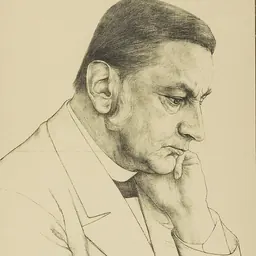


Contemporaries
People whose lives overlapped Sambhunath Pandit's
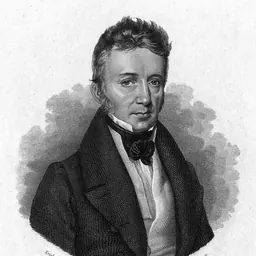



Frequently asked questions
Who was Sambhunath Pandit?
Indian judge, social reformer (1820–1867)
When was Sambhunath Pandit born?
Sambhunath Pandit was born in 1820 in Kolkata.
When did Sambhunath Pandit die?
Sambhunath Pandit died on 6 June 1867 in Kolkata.
What was Sambhunath Pandit's occupation?
Sambhunath Pandit was a lawyer.
What nationality was Sambhunath Pandit?
Sambhunath Pandit was Indian.
Sources & further reading
· Wikipedia: Sambhunath Pandit
Cite this page
APA: Biography.guide. (2026). Sambhunath Pandit. https://biography.guide/sambhunath-pandit/
MLA: "Sambhunath Pandit." Biography.guide, https://biography.guide/sambhunath-pandit/.
Chicago: "Sambhunath Pandit." Biography.guide. https://biography.guide/sambhunath-pandit/.
Data last updated: 2026-09-22 · Spot an error? Report a correction.
Page generated 2026-09-27 05:18 UTC