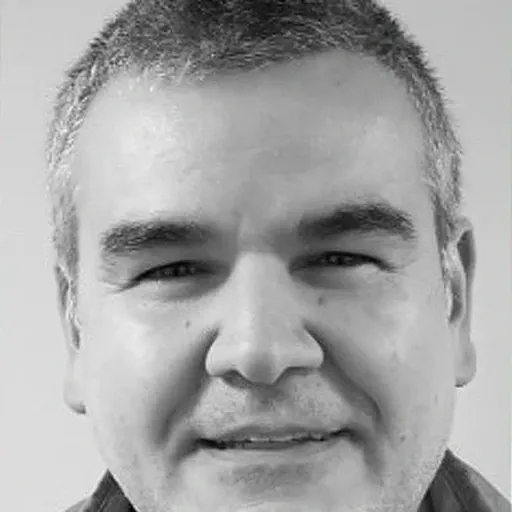
Salvatore Cezar Pais
American physicist, aerospace engineer, and inventor
About Salvatore Cezar Pais
Salvatore Cezar Pais was a military flight engineer, inventor and physicist.
Salvatore Cezar Pais (born September 7, 1967) is a Romanian-American aerospace engineer and inventor.
Beginning in 2015, Pais filed a series of patent applications on behalf of the U.S. Navy describing technologies with radical claims, including a room temperature superconductor, a compact fusion reactor, an inertial mass reduction device, and a high-frequency gravitational wave generator. Collectively dubbed the "UFO patents" in the media, these inventions attracted widespread attention for their potential energy and military applications, but also significant skepticism from physicists who questioned their scientific basis. The Navy spent over $500,000 testing Pais's core concept, the "Pais Effect," from 2016 to 2019, but NAWCAD concluded that the effect could not be proven. Some commentators have speculated that the patents may constitute disinformation intended to mislead the United States' strategic adversaries about the direction of American defense research.
Pais received his Ph.D. in mechanical and aerospace engineering from Case Western Reserve in 1999. His doctoral advisors were Yasuhiro Kamotani and Simon Ostrach, both of whom had conducted Spacelab experiments in microgravity conditions aboard the Space Shuttle mission STS-50 in 1992. Pais's doctoral research was sponsored by NASA.
Career Pais has presented at American Institute of Aeronautics and Astronautics conferences over the years.
Transfers within the defense establishment In June 2019, Pais left NAWCAD and transferred to the U.S. Navy's Strategic Systems Programs (SSP), He reported that he began in 2015 to publish his patents "after rejections from academic publishing".
Craft using an inertial mass reduction device (filed 2016, granted December 4, 2018): A patent describing a conical "hybrid aerospace/undersea craft" that could purportedly "engineer the fabric of our reality at the most fundamental level" by utilizing an inertial mass reduction device. The patent was initially rejected, but was granted after James Sheehy, the Naval Aviation Enterprise's chief technology officer, wrote to the United States Patent and Trademark Office asserting that the invention was operable and warning that the Chinese military were developing similar technology. This patent expired on January 9, 2023, due to non-payment of maintenance fees.
Piezoelectricity-induced room temperature superconductor (filed 2017, published February 21, 2019): A device purportedly capable of achieving superconductivity at room temperature, which would enable "the transmission of electrical power with no losses." The Institution of Engineering and Technology noted that no evidence was presented to demonstrate that the device worked, and that the highest-temperature superconductors achieved at that time operated at approximately −70 °C (−94 °F). The claim was also covered by Phys.org. The superconductor patent application led to appeals by the U.S. Navy and Pais, after being initially rejected by the U.S. Patent Office.
Plasma compression fusion device (filed 2018, published September 26, 2019): A compact nuclear fusion reactor described as capable of producing power in the gigawatt to terawatt range. Popular Mechanics described it as a "compact nuclear fusion reactor" whose "designs seemingly stretch the limits of science." The concept was also described in a peer-reviewed paper published in IEEE Transactions on Plasma Science in 2019. Pais said those experiments had not yet produced the 1 Coulomb charge he considered necessary for the Pais Effect to work. Internal documents obtained through Freedom of Information Act requests by The Drive revealed that the project had been considered to have "National Security importance" within NAWCAD, and that research notes referenced a "Spacetime Modification Weapon" that could theoretically dwarf the power of a hydrogen bomb. In the 2025 interview summarized by Interesting Engineering, Pais rejected suggestions that his patents were disinformation, saying they were "not a bluff" and asserting that the underlying physics was correct.
Several of Pais's patents, including the electromagnetic field generator and the high-frequency gravitational wave generator, have since expired due to non-payment of maintenance fees, and the plasma compression fusion device patent application was abandoned, suggesting that neither Pais nor the Navy is actively pursuing these technologies through the patent system. According to The Times, "mainstream publications still refuse to publish him".
Selected publications Peer-reviewed papers
Patent literature
Personal life Pais lives in California. He described himself as religious. Pais was noted for having virtually no web presence. The Times reported that Pais stated in his capacity as a private individual that he believes extraterrestrial life exists, may possess technologies similar to his inventions, and are a form of "superintelligence" that "considers the human race 'an experiment'."
Don’t just read it —
keep it.
Full-length biographies made to live with: read them, listen on the way to work, watch them tonight.
- E-book
- Audio
- Video
Instant download · yours to keep · every purchase keeps this site free
Important facts
Related people
Same field, nearest in time


Frequently asked questions
Who was Salvatore Cezar Pais?
American physicist, aerospace engineer, and inventor
What was Salvatore Cezar Pais's occupation?
Salvatore Cezar Pais was a military flight engineer, inventor and physicist.
Sources & further reading
· Wikipedia: Salvatore Cezar Pais
Cite this page
APA: Biography.guide. (2026). Salvatore Cezar Pais. https://biography.guide/salvatore-cezar-pais/
MLA: "Salvatore Cezar Pais." Biography.guide, https://biography.guide/salvatore-cezar-pais/.
Chicago: "Salvatore Cezar Pais." Biography.guide. https://biography.guide/salvatore-cezar-pais/.
Data last updated: 2026-09-24 · Spot an error? Report a correction.
Portrait: Wikimedia Commons · author & licence
Page generated 2026-09-27 05:08 UTC