
Salman the Persian
Companion of Muhammad; first Persian convert to Islam
About Salman the Persian
Lived 568 – 657 (aged 88–89). Salman the Persian was a preacher, military leader, translator and writer, known for Ali and Sahaba.
Salman the Persian, (born Rozbih Khwashbudhan or Rozbih Budhakhshan; – ), also known as Salman al-Farsi, was a Persian companion of the Islamic prophet Muhammad and one of the most prominent non-Arab members of the early Muslim community. He was originally a Zoroastrian from Sassanid Iran and spent much of his early life searching for religious truth. His search led him from Zoroastrianism to Christianity and eventually to Islam, after which he travelled to Medina and met Muhammad. Salman's early life is described as a prolonged search for truth. He was born into a Zoroastrian family near Isfahan and was raised as a Zoroastrian. After encountering Christians and becoming interested in their beliefs, he left his homeland and travelled through the Byzantine Empire in search of religious teachers. He stayed with several Christian monks and scholars in Amorium, and continued studying Christianity under their guidance. After the death of his teacher, Salman was directed to another scholar and continued his journey from one teacher to another. Eventually, his final teacher told him that a prophet would soon appear in Arabia and described several signs by which he could recognize him. Salman then travelled toward Arabia, where he was taken to Medina and met Muhammad, converting to Islam after recognizing the signs described to him.
Salman is particularly renowned for his role in the Battle of the Trench in 627 CE. He suggested that Muhammad dig a defensive trench around Medina to protect the city from the attacking Meccan polytheists. The tactic was unfamiliar to the Arabs but had been used in Persian military warfare, and the trench played a key role in preventing the attacking forces from entering Medina. Following Muhammad's death in 632, Salman became closely associated with Ali. He is particularly revered in Shia Islam, where he is regarded as one of the most devoted companions of Muhammad and as a close supporter of Ali and the Ahl al-Bayt. A well-known hadith attributes to Muhammad the statement that Salman was among his family (Ahl al-Bayt). Salman is claimed to have participated in the Muslim conquest of Persia during the Rashidun Caliphate. Sources report that he participated in campaigns against the Sasanian Empire, including the Battle of al-Qadisiyyah in 636 CE. His Persian background and familiarity with Persian language and customs were regarded as valuable to the Muslim forces. After the conquest of the region, Salman was appointed governor of al-Mada'in (Ctesiphon), the former Sasanian capital, and died there around 656 CE. Salman is also highly revered in Sunni Islam, holding a highly esteemed position.
Early life The date and place of Salman's birth are disputed. Based on available evidence, he was likely born between 568 and 570 AD. Salman was a Persian originally named as either Rozbih Khwashbudhan, or Rozbih Budhakhshan. His birthplace is reported as either Kazerun in Fars province or Isfahan in Isfahan province.
In a hadith, Salman also traced his ancestry to Ramhormoz. The first sixteen years of his life were dedicated to studying to become a Zoroastrian magus or priest, after which he became the guardian of a fire temple.
Conversion to Christianity from Zoroastrianism Three years later in 587 he met a Christian group and was impressed by them. Against the wishes of his father, he left his family to join them. His family allegedly imprisoned him afterwards to prevent him but he escaped.
Career as a Sahabi
Mosque of Salman the Persian at the site of the Battle of the Trench in Medina.
Salman came up with the idea of digging a great trench around the Medina, to defend the city against the army of 10,000 Arabian non-Muslims. Muhammad and his companions accepted Salman's plan because it was safer, and there would be a better chance that the non-Muslim army would have a larger number of casualties. other sources narrate that during the Battle of the Trench, one of Muhajirun stated "Salman is one of us, Muhajirun", but this was challenged by the Muslims of Medina (also known as the Ansar). A lively argument began between the two groups with each of them claiming Salman belonged to their group and not to the other one. Muhammad arrived on the scene and heard the argument. He was amused by the claims but soon put an end to the argument by saying: "Salman is neither Muhajir nor Ansar. He is one of us. He is one of the People of the House."
Salman participated in the conquest of the Sasanian Empire, and became the first governor of the Sasanian capital Ctesiphon, after its fall at the time of the second Rashidun Caliph, Umar ibn Al-Khattab.
Salman used to cut the hair of Muhammad at the time, inspiring plates in Turkish barber shops with the verse: Every morning our shop opens with the basmala, Hazrat-i Salman-i Pak is our pir and our master.
Manuscripts Salman is considered one of the pioneers in Shi'ite written works. In addition, written works have also been attributed to him. Including a work called "Khabar Jathliq ar-Rumi". Of course, this work is a text that Salman only narrated and was not the author of. "Khabar Jathliq ar-Rumi" contains the theological questions of the Roman emperor to the Caliph of the Muslims after the death of Muhammad and Ali's answer to those questions. Ibn Babawayh quoted three parts of it and at the end of the second and third quotations he pointed out that the full text of Salman's book is at the end of the book Muhammad had been brought. while another source says he died during Uthman's era in 35 A.H. / 655 or 656 C.E. His tomb is located in Salman Al-Farsi Mosque in Al-Mada'in, or according to some others, in Isfahan, Jerusalem or elsewhere. Salman, along with Abu Dharr al-Ghifari, Ammar ibn Yasir, and Miqdad ibn Aswad, is considered to be the four loftiest of the Shi'a. Ali Asgher Razwy, a 20th-century Shia Twelver Islamic scholar states:
Alawism For Alawites, Salman is part of a divine trinity alongside Muhammad and Ali, the latter of whom is seen as a manifestation of Allah.
Sufism Salman is also well known as a prominent figure in Sufism. and Salman is honored as a prophet, and as an incarnation of the monotheistic idea.
Bahá’í Faith In the Kitáb-i-Íqán, Bahá'u'lláh honours Salman for having been told about the coming of Muhammad:
As to the signs of the invisible heaven, there appeared four men who successively announced unto the people the joyful tidings of the rise of that divine Luminary. Rúz-bih, later named Salmán, was honoured by being in their service. As the end of one of these approached, he would send Rúz-bih unto the other, until the fourth who, feeling his death to be nigh, addressed Rúz-bih saying: 'O Rúz-bih! when thou hast taken up my body and buried it, go to Hijáz for there the Day-star of Muhammad will arise. Happy art thou, for thou, shalt behold His face!'
TV Series Salman the Persian is an upcoming Iranian historical television series directed by Davood Mirbagheri. The series depicts the life of Salman, from his childhood in Sassanid Iran and his journey through the Byzantine Empire to his conversion to Islam and his life alongside Muhammad. The series is largest and most ambitious television production in Iranian history.
Don’t just read it —
keep it.
Full-length biographies made to live with: read them, listen on the way to work, watch them tonight.
- E-book
- Audio
- Video
Instant download · yours to keep · every purchase keeps this site free
Important facts
People in Salman the Persian's life
Named in this biography and alive at the same time
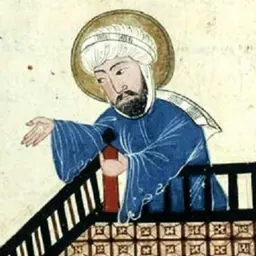


Related people
Same field, nearest in time



Contemporaries
People whose lives overlapped Salman the Persian's


Frequently asked questions
Who was Salman the Persian?
companion of Muhammad; first Persian convert to Islam
When was Salman the Persian born?
Salman the Persian was born in 568 in Kazerun.
When did Salman the Persian die?
Salman the Persian died in 657 in Ctesiphon.
What was Salman the Persian's occupation?
Salman the Persian was a preacher, military leader, translator and writer.
What was Salman the Persian known for?
Salman the Persian was known for Ali and Sahaba.
What nationality was Salman the Persian?
Salman the Persian's recorded nationality: Sasanian Empire, Rashidun Caliphate.
Sources & further reading
· Wikipedia: Salman the Persian
Cite this page
APA: Biography.guide. (2026). Salman the Persian. https://biography.guide/salman-the-persian/
MLA: "Salman the Persian." Biography.guide, https://biography.guide/salman-the-persian/.
Chicago: "Salman the Persian." Biography.guide. https://biography.guide/salman-the-persian/.
Data last updated: 2026-09-20 · Spot an error? Report a correction.
Page generated 2026-09-27 05:26 UTC