
Sally Miller Gearhart
American teacher, feminist, science fiction writer, and political activist
About Sally Miller Gearhart
Lived 1931 – 2021 (aged 90). Sally Miller Gearhart was an American novelist, writer, science fiction writer, university teacher and women's rights activist.
Sally Miller Gearhart (April 15, 1931 – July 14, 2021) was an American teacher, radical feminist, science-fiction writer, and political activist. In 1973, she became the first open lesbian to obtain a tenure-track faculty position when she was hired by San Francisco State University, where she helped establish one of the first women and gender study programs in the country. She later became a nationally known gay rights activist.
Early life Sally Miller Gearhart was born in Pearisburg, Virginia, in 1931 to Sarah Miller Gearhart and Kyle Montague Gearhart. and later moved to Texas Lutheran College (now University) in Seguin, Texas. In both positions, Gearhart lived in the closet and hid her true sexual identity to fit with the culture of the schools. As a professor, she was incredibly popular and sought-after, but her personal life was full of the struggles of living in the closet.
Activism After Gearhart received tenure from San Francisco State, she became politically active, fighting in particular for radical feminist causes. Gearhart famously debated John Briggs, attacking the initiative to ban homosexuals from academic positions in public schools. A clip of the debate appeared in the documentary film The Times of Harvey Milk, which also included Gearhart talking about working with Milk against Proposition 6, and reactions in San Francisco in the aftermath of Milk's assassination.
In the mid-1970s, Gearhart was co-chair of The Council On Religion And The Homosexual. This organization offered a variety of speaking events and literature to educate followers on the Judeo-Christian tradition. It also educated legislators about the lifestyles of lesbian, gay, bisexual, and transgender people. and "Last Call at Maud's" released in 1993. She appeared briefly in Barbara Hammer's 1975 short film "Superdyke".
Throughout her career, Gearhart fought for animal rights and became involved with ecologically based causes and the women's spirituality movement.
Writing In 1974, she co-authored with United Church of Christ pastor William R. Johnson the book Loving Women/Loving Men: Gay Liberation and the Church, which argued that marriage is a covenant relationship, regardless of gender.
In 1976, Gearhart co-wrote A Feminist Tarot with Susan Rennie. It was published by Persephone Press and used conventional Rider–Waite–Smith imagery. Because of her collaboration with feminist presses like Persephone Press and engagement with themes of feminist separatism and lesbian feminism, Gearhart is associated with the women in print movement, an effort by second-wave feminists to establish autonomous communications networks of feminist periodicals, presses, and bookstores created by and for women. Gearhart's novel The Wanderground inspired the name of the Wanderground Lesbian Archive and Library in Cranston, Rhode Island, which collects New England lesbian works with a focus on the women in print movement.
In 1979, Gearhart published in the journal Women’s Studies International Quarterly, issue 2, which included the essay “The Womanization of Rhetoric”, which could be considered the first feminist essay to reject rhetoric's key principle of persuasion, declaring that “Any intent to persuade is an act of violence” (195). With this, she separated rhetoric from ideas of domination, conquering, and often violence. In the essay, she called this new, domination-free rhetoric "invitational rhetoric".Of all the human disciplines, [rhetoric] has gone about its task of educating others to violence with the most audacity. The fact that it has done so with language and metalanguage, with refined functions of the mind, instead of with whips or rifles does not excuse it from the mindset of the violent. (195)
In her early career, Gearhart took part in a series of seminars at San Francisco State University, where feminist scholars were critically discussing issues of rape, slavery, and the possibility of nuclear annihilation. Gearhart outlines a three-step proposal for female-led social change from her essay, "The Future–-If There Is One–-is Female": I) Every culture must begin to affirm a female future. II) Species responsibility must be returned to women in every culture. III) The proportion of men must be reduced to and maintained at approximately 10% of the human race.
Gearhart does not base this radical proposal on the idea that men are innately violent or oppressive, but rather on the "real danger is in the phenomenon of male-bonding, that commitment of groups of men to each other whether in an army, a gang, a service club, a lodge, a monastic order, a corporation, or a competitive sport." Gearhart identifies the self-perpetuating, male-exclusive reinforcement of power within these groups as corrosive to female-led social change. Thus, if "men were reduced in number, the threat would not be so great and the placement of species responsibility with the female would be assured."
Gearhart, a dedicated pacifist, recognized that this kind of change could not be achieved through mass violence. On the critical question of how women could achieve this, Gearhart argues that it is by women's own capacity for reproduction that the ratio of men to women can be changed through the technologies of cloning or ovular merging, both of which would only produce female births. She argues that as women take advantage of these reproductive technologies, the sex ratio would change over generations.
Daphne Patai in her book Heterophobia: Sexual Harassment and the Future of Feminism summarizes Gearhart's essay as, "The future must be in female hands, women alone must control the reproduction of species; and only 10% of the population should be allowed to be male".
Mary Daly supported Gearhart's proposals, stating: "I think it's not a bad idea at all. If life is to survive on this planet, there must be a decontamination of the Earth. I think this will be accompanied by an evolutionary process that will result in a drastic reduction of the population of males."
Works
Some Modern American Concepts of Tragic Drama as Revealed by the Critical Writings of Twentieth Century American Playwrights (1953) Aristotle and Modern Theorists on the Elements of Tragedy. (1956) The Lesbian and God-the-Father, or, All the Church Needs Is a Good Lay ... On Its Side (1972) Loving Women/Loving Men: Gay Liberation and the Church (1974) “Future Visions: Today’s Politics: Feminist Utopias in Review” (1994) The Kanshou (2002) The Magister (2003)
Personal life Gearhart knew from the age of ten that she would have no children, and in college, she discovered that she was a lesbian. She read lesbian novels but destroyed them early in her career as she did not want her sexual identity revealed.
Gearhart spent her later years in Willits, a small town situated in the heart of Mendocino County's "Redwood country" in northern California, before moving to a care home in nearby Ukiah. After a long illness, she died in Ukiah on July 14, 2021, at the age of 90.
Although she did not adopt the Christian faith, Gearhart acknowledged the influence of Christianity on her life.
Legacy The Sally Miller Gearhart Fund for lesbian studies was established by Carla Blumberg, one of Gearhart's former students, in January 2008 at the University of Oregon. It was created to promote research and teaching in lesbian studies through an annual lecture series and an endowed professorship at the university. The first lecture was given by Arlene Stein of Rutgers University on May 27, 2009, and it was titled The Incredibly Shrinking Lesbian World and Other Queer Conundra.
The Sally Miller Gearhart Papers (1956–1999) are held at the Special Collections and University Archives, University of Oregon Libraries.
Gearhart was portrayed by Carrie Preston in the 2017 miniseries When We Rise, which dealt with the evolution of the LGBT community in San Francisco and advancement of LGBT civil rights in America.
Sally!, a feature documentary about Gearhart directed by documentarian Deborah Craig premiered in June 2024.
Don’t just read it —
keep it.
Full-length biographies made to live with: read them, listen on the way to work, watch them tonight.
- E-book
- Audio
- Video
Instant download · yours to keep · every purchase keeps this site free
Important facts
People in Sally Miller Gearhart's life
Named in this biography and alive at the same time




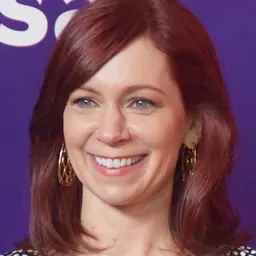


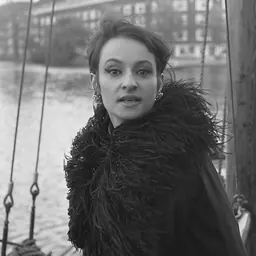
Related people
Same field, nearest in time
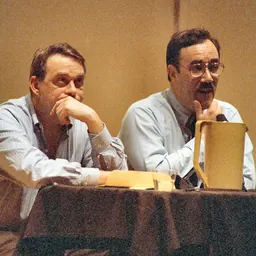
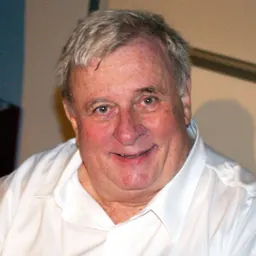


Contemporaries
People whose lives overlapped Sally Miller Gearhart's

Frequently asked questions
Who was Sally Miller Gearhart?
American teacher, feminist, science fiction writer, and political activist (1931–2021)
When was Sally Miller Gearhart born?
Sally Miller Gearhart was born on 15 April 1931 in Pearisburg.
When did Sally Miller Gearhart die?
Sally Miller Gearhart died on 14 July 2021 in Ukiah.
What was Sally Miller Gearhart's occupation?
Sally Miller Gearhart was a novelist, writer, science fiction writer, university teacher and women's rights activist.
What nationality was Sally Miller Gearhart?
Sally Miller Gearhart was American.
Sources & further reading
· Wikipedia: Sally Miller Gearhart
· DBpedia: Sally Miller Gearhart
Cite this page
APA: Biography.guide. (2026). Sally Miller Gearhart. https://biography.guide/sally-miller-gearhart/
MLA: "Sally Miller Gearhart." Biography.guide, https://biography.guide/sally-miller-gearhart/.
Chicago: "Sally Miller Gearhart." Biography.guide. https://biography.guide/sally-miller-gearhart/.
Data last updated: 2026-09-20 · Spot an error? Report a correction.
Page generated 2026-09-27 05:18 UTC