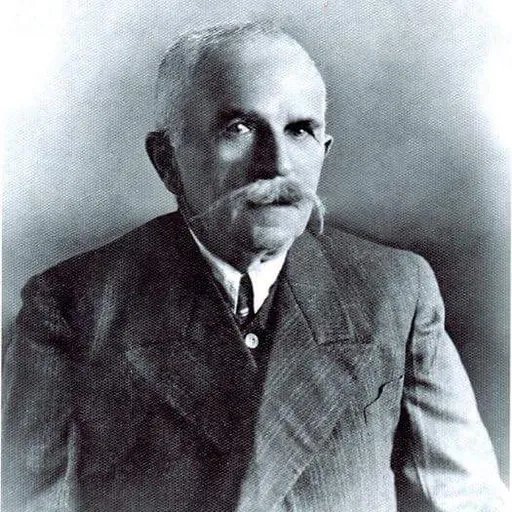
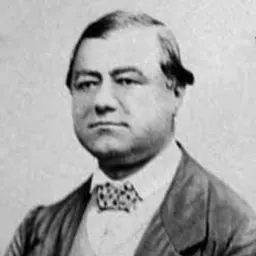
Sali Butka
Guerilla leader and delegate to Congress of Lushnjë
About Sali Butka
Lived 1852 – 1938 (aged 85–86). Sali Butka was an Albanian writer, politician and resistance fighter.
Sali Butka (1852 – 24 October 1938), was an Albanian nationalist figure, revolutionary kachak, poet, and one of the delegates of the city of Korçë to the Albanian National Congress of Lushnjë. He was a well-known leader of an armed çeta band of Albanian fighters during the early 1900's.
Biography Early Activities Butka was born in the village of Butkë in the Kolonjë District to one of the branches of the prominent Albanian Frashëri family. He was a Bektashi Muslim.
Butka subsequently became the commander of various Albanian irregular bands (also known as çeta), and in 1906, he initiated armed guerrilla operations throughout southern Albania against the Ottoman Empire and the rule of Sultan Abdul Hamid II Butka had taught himself how to read and write in Albanian. Throughout the course of his guerrilla activities, he would compose revolutionary poems that combined naturalistic texts with nationalist themes, often in the form of folk poetry. He viewed his literary contributions as feeding an Albanian national consciousness.
Pre-Independence Sali Butka participated in a large meeting on the Albanian alphabet in the city of Korçë in 1910, alongside 2,500 fellow Albanians from Kolonjë; additionally, Butka was one of the leading Albanian figures who protested against the Sublime Porte and the use of Arabic letters for the Albanian alphabet. In early 1911, the Revolutionary Committee was created in Kolonjë with Sali Butka at the head, alongside his brother Myftar and his son Gani.
Fellow revolutionary fighter Spiro Bellkameni would return from exile in March 1911 to the village of Butkë and spend time with Sali's band; Sali would eventually organise the formation of an armed band under Spiro's command, of which Sali's brother Myftar and his son Gani were also members. Butka, Gërmenji and the Albanians sent their demands to the French, which ultimately culminated in the creation of the pro-Albanian Autonomous Province of Korçë; the French eventually reneged on the Albanians, arrested and executed Gërmenji in late 1917 and sought to hand Korçë over to the Greeks. In response, Sali Butka gathered a force of 20,000, surrounded Korçë yet again and sent the French forces an ultimatum. Korçë was once again handed over to the Albanians and the borders of the Albanian state were confirmed by the International Boundary Commission.
He was a prominent guerrilla figure during the Balkan Wars (1912–1913) and World War I (1914–1918). During the Balkan Campaign of World War I, several warrior groups of Albanian Tosks and Ghegs supported with their activity the armed operations of the Central Powers in the region.
Butka's band invaded in 1916 the Aromanian-inhabited town of Moscopole, once a prosperous metropolis in the 18th century, and led to its destruction. According to testimonies, he authorized the public execution of the Aromanian priest there. The razing of the town forced many of its inhabitants to flee, with many migrating to nearby Greek-occupied territories in southern Albania and some going to Korçë. This was done in response to the French army's desire to accept Venizelos' demands for the partition of southern Albania.
In 1920 he became one of the delegates of the city of Korçë to the Congress of Lushnjë.
Don’t just read it —
keep it.
Full-length biographies made to live with: read them, listen on the way to work, watch them tonight.
- E-book
- Audio
- Video
Instant download · yours to keep · every purchase keeps this site free
Important facts
People in Sali Butka's life
Named in this biography and alive at the same time


Related people
Same field, nearest in time
Contemporaries
People whose lives overlapped Sali Butka's


Frequently asked questions
Who was Sali Butka?
Guerilla leader and delegate to Congress of Lushnjë (1852–1938)
When was Sali Butka born?
Sali Butka was born in 1852 in Butkë.
When did Sali Butka die?
Sali Butka died in 1938 in Ersekë.
What was Sali Butka's occupation?
Sali Butka was a writer, politician and resistance fighter.
What nationality was Sali Butka?
Sali Butka was Albanian.
Sources & further reading
Cite this page
APA: Biography.guide. (2026). Sali Butka. https://biography.guide/sali-butka/
MLA: "Sali Butka." Biography.guide, https://biography.guide/sali-butka/.
Chicago: "Sali Butka." Biography.guide. https://biography.guide/sali-butka/.
Data last updated: 2026-09-24 · Spot an error? Report a correction.
Portrait: Wikimedia Commons · author & licence
Page generated 2026-09-27 05:09 UTC