
About Sakine Cansız
Lived 1958 – 2013 (aged 54). Sakine Cansız was a Turkish political activist.
Sakine Cansız (; , ; 1958 – 10 January 2013) was one of the co-founders of the Kurdistan Workers' Party (PKK). A Kurdish activist and in the 1980s, she was arrested and tortured by Turkish police.
Early life Cansız was born around 1958 in Tunceli, to a Kurdish Alevi family. She had seven siblings and she was the eldest daughter. She went to primary and secondary school in Tunceli. In secondary school, she was influenced by her teacher Yusuf Kenan Deniz, who introduced his class to the Dev-Genç, the Revolutionary Youth Federation of Turkey. She began to hear about Denis Gezmis on the radio and saw posters of him depicted as a hero. Other posters were more critical. Cansız and her friends took down the posters, with negative depictions. In middle school, she experienced dissent for the first time, and learned to be discreet. In 1969, her father migrated to Germany.
In 1973, she and her elder brother followed their father to Berlin, Germany. After 11 months in Berlin she returned to Tunceli, and became engaged to Metin. She began to take part in revolutionary activities, which were not endorsed by the family of her fiancée. She fled to Ankara where she first met Abdullah Öcalan, with whom she would work closely. Cansız and Öcalan's former wife Kesire Yıldırım were the only women who participated in this meeting. Cansız was arrested in 1979 soon after graduating high school. Cansiz was imprisoned along with other members of the PKK. She spent years in jail in Diyarbakir where 34 inmates died of torture between the years 1981 and 1989. The treatment that they received in the prison was horrible and was one of the main reasons for the organizations radicalization and the increased armed struggle against the Turkish that began in 1984.
After her release in 1991, Cansız stayed in the PKK camps in Lebanon's Beqaa Valley and then in northern Iraq where she fought under the command of Osman Ocalan. In addition to fighting she organized and headed women squads of the PKK there.
Reportedly, "she was the most prominent and most important female Kurdish activist. She did not shy away from speaking her mind, especially when it came to women's issues." Their bodies were found in the Kurdistan Information Center in Paris.
The three women were last seen inside an information center on a Wednesday afternoon, hours later a member of the Kurdish community tried to visit the center but the door was locked. The three women were found dead with gunshot wounds in the information center on Thursday morning. That was the first time that a senior member of the PKK had been killed in Europe. alt=A group of people marching down an urban street behind a red flag with a star in the middle. They are holding up placards with pictures of three different women on them
The killings occurred at a time when the Turkish government was in negotiation with PKK leaders including Öcalan. PKK activists in Paris considered the murders an attempt by "dark forces" within the Turkish government to derail these negotiations. The PKK blamed the Turkish government. Turkish officials pointed at frequent strife within the PKK, with the Turkish national daily Hürriyet claiming that Cansız had been in conflict with Bahoz Erdal, the alleged commander of the PKK's military wing. Also killed were Fidan Doğan of the Kurdistan National Congress (based in Brussels) and Leyla Söylemez, a "junior activist". The French interior minister Manuel Valls announced that the three women were all killed execution-style. Two days after the murder, Ömer Güney was detained and later prosecuted for the assassination of the three women. The prosecutor François Molins concluded that the surveillance cameras showed that Ömer Güney was within the Kurdish Information Center during the time of the assassination. And on his bag was found gunpowder. After his death the French authority decided to close the investigation into the assassination of the three women. In May 2019 the investigation was reopened.
Funeral The body of Cansız together with those of the other two women murdered was brought from Paris to Istanbul on 16 January 2013 and transferred to Diyarbakır. A funeral ceremony for the three slain women was held in Diyarbakır with the attendance of tens of thousands of Kurds on 17 January 2013. Each was buried in her hometown: Cansız in Tunceli, Doğan in Kahramanmaraş, and Söylemez in Mersin.
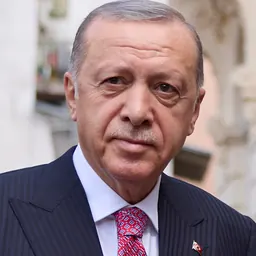
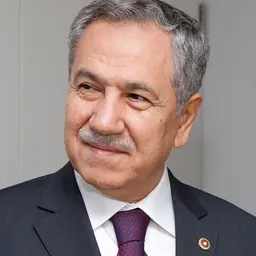
Reactions Both Turkey and France condemned the killings of the three women. Turkish Prime Minister Recep Tayyip Erdoğan suggested that the murders were done for two possible reasons: 1) to derail the current negotiations or 2) to carry out an internal execution within the PKK. Turkey's Deputy Prime Minister and government spokesman Bülent Arınç condemned the attack and expressed his condolences.
Don’t just read it —
keep it.
Full-length biographies made to live with: read them, listen on the way to work, watch them tonight.
- E-book
- Audio
- Video
Instant download · yours to keep · every purchase keeps this site free
Important facts
People in Sakine Cansız's life
Named in this biography and alive at the same time



Related people
Same field, nearest in time

Contemporaries
People whose lives overlapped Sakine Cansız's


Frequently asked questions
Who was Sakine Cansız?
Kurdish activist, co-founder of PKK
When was Sakine Cansız born?
Sakine Cansız was born on 12 February 1958 in Tunceli Province.
When did Sakine Cansız die?
Sakine Cansız died on 9 January 2013 in 10ᵗʰ arrondissement of Paris.
What was Sakine Cansız's occupation?
Sakine Cansız was a political activist.
What nationality was Sakine Cansız?
Sakine Cansız was Turkish.
Sources & further reading
Cite this page
APA: Biography.guide. (2026). Sakine Cansız. https://biography.guide/sakine-cansiz/
MLA: "Sakine Cansız." Biography.guide, https://biography.guide/sakine-cansiz/.
Chicago: "Sakine Cansız." Biography.guide. https://biography.guide/sakine-cansiz/.
Data last updated: 2026-09-22 · Spot an error? Report a correction.
Page generated 2026-09-27 05:24 UTC