
Saif bin Sultan
Omani imam
About Saif bin Sultan
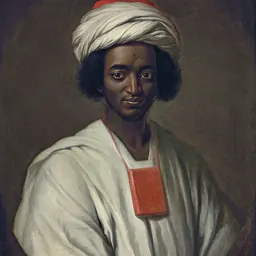
Lived 1700 – 1711. Saif bin Sultan was an imam.
Saif bin Sultan was the fourth of the Yaruba dynasty Imams of Oman, a member of the Ibadi sect. He ruled from 1692 to 1711, during which Omani presence became firmly established on the coast of East Africa.
Early years
Saif bin Sultan was the son of the second Yaruba Imam, Sultan bin Saif. On his father's death, his brother Bil'arab bin Sultan became Imam in 1679. Later, Saif bin Sultan fell out with his brother, built up his forces and besieged Bil'arab in Jabrin. After Bil'arab died there in 1692/93, Saif bin Sultan became Imam.
Imam
Saif bin Sultan invested in improving agriculture, building aflaj in many parts of the interior to provide water, and planting date palms in the Al Batinah Region to encourage Arabs to move from the interior and settle along the coast. He built new schools. He made the castle of Rustaq his residence, adding the Burj al Riah wind tower.
Saif bin Sultan continued the struggle against the Portuguese on the East African coast. In 1696, his forces attacked Mombasa, besieging 2,500 people who had taken refuge in Fort Jesus. The Siege of Fort Jesus ended after 33 months when the thirteen survivors of famine and smallpox surrendered. Soon after the Omanis took Pemba Island, Kilwa and Zanzibar.
The expansion of Omani power included the first large-scale settlement of Zanzibar by Omani migrants. Saif bin Sultan appointed Arab governors to the city states of the coast before he returned to Oman. Later, many of these were to come under the control of Muhammed bin Uthman al-Mazrui, governor of Mombasa, and his descendants, the Mazrui, who made only nominal acknowledgement of the suzerainty of Oman. Saif bin Sultan also encouraged piracy against the merchant trade of India, Persia and even of Europe.
Death and legacy
Saif bin Sultan died on 4 October 1711. He was buried in the castle of Rustaq in a handsome tomb, later destroyed by a Wahhabi general. At his death he had great wealth, said to include 28 ships, 700 male slaves and one third of Oman's date trees. He was succeeded by his son Sultan bin Saif II. Saif bin Sultan earned the title "the Earth's bond" or "the chain of the Earth" for the benefits he had brought to the people of Oman. According to Samuel Barrett Miles,
Don’t just read it —
keep it.
Full-length biographies made to live with: read them, listen on the way to work, watch them tonight.
- E-book
- Audio
- Video
Instant download · yours to keep · every purchase keeps this site free
Important facts
Related people
Same field, nearest in time



Frequently asked questions
Who was Saif bin Sultan?
Omani imam
When was Saif bin Sultan born?
Saif bin Sultan was born in 1700.
When did Saif bin Sultan die?
Saif bin Sultan died on 15 October 1711.
What was Saif bin Sultan's occupation?
Saif bin Sultan was an imam.
What nationality was Saif bin Sultan?
Saif bin Sultan's recorded nationality: Oman.
Sources & further reading
Cite this page
APA: Biography.guide. (2026). Saif bin Sultan. https://biography.guide/saif-bin-sultan/
MLA: "Saif bin Sultan." Biography.guide, https://biography.guide/saif-bin-sultan/.
Chicago: "Saif bin Sultan." Biography.guide. https://biography.guide/saif-bin-sultan/.
Data last updated: 2026-09-20 · Spot an error? Report a correction.
Page generated 2026-09-27 05:23 UTC