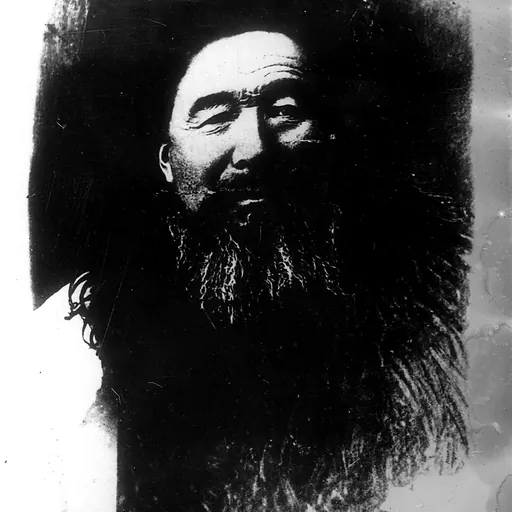
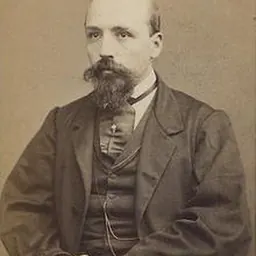
Sagymbai Orozbak uulu
Traditional Kyrgyz epic poet
About Sagymbai Orozbak uulu
Lived 1868 – 1930 (aged 61–62).
Sagimbai Orozbakov (1868–1930) was a Kyrgyz manaschi, or reciter of the Epic of Manas. The first reputable and complete edition of his noted variant of Manas was published in 2010. It was the first to cover the whole life of the titular hero.
Biography
Orozbakov studied under his predecessor Tınıbek Japıy uulu. Kyrgyz historian Belek Soltonoyev witnessed Orozbakov perform in 1908. During the events of 1916, he fled to Xinjiang where, in 1917, he participated in an aitish with Jüsüpakun Apay. Orozbakov received criticism regarding his style and accuracy in both performances.
Transcribing Manas, 1922–1926
The lengthy variant contains notable innovations. Orozbakov appears to have been the first to replace the previous category of qissa (story) with the term tarikh (history), incorporated new learning, and presented mythical locations as if they were actual locations. It was the first to explicitly define Manas as Kyrgyz. Orozbakov includes elements of pan-Turkism and pan-Islamism. These innovative features, possibly introduced to appease his patron Kayum Miftakov. Ironically this led Orozbakov and Manas to be regarded in the Soviet era as representative of pre-Revolution Kyrgyz society.
Manuscripts of this version are held at the National Academy of Sciences of the Republic of Kyrgyzstan.
Legacy
Sections such as the birth of Manas were published in Abdurakmanov's Manas Series. Soviet methods of translation allowed Semyon Lipkin to publish recast adaptations of sections (and provide material for his novella). The Russian translation was used by Maurice Bowra in his comparative studies of Homer and epic poetry.
Post-war ideological criticism of Manas, and its defence by scholars such as Mukhtar Auezov, led to the demand of a 'harmonized' politically acceptable version incorporating Orozbakov's variant. A revised version was published in 1958–1962. Later, due to Soviet-era scholars desiring a critical edition, and despite continued ideological debates, a new version (containing prose summaries owing to financial constraints) was created. A seemingly complete edition was published in 2010. An English-language translation was published by Penguin in 2022.
Though the complete trilogy—Manas, Semetey, and Seitek—totalling over half a million lines by Sayakbay Karalaev is often mentioned, Orozbakov's version is more accessible and more known. His variant is considered an imitative model and reference point, and a passage from his published version was reused in a modern performance by a contemporary manaschi, Talantaaly Bakchiev.
Manuscripts of the 1922-1926 version by Orozbakov were placed on UNESCO's Memory of the World International Register.
Don’t just read it —
keep it.
Full-length biographies made to live with: read them, listen on the way to work, watch them tonight.
- E-book
- Audio
- Video
Instant download · yours to keep · every purchase keeps this site free
Important facts
People in Sagymbai Orozbak uulu's life
Named in this biography and alive at the same time

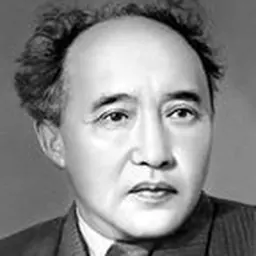
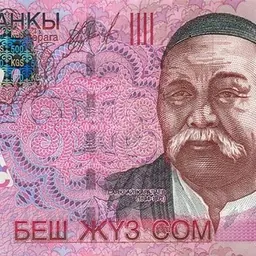

Contemporaries
People whose lives overlapped Sagymbai Orozbak uulu's




Frequently asked questions
Who was Sagymbai Orozbak uulu?
traditional Kyrgyz epic poet
When was Sagymbai Orozbak uulu born?
Sagymbai Orozbak uulu was born in 1868 in Sary-Oy.
When did Sagymbai Orozbak uulu die?
Sagymbai Orozbak uulu died in 1930 in Kochkor.
Sources & further reading
· Wikipedia: Sagymbai Orozbak uulu
· DBpedia: Sagymbai Orozbak uulu
Cite this page
APA: Biography.guide. (2026). Sagymbai Orozbak uulu. https://biography.guide/sagymbai-orozbak-uulu/
MLA: "Sagymbai Orozbak uulu." Biography.guide, https://biography.guide/sagymbai-orozbak-uulu/.
Chicago: "Sagymbai Orozbak uulu." Biography.guide. https://biography.guide/sagymbai-orozbak-uulu/.
Data last updated: 2026-09-20 · Spot an error? Report a correction.
Portrait: Wikimedia Commons · author & licence
Page generated 2026-09-27 04:57 UTC