
About Safi Faye
Lived 1943 – 2023 (aged 79). Safi Faye was a Senegalese film director, ethnologist, film actor, screenwriter, anthropologist and film producer.
Safi Faye (November 22, 1943 – February 22, 2023) was a Senegalese film director and ethnologist. She was the first African woman to direct a commercially distributed feature film, Kaddu Beykat, which was released in 1975. She has directed several documentary and fiction films focusing on rural life in Senegal.
Early life and education Safi Faye was born in 1943 in Dakar, Senegal, to an aristocratic Serer family. She attended the École normal de Rufisque, or Normal School, in Rufisque and receiving her teaching certificate in 1962 or 1963, began teaching in Dakar.
In 1966 she went to the Dakar Festival of Negro Arts and met French ethnologist and filmmaker Jean Rouch. Faye has said that she dislikes Rouch's film but that working with him enabled her to learn about filmmaking and cinéma-vérité.
In the 1970s she studied ethnology at the École pratique des hautes études and then at the Lumière Film School. She received a further degree in ethnology from the Sorbonne in 1988.
Almost all of Safi Faye's films (both documentary and fictive) focus heavily on the role and struggles of women in rural Africa. She has, however, rebuked the idea that they exclusively center women and states "Women alone cannot live in Africa. Women live in a community, and I cannot eliminate the community."
Faye's directorial debut, in which she also acted, was a 1972 short called La Passante (The Passerby), drawn from her experiences as a foreign woman in Paris. It follows a woman (Faye) walking down a street and noticing the reactions of men nearby.
Faye's first feature film was Kaddu Beykat (1975), which means The Voice of the Peasant in Wolof and was known internationally as Letter from My Village or News from My Village. Selbé regularly converses with Faye, who remains off-screen, and describes her relationship with her husband and daily life in the village.
The last of her feature films was released in 1996. Titled Mossane, the film is in Wolof and was awarded the Un Certain Regard prize at the Cannes Film Festival. On its release it was banned in Senegal. In 1976 it won the FIPRESCI Prize from the International Federation of Film Critics (tied with Chhatrabhang) and the OCIC Award.
The film is her first to focus on the experiences of rural Senegalese and give particular voice to the women of such communities. It is also notable for the off-screen narration, delivered by Faye herself, which breaks from a more traditional authoritative male voice. released in 1996 but completed in 1990, follows a 14-year-old's battle against the expectation and traditions of her community and family. Promised since birth to an emigrant living in France, she instead falls in love with a poor student. Rejecting the arrangement on the day of her wedding, she flees the village and drowns.
Faye has said the story was inspired by “an African legend that stipulates that a girl of incredible beauty is born every other century...moss means beauty in the Serer language. It is a kind of beauty which is inaccessible to human beings.” Regarding the goal of the film the director has gone on to state "there is no moral to the story;" rather, it exists "to show how tradition and modernity currently confront each other in African reality."
Filmography 1972: Passante (The Passerby) 1975: Kaddu Beykat (Letter from My Village) 1979: Fad'jal (Come and work) 1979: Goob na nu (The harvest is in) 1980: Man Sa Yay (I, Your Mother) 1981: Les âmes au soleil (Souls under the Sun) 1983: Selbe: One Among Many (or Selbe and So Many Others) 1983: 3 ans 5 mois (Three years five months) 1985: Racines noires (Black Roots) 1985: Elsie Haas, femme peintre et cinéaste d'Haiti (Elsie Haas, Haitian Woman Painter and Filmmaker) 1989: Tesito 1996: Mossane
Don’t just read it —
keep it.
Full-length biographies made to live with: read them, listen on the way to work, watch them tonight.
- E-book
- Audio
- Video
Instant download · yours to keep · every purchase keeps this site free
Important facts
People in Safi Faye's life
Named in this biography and alive at the same time
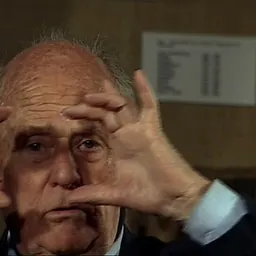

Related people
Same field, nearest in time




Contemporaries
People whose lives overlapped Safi Faye's
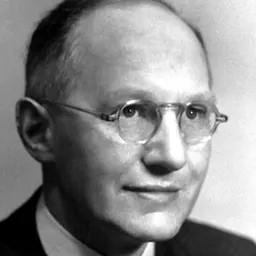

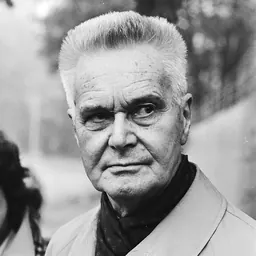
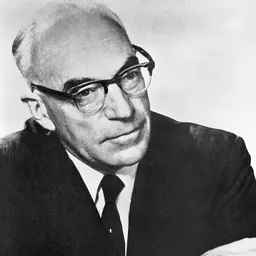

Frequently asked questions
Who was Safi Faye?
Senegalese ethnologist and film director (1943–2023)
When was Safi Faye born?
Safi Faye was born on 22 November 1943 in Dakar.
When did Safi Faye die?
Safi Faye died on 22 February 2023 in 14th arrondissement of Paris, Paris.
What was Safi Faye's occupation?
Safi Faye was a film director, ethnologist, film actor, screenwriter, anthropologist and film producer.
What nationality was Safi Faye?
Safi Faye was Senegalese.
Sources & further reading
Cite this page
APA: Biography.guide. (2026). Safi Faye. https://biography.guide/safi-faye/
MLA: "Safi Faye." Biography.guide, https://biography.guide/safi-faye/.
Chicago: "Safi Faye." Biography.guide. https://biography.guide/safi-faye/.
Data last updated: 2026-09-26 · Spot an error? Report a correction.
Page generated 2026-09-27 05:16 UTC