
About Sadr al-Din al-Qunawi
Lived 1209 – 1274 (aged 64–65). Sadr al-Din al-Qunawi was a philosopher, historian and sufi.
Ṣadr al-Dīn Muḥammad ibn Isḥāq ibn Muḥammad ibn Yūnus Qūnawī, (; 1207–1274), was a philosopher. He was a notable contributor to mystical or Sufi philosophy (which is closely aligned with metaphysics) and influenced the philosophical study of knowledge, epistemology, specifically in reference to the theoretical elaboration of mystical/intellectual insight. He combined the works of mystic-thinker, Muḥyī al-Dīn Ibn 'Arabī (1165-1240 CE/560-638 AH), and the logical/philosophical innovations of Ibn Sīnā (Lat., Avicenna), on the other.
Biography Little is known about Qūnawī's personal life. As a young boy, Ṣadr al-Dīn was adopted by Ibn 'Arabī, who also taught him. He was of Persian descent, and he lived and taught in the city of Konya (modern-day Turkey where he is known as Sadreddin Konevî). thumb Sadr al-Din al-Qunawi's tomb is in Konya. He was close to Mawlāna Jalāl-e Dīn Rūmī and participated in his spiritual circle. A master of ḥadīth, people came to Konya from distant lands just to study under him. But while he was reputed for his understanding of the Quran and Ḥadīth, he knew the ancient Peripatetic philosophy, no doubt thanks to Ibn Sīnā, who commented extensively on the works of Aristotle. Qūnawī may have studied an Arabic translation of Aristotle's Metaphysics, being one of a handful of truly insightful, post-Avicennan critics of Aristotle, even if he was not a full-fledged commentator in the spirit of Ibn Rushd. Inscription in Turkish praises him as a scholar, teacher and Sheikh. Qūnawī's overall influence appears more strategic than wide. Some of his students found fame. Notably, he instructed Qutb al-Din al-Shirazi, who went on to author a well known commentary, on Suhrawardi's Ḥikmat al-Ishrāq. Another student of Qūnawī's, the Sufi poet Fakhr-al-Din Iraqi, played an important role in introducing Ibn 'Arabī into the Persian language.
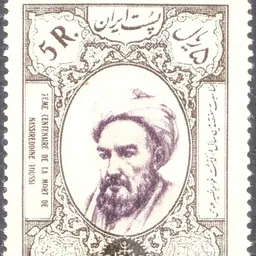
Mystical vs. philosophical knowledge After visiting the grave of Ibn 'Arabī after his teacher and father-in-law had died, Qūnavī described a mystical experience he had about his teacher, Ibn 'Arabī:I walked one summery day through an empty stretch in the Taurus. An easterly wind was stirring the blossoms. I gazed at them and reflected upon God's power, might and majesty (exalted be He). The love of the Merciful [God] filled me with such ardent passion that I labored to part with created things. Then, the spirit of Shaykh Ibn 'Arabī was personified to me in the most splendid form, as if he were a pure light. He called out [to me], “O ye who are perplexed, behold me! If God sublime and transcendent hath shown Himself to me in a flash of manifestation from the noble elevation of the essence, absent hast thou been from me therein by a mere glance of an eye.” I agreed at once and, as if he had been standing there [bodily] before my eyes, the Shaykh al-Akbar [i.e., Ibn Arabī] greeted me with the salutations of reunion after a parting and embraced me affectionately, saying: “Praise be to God who the veil hath lifted and who bringeth those dear unto each other into reunion. No goal, effort or salvation hath been disaffirmed". His recollection of this dream seems to indicate not just continuing deference to his teacher, but also what he saw as the practical end of reason. While more scientific than his mentor, Qūnavī too was a practising mystic, not just a thinker and teacher. Regardless of his background in the mystical, he excelled in formal sciences like ḥadīth studies, Qurānic exegesis (tafsīr), dialectical theology (kalām), jurisprudence (fiqh), and philosophical sciences. He also corresponded with contemporaries like Nāsīr al-Dīn Ṭūsī, whose mathematical and astronomical discoveries have played a significant role in furthering their respective fields.
Qūnavī's significance primarily arises from his firm place in Islam's "post-Avicennan" (or, more precisely, post-Falsafah) period. The intellectual current to which he belonged to (which notably included Sadr al-Din Shirazi, also called Mulla Sadra) was an important factor for the development of philosophy in Iran. said that, despite the pupil's frustrated attempts to follow in his spiritual footsteps, without a proper study of Qūnavī's works the true intention of Ibn 'Arabī regarding the so-called doctrine of Waḥdat al-Wujūd (a doctrine progeny has ascribed to Ibn 'Arabī) could not be discerned in any manner conforming to both reason and religious law (Jāmī 556). Al-Munāwī (b. 1265) quoted him as saying that his teacher had striven to lead him to a level where God manifested Himself through flashes of manifestation to all seekers, but that he failed (NJK 222). Mystics describe a manifestation of this kind as a “flash,” because the “direct witnessing of the essence” resembles the light, speed, and evanescence of any ordinary flash or lightning.
Al-Qāshānī likened this “flash” to “the illumination appearing to a person that beckons and summons to the Presence of Proximity to the Lord for a journey within God.” Ibn 'Arabī referred to the deep tranquility felt by the saintly “friends of God,” the awliyā’, who take their repose in it. Because tranquility did not always occur to them, it was said they could only take furtive glances at the manifestation, as if in a flash (Hakim 660–61).
Paradoxically, his close relationship with Ibn 'Arabī encouraged Qūnavī to seek a separate path to spiritual enlightenment, and for developing the proper terms with which to express overarching truths, which he felt were accessible only through personal experience, not anyone else's.
Around this time, Qūnavī's father, Majd al-Dīn Isḥāq, began his career as a statesman and acquired the status of a revered spiritual figure. On his return journey from a pilgrimage to the holy city of Mecca, Isḥāq was accompanied by Muḥyiddīn Ibn 'Arabī, with whom he became friends. When Isḥāq died, his companion reportedly became Ṣadr al-Dīn's stepfather by marrying the widowed mother. Although this is not confirmed beyond reasonable doubt, Qūnawî did became Ibn 'Arabî's close disciple and was given permission to teach all of his works.
Qūnavī's preference for Arabic linguistics, allowed him to become involved in Arabic high culture, even if his mystical "exegetical grammar" must not be collapsed with conventional Arabic grammar. was partly responsible for general interest toward Arabic philology. In view of his special relationship with Ibn 'Arabī, (who prayed as a Mālikī,) Qūnavī could easily access their exegetical sources. However, apart from themes directly inspired by his teacher, there is little evidence of anything peculiarly Mālikī or Maghrebi in the works of Qūnavī, including in grammar. This “unity” between knower and known is what any claim to a knowledge of the reality ultimately had to rest upon; but it is a unity which indicated that we knew the reality in the manner in which it has revealed itself to the other reality, that of the knower, and is not a simple identity of two entities.
Qūnavī described the passage, that occurred with the knowledge of the thing as a unique reality by way of a special “unity”. In other words, knowledge of it in the form of an object of inquiry or “branch.”
Works I'jāz al-bayān fī ta’wīl Umm al-Kitāb. Second Edition. Hyderabad, Deccan: Maṭbacat Majlis Dā’irat al-Ma'ārif al-'Uthmānīyah, 1368 AH/1949 CE (also titled "Tafsir al-Fatiha") A lengthy mystical exegesis of selected Quranic verses, and his most important work. Kitāb al-fukūk (also titled "Fakk al-Khutum"). Introd., ed. Muḥammad Khwājavī. Tehran: Intishārāt Mawlā, 1371 AHS/1413 AH, pp. 177-316. This is a short seminal commentary on Ibn 'Arabī’s "Fuṣūṣ al-ḥikam" Kitāb al-Mufawadat. Briefwechsel Zwischen Șadr ud-Dīn-ee Qūnawī (gest. 673/1274) und Naṣīr ud-dīn Ṭūsī (gest. 672/1274). PhD Thesis. Edited and commented by Gudrun Schubert His correspondence with Nasir al-Din al-Tusi, consisting of “al-Ajwibah”, “al-As’ilah,” and “al-Mufṣiḥah.” Kitāb al-nafaḥāt al-ilāhīyah (or Kitāb al-nafaḥāt al-rabbānīyah), ms. 1354. Paris: Bibliothèque Nationale. Kitāb al-nuṣūṣ. Copied by Ibrāhīm al-Lārījānī, 1315. Lithographed, Tehran: Kitābkhānah Ḥāmidī, Jamādī al-Thānī 1395 AH/1354 AHS; fol. 274-300. Miftāḥ al-ghayb al-jam' wa al-wujūd. (On margins of Miftāḥ al-uns fī sharḥ Miftāḥ ghayb al-jam' wa al-wujūd. Shams Muḥammad b. Ḥamzah b. Muḥammad al-'Uthmānī, or Ibn al-Fanārī al-Ḥanafī. Lithographed in Tehran, 1323 AH. One of Quwnawi's key works. It has long been taught to students in Iran's madrassas who have mastered the most difficult philosophical texts. Sharḥ al-arba'īn ḥadīthan. Edited and annotated by Dr. Ḥasan Kāmil Yılmaz. Istanbul: Yıdızlar Matbaası, 1990. Published as Tasavvufî Hadîs Şerhleri ve Konevînin Kırk Hadîs Şerhi An unfinished work on the famous 40 sayings of the Prophet of Islam. Qunawi died before completing this work but he commented on twenty-nine ḥadiths. It provides important elucidations on the "imagination" and other concepts. Sharḥ al-asmā’ al-ḥusnā (see “Introduction” for bibliographical information on manuscripts used) A concise explanation of the ninety-nine names of God and their effects at the human level.
Don’t just read it —
keep it.
Full-length biographies made to live with: read them, listen on the way to work, watch them tonight.
- E-book
- Audio
- Video
Instant download · yours to keep · every purchase keeps this site free
Important facts
People in Sadr al-Din al-Qunawi's life
Named in this biography and alive at the same time
Related people
Same field, nearest in time


Contemporaries
People whose lives overlapped Sadr al-Din al-Qunawi's




Frequently asked questions
Who was Sadr al-Din al-Qunawi?
Persian mystical or Sufi philosopher (1207-1274)
When was Sadr al-Din al-Qunawi born?
Sadr al-Din al-Qunawi was born in 1209 in Malatya.
When did Sadr al-Din al-Qunawi die?
Sadr al-Din al-Qunawi died in 1274 in Konya.
What was Sadr al-Din al-Qunawi's occupation?
Sadr al-Din al-Qunawi was a philosopher, historian and sufi.
Sources & further reading
· Wikipedia: Sadr al-Din al-Qunawi
· DBpedia: Sadr al-Din al-Qunawi
Cite this page
APA: Biography.guide. (2026). Sadr al-Din al-Qunawi. https://biography.guide/sadr-al-din-al-qunawi/
MLA: "Sadr al-Din al-Qunawi." Biography.guide, https://biography.guide/sadr-al-din-al-qunawi/.
Chicago: "Sadr al-Din al-Qunawi." Biography.guide. https://biography.guide/sadr-al-din-al-qunawi/.
Data last updated: 2026-09-20 · Spot an error? Report a correction.
Page generated 2026-09-27 05:34 UTC