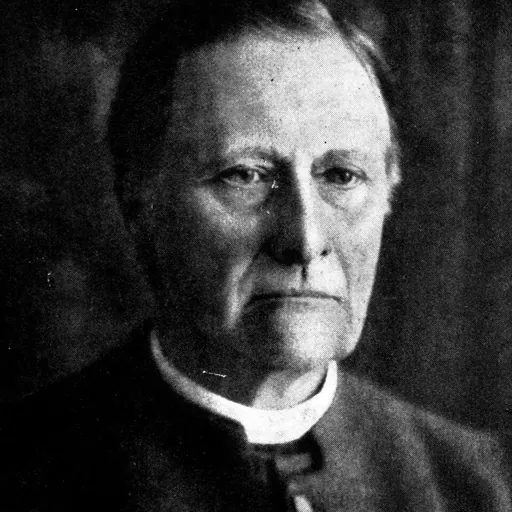
Sabine Baring-Gould
English hagiographer, antiquarian, novelist, eclectic scholar, folk song collector
About Sabine Baring-Gould
Lived 1834 – 1924 (aged 89). Sabine Baring-Gould was a British anglican priest, writer, novelist, folklorist, translator and theologian.
Sabine Baring-Gould (; 28 January 1834 – 2 January 1924) of Lew Trenchard in Devon, England, was an Anglican priest, hagiographer, antiquarian, novelist, folk song collector and eclectic scholar.
He is remembered particularly as a writer of hymns, the best-known being "Onward, Christian Soldiers", and "Now the Day Is Over". He also translated the carols "Gabriel's Message", and "Sing Lullaby" from Basque to English.
His family home, the Jacobean manor house of Lew Trenchard, near Okehampton, Devon, has been preserved with the alterations he made and is a hotel.
Origins
Sabine Baring-Gould was born in the parish of St Sidwell, Exeter, on 28 January 1834. He was the eldest son and heir of Edward Baring-Gould (1804–1872), lord of the manor of Lew Trenchard, a Justice of the Peace and Deputy Lieutenant of Devon, formerly a lieutenant in the Madras Light Cavalry (resigned 1830), by his first wife, Sophia Charlotte Bond, daughter of Admiral Francis Godolphin Bond, Royal Navy.
Sabine's paternal grandfather was William Baring (died 1846), JP, DL, who in 1795 had assumed by royal licence the additional surname and arms of Gould, in accordance with the terms of his inheritance of the manor of Lew Trenchard from his mother Margaret Gould, daughter and eventual heiress in her issue of William Drake Gould (1719–1767) of Lew Trenchard.
The Gould family was descended from a certain John Gold, a crusader present at the siege of Damietta in 1217 who for his valour, was granted in 1220 by Ralph de Vallibus, an estate at Seaborough in Somerset. Margaret Gould was the wife of Charles Baring (1742–1829) of Courtland in the parish of Exmouth, Devon, whose monument survives in Lympstone Church. He was the 4th son of Johann Baring (1697–1748), of Larkbeare House, Exeter, a German immigrant apprenticed to an Exeter wool merchant, and younger brother of Francis Baring (1740–1810), and John Baring (1730–1816) of Mount Radford, Exeter. The two brothers established the London merchant house of John and Francis Baring Company, which eventually became Barings Bank.
Sabine was named after the family of his grandmother, Diana Amelia Sabine (died 1858), wife of William Baring-Gould (died 1846), daughter of Joseph Sabine of Tewin, Hertfordshire and sister of the Arctic explorer General Sir Edward Sabine.
Career
Because the family spent much of his childhood travelling round Europe, most of his education was by private tutors. He only spent about two years in formal schooling, first at King's College School in London (then located in Somerset House) and then, for a few months, at King's School, Warwick (now Warwick School). Here his time was ended by a bronchial disease of the kind that was to plague him throughout his long life. His father considered his ill-health as a good reason for another European tour.
In 1852, he was admitted to Cambridge University, earning the degrees of Bachelor of Arts in 1857, then Master of Arts (an upgrade, not a new qualification) in 1860 from Clare College, Cambridge. In September 1853 he informed Nathaniel Woodard of his desire to be ordained. He taught for only ten days at one of Woodard's boys' boarding schools in Sussex, Lancing College, but then moved to another, Hurstpierpoint College, where he stayed from 1857 to 1864. While there, he was responsible for several subjects, especially languages and science, and he also designed the ironwork of the bookcases in the boys' library, as well as painting the window jambs with scenes from the Canterbury Tales and The Faerie Queene.
He took holy orders in 1864, and at age 30, became the curate at Horbury Bridge, West Riding of Yorkshire. It was while acting as a curate that he met Grace Taylor, the daughter of a mill hand, then aged fourteen. In the next few years they fell in love. His vicar, John Sharp, arranged for Grace to live for two years with relatives in York to learn middle-class manners. Gould later became a friend of George Bernard Shaw, and this story is thought to be part inspiration for Shaw's play Pygmalion. Baring-Gould, meanwhile, relocated to become perpetual curate at Dalton, near Thirsk. He and Grace were married in 1868 at Wakefield. Their marriage lasted until her death 48 years later, and the couple had 15 children, all but one of whom lived to adulthood. When he buried his wife in 1916, he had carved on her tombstone the Latin motto ('Half My Soul').
Baring-Gould became the rector of East Mersea in Essex in 1871 and spent ten years there. In 1872, his father died and he inherited the family estates of Lewtrenchard in Devon, which included the gift of the living of Lew Trenchard parish. When the living became vacant in 1881, he was able to appoint himself to it, becoming parson as well as squire. He did a great deal of work restoring St Peter's Church, Lewtrenchard, and (from 1883 to 1914) thoroughly remodelled his home, Lew Trenchard Manor.
Folk songs Baring-Gould regarded his principal achievement to be the collection of folk songs that he made with the help of the ordinary people of Cornwall and Devon. His first book of songs, Songs and Ballads of the West (1889–91), was published in four parts between 1889 and 1891; the musical editor for this collection was Henry Fleetwood Sheppard, though some of the songs included were noted by Baring-Gould's other collaborator Frederick Bussell.
Baring-Gould and Sheppard produced a second collection named A Garland of Country Songs during 1895. A new edition of Songs of the West was proposed for publication in 1905. Sheppard had died in 1901, and so the folk song collector Cecil Sharp was invited to undertake the musical editorship for the new edition. Sharp and Baring-Gould also collaborated on English Folk Songs for Schools. This collection of 53 songs published in 1907 and used widely was used widely in British schools for the next 60 years.
Although he had to modify the words of some songs which were too rude for the time, he left his original manuscripts for future students of folk song, thereby preserving many beautiful pieces of music and their lyrics which might otherwise have been lost.
Baring-Gould gave the fair copies of the folk songs he collected, together with the notebooks he used for gathering information in the field, to Plymouth Public Library in 1914. They were deposited with the Plymouth and West Devon Record Office in 2006. These, together with the folk-song manuscripts from Baring-Gould's library discovered at Killerton in 1998, were published as a microfiche edition in 1998. In 2011 the complete collection of his folk-song manuscripts, including two notebooks not in the microfiche edition, were digitised and published online by the Devon Tradition Project managed by Wren Music in association with the English Folk Dance and Song Society as part of the "Take Six" project undertaken by the Vaughan Williams Memorial Library. It now forms part of the VWML's "Full English" website. Thirty boxes of additional manuscript material on other topics (the Killerton manuscripts) are kept in the Devon History Centre in Exeter.
Cecil Sharp dedicated his book English Folk Song: Some Conclusions (1907) to Baring-Gould.
Literature Baring-Gould wrote many novels, including The Broom-Squire set in the Devil's Punch Bowl (1896), Mehalah: a story of the salt marshes (1880), Guavas the Tinner (1897), the 16-volume The Lives of the Saints, and the biography of the eccentric poet-vicar of Morwenstow, Robert Stephen Hawker. He also published nearly 200 short stories in assorted magazines and periodicals. Many of these short stories were collected together and republished as anthologies, such as his Book of Ghosts (1904), Dartmoor Idyllys (1896), and In a Quiet Village (1900). His folkloric studies resulted in The Book of Were-Wolves (1865), one of the most frequently cited studies of lycanthropy. He habitually wrote while standing, and his standing desk can be seen in the manor.
One of his most enduringly popular works was Curious Myths of the Middle Ages, first published in two parts during 1866 and 1868, and republished in many other editions since then. "Each of the book's twenty-four chapters deals with a particular medieval superstition and its variants and antecedents", writes critic Steven J. Mariconda. H. P. Lovecraft termed it "that curious body of medieval lore which the late Mr. Baring-Gould so effectively assembled in book form".
He wrote much about the West Country: his works of this topic include: A Book of the West. 2 vols. I: Devon; II: Cornwall. London : Methuen, 1899 Cornish Characters and Strange Events. London: John Lane, 1909 (reissued in 1925 in 2 vols., First series and Second series) Devonshire Characters and Strange Events.
Baring-Gould served as president of the Royal Institution of Cornwall for ten years from 1897.
Dartmoor Baring-Gould, along with his friend Robert Burnard, organised the first scientific archaeological excavations of hut-circles on Dartmoor at Grimspound during 1893. They then asked R. N. Worth, R. Hansford Worth, W. A. G. Gray and a Dr Prowse to assist them with further investigations. This resulted in the formation of the Committee of the Devonshire Association for the exploration of Dartmoor. Baring-Gould was the secretary and author of the first ten annual reports until 1905. The Dartmoor Exploration Committee performed many archaeological digs of prehistoric settlements on Dartmoor and systematically recorded and in some cases restored prehistoric sites. The current state of many prehistoric stone rows and stone circles on Dartmoor owes much to the work of Sabine Baring-Gould and Robert Burnard and the Dartmoor Exploration Committee. Baring-Gould was president of the Devonshire Association for the year 1896.
He wrote much about Dartmoor: his works of this topic include: Dartmoor idylls (1896) A Book of Dartmoor (1900), London : Methuen, 1900. Republished Halsgrove, 2002
Family He married Grace Taylor on 25 May 1868 at Horbury. They had 15 children: Mary (born 1869), Margaret Daisy (born 1870, an artist who painted part of the screen in Lew Trenchard Church), Edward Sabine (born 1871), Beatrice Gracieuse (1874–1876), Veronica (born 1875), Julian (born 1877), William Drake (born 1878), Barbara (born 1880), Diana Amelia (born 1881), Felicitas (baptised 1883), Henry (born 1885), Joan (born 1887), Cecily Sophia (born 1889), John Hillary (born 1890), and Grace (born 1891).
His wife Grace died in April 1916, and he did not remarry; he died on 2 January 1924 at his home at Lew Trenchard and was buried next to his wife.
He wrote two volumes of memoirs: Early Reminiscences, 1834–1864 (1923) and Further Reminiscences, 1864–1894 (1925).
One grandson, William Stuart Baring-Gould, was a noted Sherlock Holmes scholar who wrote a fictional biography of the great detective—in which, to make up for the lack of information about Holmes's early life, he based his account on the childhood of Sabine Baring-Gould. Sabine himself is a major character of Laurie R. King's Sherlock Holmes novel The Moor, a Sherlockian pastiche. In this novel it is revealed that Sabine Baring-Gould is the godfather of Sherlock Holmes.
Radio actor Robert Burnard was his grandson. Comedian Josh Widdicombe is a distant descendant.
List of works + Title Year Note A Book of the Pyrenees 1907 Available on gutenberg.org A Book of Dartmoor 1900 Available on gutenberg.org A Book of Fairy Tales Retold by S. Baring-Gould 1894 A Book of Folk-Lore 1913 A Book of Cornwall 1899 Available on gutenberg.org A Book of Ghosts 1904 Available on gutenberg.org A Book of North Wales 1903 Available on gutenberg.org A Book of South Wales 1905 A Book of the Cevennes 1907 Available on gutenberg.org A Book of the Rhine from Cleve to Mainz 1906 A Book of the Riviera 1928 Available on gutenberg.org A Book of the West: Being an Introduction to Devon and Cornwall 1899 Vol. 1, Vol. 2 A Coronation Souvenir 1902 A Coronation Souvenir 1911 A First Series of Village Preaching for a Year 1877 A History of Sarawak under Its Two White Rajahs 1909 Available on gutenberg.org A Memorial of Horatio Lord Nelson 1905 A Second Series of Village Preaching for a Year 1884 A Study of St. Paul, His Character and Opinions 1897 Amazing Adventures 1903 Illustrated by Harry B. Neilson An Account of an English Camp Near Bayonne 1851 An Armory of the Western Counties, Devon and Cornwall 1898 An Old English Home and its Dependencies 1898 Available on gutenberg.org Arminell: A Social Romance 1890 Vol. 1, Vol. 2, Vol. 3 Bladys of the Stewponey 1898 Brittany 1902 Available on gutenberg.org Cheap Jack Zita 1894 Available on gutenberg.org Chris of All Sorts 1903 Church Songs, First Series 1884 Cliff Castles and Cave Dwellings of Europe 1911 Available on gutenberg.org Conscience and Sin: Daily Meditations for Lent 1890 Available on gutenberg.org Cornish Characters and Strange Events 1909 Available on gutenberg.org Cornwall 1910 Available on gutenberg.org Court Royal 1891 Court Royal: A Story of Cross Currents 1886 Curiosities of Olden Times 1896 Available on gutenberg.org Curious Myths of the Middle Ages 1866 Available on gutenberg.org Curious Myths of the Middle Ages, Second Series 1868 Dartmoor Idylls 1896 Devon 1907 Devon Characters and Strange Events 1908 Available on gutenberg.org Domitia (novel) 1898 Available on gutenberg.org Early Reminiscences, 1834–1864 1923 English Minstrelsie: A National Monument of English Song 1896 Eve: A Novel 1888 Available on gutenberg.org Evening Communions: A Letter to the Lord Bishop of Exeter 1895 Family Names and Their Story 1910 Further Reminiscences, 1864–1894 1925 Furze Bloom: Tales of the Western Moors 1899 Germany 1883 Germany, Present and Past 1882 Golden Feather 1886 Grettir the Outlaw: A Story of Iceland 1890 Available on gutenberg.org Guavas the Tinner 1897 Historic Oddities and Strange Events, First Series 1891 Available on gutenberg.org How to Save Fuel 1874 Iceland, Its Scenes and Its Sagas 1863 In a Quiet Village 1900 Available on gutenberg.org In Dewisland 1904 In Exitu Israel: An Historical Novel of the French Revolution 1870 Vol. 1, Vol. 2 In the Roar of the Sea: A Tale of the Cornish Coast 1892 Volume I, volume II, and volume III; also available on gutenberg.org In Troubadour Land: A Ramble in Provence and Languedoc 1891 Available on gutenberg.org Jacquetta and Other Stories 1890 John Herring: A West of England Romance 1889 Vol.1, Vol.2 Vol.3 Kitty Alone: A Story of Three Fires 1894 Vol. 1, Available on gutenberg.org, Vol. 3 Legends of Old Testament Characters, from the Talmud and Other Sources 1872 Available on gutenberg.org Legends of the Patriarchs and Prophets 1881 Available on gutenberg.org Little Tu'penny 1887 Lives of the Saints 1897 Margery of Quether, and Other Stories 1892 Mehalah, A Story of the Salt Marshes 1880 Available on gutenberg.org Miss Quillet 1902 Monsieur Pichelmere, and Other Stories 1905 Mrs. Curgenven of Curgenven 1893 My Few Last Words 1924 My Prague Pig and Other Stories for Children 1890 Nazareth and Capernaum: Ten Lectures on the Beginning of Our Lord's Ministry 1886 Nebo the Nailer 1902 Noémi: A Story of Rock-Dwellers 1895 Available on gutenberg.org Old Country Life 1889 Available on gutenberg.org One Hundred Sermon Sketches for Extempore Preachers 1871 Organization: A Sermon Preached at St. Michael's Church, Wakefield 1870 Our Inheritance: An Account of the Eucharistic Service in the First Three Centuries 1888 Our Parish Church: Twenty Addresses to Children on Great Truths of the Christian Faith 1885 Pabo, The Priest 1899 Available on gutenberg.org Perpetua: A Story of Nimes in A.D. 213 1897 Available on gutenberg.org Post-Mediaeval Preachers: Some Account of the Most Celebrated Preachers of the Fifteenth, Sixteenth, and Seventeenth Centuries 1865 Available on gutenberg.org Protestant or Catholic? A Lecture 1872 Red Spider 1888 Vol.1, Vol.2 Richard Cable the Lightshipman 1888 Romances of the West Country 1898 Royal Georgie 1901 Secular v. Religious Education: A Sermon 1872 Sermons on the Seven Last words 1884 Sermons to Children 1879 Sheepstor 1912 Siegfried: A Romance Founded on Wagner's Operas, Rheingold, Siegfried, and Gotterdammerung 1905 Some Modern Difficulties: Nine Lectures 1875 Some Remarks upon 'Two Recent Memoirs of R. S. Hawker, Late Vicar of Morwenstow 1876 Songs of the West: Folksongs of Devon & Cornwall 1905 Available on gutenberg.org. With Frederick William Bussell and Henry Fleetwood Sheppard Strange Survivals: Some Chapters in the History of Man 1892 Available on gutenberg.org The Birth of Jesus: Eight Discourses for Advent, Christmas and Epiphany 1885 The Book of Were-Wolves, Being an Account of a Terrible Superstition 1865 Also available on gutenberg.org The Broom-Squire 1896 Available on gutenberg.org The Chorister, a Tale of King's College Chapel in the Civil Wars 1856 The Church in Germany 1891 The Church Revival: Thoughts Thereon and Reminiscences 1914 The Crock of Gold 1899 The Death and Resurrection of Jesus: Ten Lectures for Holy Week and Easter 1888 The Deserts of Southern France: An Introduction to the Limestone and Chalk Plateaux of Ancient Aquitaine 1894 The Evangelical Review 1920 The Frobishers: A Story of the Staffordshire Potteries 1901 The Golden Gate: A Complete Manual of Instructions, Devotions, and Preparations 1896 The Gaverocks: A Tale of the Cornish Coast 1888 The Icelander's Sword, or the Story of Oraefa-Dal 1893 The Land of Teck and Its Neighborhood 1911 The Life of Napoleon Bonaparte 1908 The Lives of the British Saints: The Saints of Wales and Cornwall and Such Irish Saints as Have Dedications in Britain 1913 The Lives of the Saints 1914 Vol. 1, Vol. 2 Vol. 3 The lost and hostile gospels an essay on the Toledoth Jeschu, and the Petrine and Pauline gospels of the first three centuries of which fragments remain 1874 Available on gutenberg.org The Mystery of Suffering: Six Lectures 1877 The Nativity 1885 The Origin and Development of Religious Belief 1871 The Passion of Jesus: Seven Discourses for Lent, First Series 1887 The Path of the Just: Tales of Holy Men and Children 1857 The Pennycomequicks 1889 Vol. 1, Vol. 2, Vol. 3 The Preacher's Pocket: A Packet of Sermons 1880 The Present Crisis: A Letter to the Bishop of Exeter 1899 The Queen of Love 1894 The Restitution of All Things 1907 The Seven Last Words: A Course of Sermons 1884 The Silver Store: Collected from Mediaeval Christian and Jewish Mines 1887 The Sunday Round: Plain Village Sermons for the Sundays of the Christian Year 1899 The Tragedy of the Caesars: A Study of the Characters of the Caesars of the Julian and Claudian Houses 1892 The Trials of Jesus: Seven Discourses for Lent 1886 The Vicar of Morwenstow: A Life of Robert S. Hawker 1899 Available on gutenberg.org The Village Pulpit: A Complete Course of Sixty-Six Short Sermons, or Full Sermon Outlines for Each Sunday, and Some Chief Holy Days of the Christian Year 1887 Available on gutenberg.org The Way of Sorrows: Seven Discourses for Lent 1887 Through All the Changing Scenes of Life 1892 Through Flood and Flame 1868 Troubadour-Land: A Ramble in Provence and Languedoc 1891 Available on gutenberg.org Two Sermons for the Coronation of King George 1911 Urith, A Tale of Dartmoor 1891 Available on gutenberg.org Village Conferences on the Creed 1873 Village Preaching for a Year 1884 Village Preaching for Saints' Days 1881 Virgin Saints and Martyrs 1901 Available on gutenberg.org Wagner's Parsifal at Baireuth 1892 Winefred: A Story of the Chalk Cliffs 1900 Available on gutenberg.org Yorkshire Oddities, Incidents and Strange Events 1874 Available on gutenberg.org
Don’t just read it —
keep it.
Full-length biographies made to live with: read them, listen on the way to work, watch them tonight.
- E-book
- Audio
- Video
Instant download · yours to keep · every purchase keeps this site free
Important facts
People in Sabine Baring-Gould's life
Named in this biography and alive at the same time




Related people
Same field, nearest in time

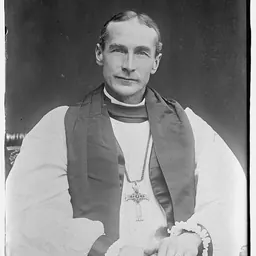

Contemporaries
People whose lives overlapped Sabine Baring-Gould's



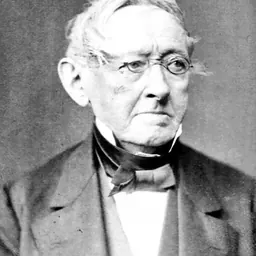
Frequently asked questions
Who was Sabine Baring-Gould?
English hagiographer, antiquarian, novelist, eclectic scholar, folk song collector (1834-1924)
When was Sabine Baring-Gould born?
Sabine Baring-Gould was born on 28 January 1834 in Exeter.
When did Sabine Baring-Gould die?
Sabine Baring-Gould died on 2 January 1924 in Lewtrenchard.
What was Sabine Baring-Gould's occupation?
Sabine Baring-Gould was an anglican priest, writer, novelist, folklorist, translator and theologian.
What nationality was Sabine Baring-Gould?
Sabine Baring-Gould was British.
Sources & further reading
· Wikipedia: Sabine Baring-Gould
· DBpedia: Sabine Baring-Gould
Cite this page
APA: Biography.guide. (2026). Sabine Baring-Gould. https://biography.guide/sabine-baring-gould/
MLA: "Sabine Baring-Gould." Biography.guide, https://biography.guide/sabine-baring-gould/.
Chicago: "Sabine Baring-Gould." Biography.guide. https://biography.guide/sabine-baring-gould/.
Data last updated: 2026-09-21 · Spot an error? Report a correction.
Portrait: Wikimedia Commons · author & licence
Page generated 2026-09-27 05:00 UTC