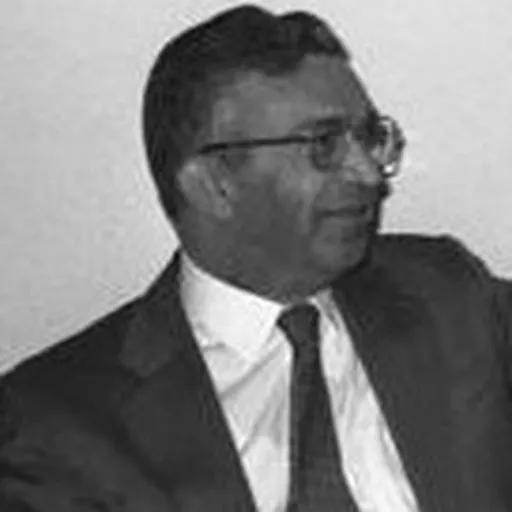
About Sa'dun Hammadi
Lived 1930 – 2007 (aged 76). Sa'dun Hammadi was an Iraqi politician and banker.
Sa'dun Hammadi (22 June 1930 – 14 March 2007; ) was an Iraqi politician, writer and economist who held various positions in the Iraqi state, most notably as the Minister of Foreign Affairs from 1974 to 1983, and later as the longest serving Speaker of the National Assembly under President Saddam Hussein from 1996 until the 2003 invasion of Iraq.
Born to a Shi'ite family in Karbala, Hammadi pursued higher education in Beirut and the United States. He began his political career in the late 1940s, when he joined the Ba'ath Party. Hammadi is credited for introducing Ba'athism in Iraq. He rose to prominence after it seized power in Iraq in 1968. Earlier, he served as the Minister for Agrarian Reform and head of Iraq National Oil Company. As the Minister of Oil, he oversaw the nationalization of oil in 1972. In 1974, Hammadi became Iraq's foreign minister, a position he held until 1983, thus surviving Saddam's takeover of power in 1979. As foreign minister, Hammadi made state visits to numerous countries and represented Iraq. He also attended various summits with Saddam.
He was briefly the prime minister of Iraq succeeding Saddam from March until September 1991. Saddam had previously been prime minister in addition to being president, but Hammadi was forced out due to his reformist views and was made the Speaker and President of the National Assembly in 1996. He continued to be in that position until the invasion of Iraq. Shortly before the beginning of the war, Hammadi rejected the ultimatum given by U.S President George W. Bush to Saddam. Following the invasion by the U.S-led coalition, he was arrested by the American forces and was kept in detention for several months. After being released, Hammadi left for Lebanon and settled in Qatar, where he worked at a cultural center in Doha. Hammadi engaged in cultural and literary activities and wrote memoirs about his life and career. Due to ageing illness, he died at a hospital in Germany on 14 March 2007, at the age of 76 and his funeral was held in Qatar.
Hammadi was a prominent Shi'ite politician in the government of the Ba'ath Party. He earned a doctorate from an American university and was also involved in cultural activities. He was among the more widely published Iraqi Ba'ath Party leaders.
Early life Hammadi was born in Karbala on 22 June 1930, as a Shi'ite Muslim. He obtained a Master's Degree in economics from the American University of Beirut. In addition, he earned a PhD. in economics from the University of Wisconsin–Madison in 1956. Hammadi joined the Ba'ath Party in 1949. He was believed to be first Iraqi member of the Ba'ath Party, who introduced Ba'athism in Iraq.
Hammadi said in his memoirs: "My years of study in Lebanon were the beginning of my exposure to what was outside my birthplace. I saw a new Arab country, and I contacted Arabs outside Iraq. In it, my political thinking crystallized, and the progressive nationalist trend settled within me. That was an opportunity to see some of the beauty of nature," He added. "I lived in a university environment that was different from what we were used to, a mixed environment where women were present. I witnessed this with emotion, and the feelings of youth blossomed in me".
14 July Revolution
One of Hammadi's early party missions took place in Syria, which was caught in a whirlwind of internal tensions after several years of successive coups. A significant event in 1958 was the declaration of the United Arab Republic, a union between Egypt and Syria, with Abdel Nasser and Shukri al-Quwatli signing the charter. However, unity was not easily achieved, as Gamal Abdel Nasser insisted on the dissolution of Syrian parties, a condition that was disappointing to the Baathists. In response, the Iraqi Baath leadership sent Hammadi to Damascus with a mission to persuade the Syrian Baath Party of the dangers of dissolving their party, but the mission ultimately failed. In his memoirs, Hammadi wrote:"I traveled to Damascus via Beirut and attended a leadership meeting with Michel Aflaq, Salah al-Din al-Bitar, and Akram al-Hourani. I explained my mission, but the discussion remained inconclusive. No definitive answer was given as to why the party had been dissolved in Syria. It was a typical meeting—lots of debate but no clear decision."He added:"Within the Iraqi branch of the party, there was no support for dissolving the party in Syria. However, members remained silent because the decision came from the highest leadership and was seen as the price of achieving unity."In the months following the unity between Egypt and Syria, on July 14, 1958, news of the revolution led by a group of Iraqi officers reached Baghdad. The monarchy was overthrown, and the Iraqi Republic was established, accompanied by a massacre of the royal family. Two days after the revolution, Hammadi took over the management of Al-Shaab newspaper, which had been published during the monarchy, and re-launched it under the new name Al-Jumhuriya.
Imprisonment and Exile Following the revolution, Hammadi left Iraq for Libya to work in the research department of the National Bank of Libya. While in Libya, he secretly worked to establish a Ba'athist organization, but a political statement calling for democracy, the expulsion of foreign forces, and Arab unity led to his arrest and imprisonment for a year. During his visit, Sa'dun discussed about the cooperation between Iraq and Kuwait. However, the meeting did not mentioned about border issues.
Hammadi also recalled the extravagance during the reign of the Shah of Iran, describing meals at tables made entirely of pure gold. He recalled, "I will never forget that I ate with the Shah twice at a table where all the utensils and accessories were made of pure gold, except for the knife blades. The Venezuelan Minister of Oil at the time was sitting next to me, so he lifted up an ashtray and read on the back that the gold it was made of was 24 karat."
Chemical weapons Hammadi's experience can be summarized as one of criticism in a low voice, despite his lack of concern for democracy. Although Hammadi witnessed many important and sensitive political issues, he chose to remain silent about them in his memoirs. The book Saddam Hussein's Tapes reveals how a special unit of the US Army conducted a mission in Baghdad, aiming to search for evidence or documents that could justify the war by proving Iraq's possession of weapons of mass destruction. During that mission, US forces uncovered a dangerous archive: thousands of hours of secret recordings of meetings and communications between Saddam Hussein and his entourage, members of the Baath Party, the Revolutionary Command Council, and senior officers in his army. Upon reviewing the book, which included the Baath Party's private meeting records, Hammadi's name appeared among the files discovered by the US forces.
The following day, after consultations with the Ba'ath Party leadership, the RCC issued a statement announcing Iraq's intent to expel American UNSCOM inspectors within a week. This decision marked a turning point in Iraq's defiance of UN disarmament efforts, leading to increased tensions between Baghdad and Washington. Hammadi's role in these proceedings emphasized Iraq's official rejection of U.S. and UN policies, framing them as attempts to prolong economic sanctions and infringe on Iraqi sovereignty.
On November 12, 2002, Hammadi, announced the unanimous rejection of United Nations Security Council Resolution 1441, which demanded Iraq's disarmament and cooperation with weapons inspections.
In the lead-up to the 2003 invasion of Iraq, Hammadi, played a prominent role in rejecting U.S. President George W. Bush's ultimatum for Saddam Hussein to leave the country.
Personal life He married twice during his life, the first time to the Al-Kayali family, which is of Libyan–Palestinian origin, and the second time to one of his relatives in Karbala. He has five children, all of whom are males: Osama, Suhail, Wael, Mazen, and Ghassan. He was known for not liking to mediate for anyone, so none of his relatives were in power. He was also known for being extremely loyal to his friends outside the Baath Party, such as Dr. Fawzi Al-Qaisi and Dr. Abdul Razzaq Al-Ubaidi, the lawyer.
Don’t just read it —
keep it.
Full-length biographies made to live with: read them, listen on the way to work, watch them tonight.
- E-book
- Audio
- Video
Instant download · yours to keep · every purchase keeps this site free
Important facts
People in Sa'dun Hammadi's life
Named in this biography and alive at the same time



Related people
Same field, nearest in time




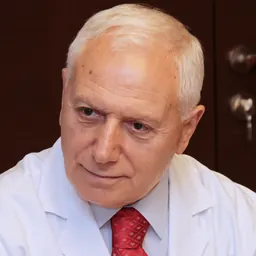
Contemporaries
People whose lives overlapped Sa'dun Hammadi's
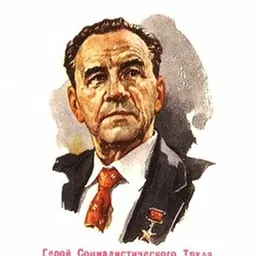
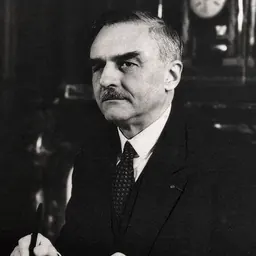
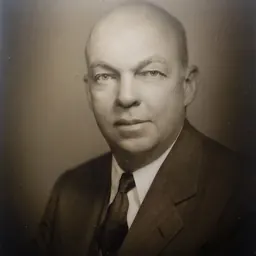

Frequently asked questions
Who was Sa'dun Hammadi?
Iraqi politician (1930-2007)
When was Sa'dun Hammadi born?
Sa'dun Hammadi was born on 22 June 1930 in Karbala.
When did Sa'dun Hammadi die?
Sa'dun Hammadi died on 14 March 2007 in Germany.
What was Sa'dun Hammadi's occupation?
Sa'dun Hammadi was a politician and banker.
What nationality was Sa'dun Hammadi?
Sa'dun Hammadi was Iraqi.
Sources & further reading
Cite this page
APA: Biography.guide. (2026). Sa'dun Hammadi. https://biography.guide/sa-dun-hammadi/
MLA: "Sa'dun Hammadi." Biography.guide, https://biography.guide/sa-dun-hammadi/.
Chicago: "Sa'dun Hammadi." Biography.guide. https://biography.guide/sa-dun-hammadi/.
Data last updated: 2026-09-20 · Spot an error? Report a correction.
Page generated 2026-09-27 05:10 UTC