
About S. S. Van Dine
Lived 1888 – 1939 (aged 50). S. S. Van Dine was an American writer, screenwriter, novelist, journalist, literary critic and critic.
Writing career At age 21, Wright began his professional writing career as literary editor of the Los Angeles Times, where – describing himself as "'Esthetic expert and psychological shark" – he was known for his scathing book reviews and irreverent opinions. He was particularly caustic about romance and detective fiction. His friend and mentor H.L. Mencken was an early inspiration. Other important literary influences included Oscar Wilde and Ambrose Bierce. Wright was an advocate of the naturalism of Theodore Dreiser, and Wright's own novel, The Man of Promise (1916), was written in a similar style.
In 1909, Wright wrote a perceptive profile of Edgar Allan Poe for the Los Angeles Times. Wright moved to New York City in 1911.
Portrait of Wright by his brother (and co-author) Stanton Macdonald-Wright, 1914. Wright was, however, most respected in intellectual circles for his writing about art. In Modern Painting: Its Tendency and Meaning (secretly co-authored in 1915 with his brother Stanton), he surveyed the important art movements of the last hundred years from Manet to Cubism, praised the largely unknown work of Cézanne, and predicted a coming era in which an art of color abstraction would replace realism. Admired by Alfred Stieglitz and Georgia O'Keeffe among others, Wright became under his brother's tutelage one of the most progressive (and belligerently opinionated) art critics of the time and helped to organize several shows, including the "Forum Exhibition of Modern American Painters", bringing the most advanced new painters to the attention of audiences on both coasts. He also published a work of aesthetic philosophy, The Creative Will (1916), that O'Keeffe and William Faulkner both regarded as a meaningful influence on their thinking about artistic identity.
In 1917, Wright published Misinforming a Nation, in which he mounted a blistering attack on alleged inaccuracies and British biases in the Encyclopædia Britannica Eleventh Edition. A Germanophile, Wright did not support America's decision to join the Allied cause in World War I, and he was blackballed from journalism for more than two years after an overzealous secretary (erroneously) accused him of spying for Germany, an episode that became a much-publicized scandal in New York in November 1917. Though cleared, his favourable view of Prussian militarism cost him his friendships with Mencken and Dreiser. In 1929, at the height of his fame as 'Philo Vance', he was appointed Police Commissioner of Bradley Beach, New Jersey. After suffering a nervous breakdown and the beginning of a long-term dependence on drugs, Wright retreated to California, where he attempted to make a living as a newspaper columnist in San Francisco. Contrary to what is stated in some sources, Wright did write a biography of the poet Richard Hovey and it was announced for publication in Spring 1914. In 1929, Wright stated that "It is true that at one time I was working on a book relating to Richard Hovey and his friends but Mrs Hovey died before the book went to press, and it has never been published"; that remains the case.
Detective fiction Returning to New York in 1920, Wright took any freelance work that came his way but lived a restless, impoverished existence and, in his displays of temper and anxiety, alienated many of his old friends. By 1923, he was seriously ill, the result of a breakdown from overwork, he claimed, but in reality the consequence of his secret cocaine addiction, according to John Loughery's biography Alias S.S. Van Dine. Confined to bed for a prolonged period of recovery, he began in frustration and boredom reading hundreds of volumes of crime and detection. As a direct result of this exhaustive study, he wrote a seminal essay, published in 1926, which explored the history, traditions and conventions of detective fiction as an art form. Wright also decided to try his own hand at detective fiction and approached Maxwell Perkins, the famous Scribner's editor whom he had known at Harvard, with an outline for a trilogy that would feature an affluent, snobbish amateur sleuth, a Jazz Age Manhattan setting, and lively topical references. In 1926, the first Philo Vance book, The Benson Murder Case, was published under the pseudonym "S.S. Van Dine". Within two years, following the publication of The Canary Murder Case and The Greene Murder Case, Wright was one of the best-selling authors in the United States.
Frankly embarrassed by his turn from intellectual pursuits to mass market fiction, Wright never wanted to publish under his own name. He took his pseudonym from the abbreviation of "steamship" and from Van Dine, which he claimed was an old family name. According to Loughery, however, "there are no Van Dines evident in the family tree" (p. 176). He wrote twelve mysteries in total, though their author's identity was unmasked by 1928. The first few books about the distinctive Philo Vance (who shared with his creator a love of art and a disdain for the common touch) sold many copies, leading Wright to become wealthy for the first time in his life. His readership was diverse and worldwide. David Shavit's study of World War II POW reading habits revealed that Vance was one of the favorite detectives among officer POWs. However, according to critic Julian Symons:
Wright's later books declined in both quality and popularity. The reading public's tastes changed, and the "hard-boiled" school of detective fiction became the dominant style in the 1930s. The new mood was captured by Ogden Nash in his brief verse:
Philo Vance Needs a kick in the pance.
Philo Vance and Sam Spade occupy different aesthetic universes. Wright continued to make money, though, and by the end of the decade, he saw himself caught in a trap from which he could not escape: in the midst of the Great Depression, he could not return to literary journalism and art criticism which paid very little, now that he and his wife were accustomed to an extravagant way of life, and yet he no longer believed in the kind of novels he was producing each year in order to maintain that way of life. It has been frequently reprinted and compared to "Knox's (Ten) Commandments" by Ronald Knox.
Short film series Wright wrote scenarios for Warner Brothers film studio in the early 1930s. These were used as the basis for a series of 12 two-reel "murder mystery" films, each approximately 20 minutes long, which were released in 1931–1932.
Donald Meek (as Dr. Crabtree) and John Hamilton (as Inspector Carr) were featured players, with Joseph Henabery directing. Three titles (The Wall Street Mystery, The Studio Murder Mystery, and the Trans-Atlantic Murder Mystery) have been released on DVD as extras on Forbidden Hollywood Collection Volume 3 (Warner).
As far as it is known, none of Van Dine's screen treatments has been published in book form, and none of the manuscripts survive. Short films were a common part of theatre screenings at the time, and Hollywood made hundreds of them during the studio era.
On 13 September 1932, a $500,000 plagiarism suit was filed against Van Dine and the Vitaphone Film Company by Arlo Channing Edington and Carmen Ballen Edington, who charged that their novel, The Studio Murder Mystery, which had been filmed by Paramount in 1929, had been lifted' – title, plot and incident" and produced by the film company, credited to Van Dine. The action was unsuccessful.
Late career and death From a monetary perspective, Wright was fortunate in his experiences with Hollywood, and he was lionized on his visits to the movie capital. All but two of his novels were adapted as feature-length films, and the role of Philo Vance was played by stars such as William Powell (before his Nick Charles period), Basil Rathbone, and Edmund Lowe. Louise Brooks (in The Canary Murder Case), Jean Arthur (in The Greene Murder Case), and Rosalind Russell (in The Casino Murder Case) appeared in the S.S. Van Dine movies. His portrait, painted by his brother in 1914, hangs in the permanent collection of the National Portrait Gallery in Washington, D.C. I Used to Be a Highbrow, But Look at Me Now. American Magazine, September 1928. New York: Scribner, 1929. "The Closed Arena". Scribner's Magazine, March 1930, pp. 237–43.
Mysteries As Albert Otis "The Wise Guy". Pearson's Magazine, January 1916, pp. 24–31. "Full o' Larceny". Pearson's Magazine, February 1916, pp. 118–26. "The King's Coup". Pearson's Magazine, March 1916, pp. 203–10. "Chivalry". Pearson's Magazine, April 1916, pp. 343–51. "The Moon of the East". Pearson's Magazine, May 1916, pp. 453–59. "The Scandal of the Louvre". Pearson's Magazine, June 1916, pp. 499–505. "A Deal in Contraband". Pearson's Magazine, July 1916, pp. 27–32. "An Eye for an Eye". Pearson's Magazine, August 1916, pp. 113–19.
As S. S. Van Dine Short fiction "Scarlet Nemesis". Cosmopolitan, January 1929, pp. 52+. "A Murder In A Witches' Cauldron". Cosmopolitan, February 1929, pp. 58+. "The Man In The Blue Overcoat". Cosmopolitan, May 1929, pp. 32+. "The Chorinsky Murder". Cosmopolitan, June 1929, pp. 56+. "The Almost Perfect Crime". Cosmopolitan, July 1929, pp. 66–67 "The Inconvenient Husband". Cosmopolitan, August 1929, pp. 102+. "The Bonmartini Murder Case". Cosmopolitan, October 1929, pp. 92+. "Fool!" Cosmopolitan, January 1930, pp. 83+. "The Clyde Mystery". Illustrated Detective Magazine, July 1932, pp. 44–48.
Novels The Benson Murder Case. New York: Charles Scribner's Sons, 1926 The Canary Murder Case. New York: Scribners, 1927 The Greene Murder Case. New York: Scribners, 1928 The Bishop Murder Case. New York: Scribners, 1929 The Scarab Murder Case. New York: Scribners, 1930 The Kennel Murder Case. New York: Scribners, 1933 The Dragon Murder Case. New York: Scribners, 1933 The Casino Murder Case. New York: Scribners, 1934 The Garden Murder Case. New York: Scribners, 1935 The President's Mystery Story. New York: Farrar and Rinehart, 1935. Co-authored with Rupert Hughes, Samuel Hopkins Adams, Anthony Abbot, Rita Weiman and John Erskine. The Kidnap Murder Case. New York: Scribners, 1936 The Gracie Allen Murder Case. New York: Scribners, 1938 (APA: The Smell of Murder) The Winter Murder Case. New York: Scribners, 1939
Miscellaneous Introduction. The Leavenworth Case, by Anna Katharine Green. New York: Modern Age Books, 1937, pp. iv–v. Introduction and editor. The World's Great Detective Stories: A Chronological Anthology. New York: Scribners, 1928. Originally issued under Wright's name; reprinted by Blue Ribbon Books as by Van Dine.
Scenarios for Warner film shorts The titles are followed by dates reviewed by Film Daily. The Clyde Mystery (September 27, 1931). This starred Donald Meek and Helen Flint. The Wall Street Mystery (November 4, 1931) The Week End Mystery (December 6, 1931). Advertised as The Week-End Mystery The Symphony Murder Mystery (January 10, 1932). Advertised as The Symphony Mystery The Studio Murder Mystery (February 7, 1932) The Skull Murder Mystery (March 1932) The Cole Case (The Cole Murder Case) (April 3, 1932) Murder in the Pullman (May 22, 1932) The Side Show Mystery (June 11, 1932). Advertised as The Sideshow Mystery The Campus Mystery (July 2, 1932). This is the only title in the series without Donald Meek. The Crane Poison Case (July 9, 1932) The Trans-Atlantic Murder Mystery (August 31, 1932). Advertised as The Transatlantic Mystery
Parodies The John Riddell Murder Case. Novel by John Riddell (Corey Ford), 1930
Poetry Beside the Sea. The Province, 10 July 1909 Dedication. The Smart Set, November 1913 Song against Women. Windsor Star, 14 November 1913 Ode to Fads of Yesteryear. Vanity Fair, May 1924. Reprinted: Southwest News, 19 June 1924
Don’t just read it —
keep it.
Full-length biographies made to live with: read them, listen on the way to work, watch them tonight.
- E-book
- Audio
- Video
Instant download · yours to keep · every purchase keeps this site free
Important facts
People in S. S. Van Dine's life
Named in this biography and alive at the same time


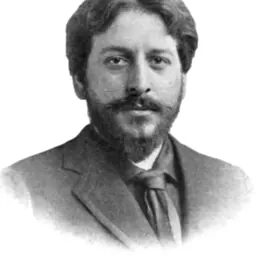


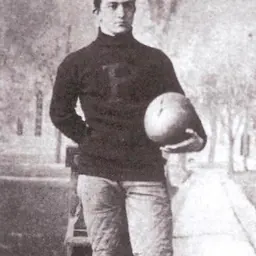
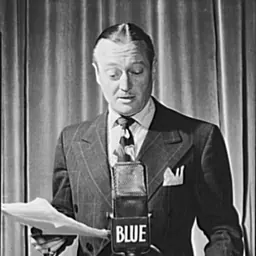
Related people
Same field, nearest in time
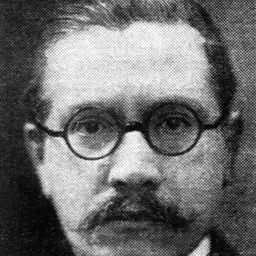


Contemporaries
People whose lives overlapped S. S. Van Dine's



Frequently asked questions
Who was S. S. Van Dine?
American art critic and writer (1888–1939)
When was S. S. Van Dine born?
S. S. Van Dine was born on 15 October 1888 in Charlottesville.
When did S. S. Van Dine die?
S. S. Van Dine died on 11 April 1939 in New York City.
What was S. S. Van Dine's occupation?
S. S. Van Dine was a writer, screenwriter, novelist, journalist, literary critic and critic.
What nationality was S. S. Van Dine?
S. S. Van Dine was American.
Sources & further reading
Cite this page
APA: Biography.guide. (2026). S. S. Van Dine. https://biography.guide/s-s-van-dine/
MLA: "S. S. Van Dine." Biography.guide, https://biography.guide/s-s-van-dine/.
Chicago: "S. S. Van Dine." Biography.guide. https://biography.guide/s-s-van-dine/.
Data last updated: 2026-09-20 · Spot an error? Report a correction.
Page generated 2026-09-27 05:25 UTC