
Ruth von Kleist-Retzow
German noblewoman and member of the German resistance to Nazism
About Ruth von Kleist-Retzow
Lived 1867 – 1945 (aged 78). Ruth von Kleist-Retzow was a German land owner.
Ruth von Kleist-Retzow (by birth, the Countess of Zedlitz-Trützschler: 4 February 1867 – 2 October 1945) was born into the German nobility and married into a Prussian army family. She was horrified by the rise of National Socialism, becoming involved both with the Confessing Church and, after 1933, with (illegal) opposition to the Hitler government. She was a particular supporter of Dietrich Bonhoeffer who became a regular guest, and whose students would frequently find a refuge at von Kleist-Retzow's Pomeranian estate. At the time of his execution Bonhoeffer was engaged to marry von Kleist-Retzow's granddaughter, with whom he was in love.
Life Born near Neustädtel (as it was then known) in Lower Silesia, Ruth was the third of the six children born to Count Robert von Zedlitz-Trützschler (1837-1914) by his marriage to Agnes Emilie Countess of Rohr (1840-1928). In 1881 her father was appointed President of the [regional] government in the city known at that time as Oppeln, and the family moved to Oppeln in Upper Silesia. It was here, when she was sixteen, that she first met Jürgen von Kleist-Retzow, a land owner and government administrator from Western Pomerania in the north. They married on Ruth's nineteenth birthday in 1886. Although they had, at that point, still only met three times, Ruth would always insist that theirs was a true love match. (who were great nephews of the recently deceased ex-chancellor). Herbert later married her daughter Maria. At the end of 1918 the war ended and Ruth's youngest daughter married into the land owning class. Her younger son, Konstantin, had trained as a pilot and then been killed in 1917 but her elder son, Hans Jürgen Friedrich von Kleist-Retzow III returned in one piece. He now moved with his family into the family manor house while Ruth gave up the city apartment in Stettin completely and moved into a smaller manor house at nearby Klein Krössin. With her children now being self-supporting, money worries seem to have subsided, and she found the leisure to ponder and discuss with friends the theological, political and social questions which had hitherto been left to fester at the back of her mind. An indication of at least some of the questions that preoccupied her comes from the title of the book that she published in 1926: "Die soziale Krisis und die Verantwortung des Gutsbesitzers" ("The Social Crisis and the Responsibility of the Big Landowners").
Works Her book demonstrated Ruth von Kleist-Retzow's interest in the role of her own social class in the changed democratic conditions of the times. She called on landowners such as herself to acknowledge their responsibilities as "stewards of God" ("Haushalter Gottes") in the management of their estates, which should be used for the good of the people (...der Menschen).
She also involve herself in the "Berneuchen Movement" (Christian youth circle) which took its name from the home of the Viebahn family at Berneuchchen Manor near Neudamm (Landsberg). That involved promoting a renewal of the Protestant Church to involve a holistic piety and commitment to a spiritual life. In many ways that reflected the lifestyle which she had already adopted in her daily life at Kieckow. When the so-called Berneuchener Book was published in 1926 it was signed off by 70 committed participants who shared in responsibility for its contents. 68 of the signatories were men, and only two women: Ruth von Kleist-Retzow and the theologian Anna Paulsen.
During the later 1920s, Ruth von Kleist-Retzow became deeply concerned by the looming menace of National Socialism, entering into an intensive exchange of ideas with the aristocrat-lawyer Ewald von Kleist-Schmenzin whose own warning was published as "Der Nationalsozialismus – eine Gefahr" in 1932. In 1935 she moved back from the countryside to Stettin where she rented and apartment which she converted into a "grandchildren's hostel" ("Enkelpension"), in order to facilitate and keep an eye on the school arrangements for her grandchildren: the return to the city also made it far easier to build up her contacts beyond her own immediate family circle.
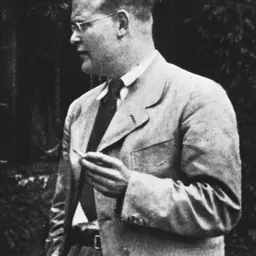
In Stettin she very soon came across the large group of enthusiasts around the progressive theologian Dietrich Bonhoeffer who was in charge at the Evangelical Priest Training Establishment ("Predigerseminar") of the recently formed anti-Nazi "Confessing Church" ("Bekennende Kirche") at Finkenwalde, just outside the city on its south side. Von Kleist-Retzow became the intermediary between the two superficially contrasting worlds of the intellectual theologians around Bonhoeffer and the scions of the old Prussian army families, trying to perpetuate traditions of decency and honour on their landed estates in a fast changing worlds. The latter group included the family of her son, Hans Jürgen and her friend and neighbour, Ewald von Kleist-Schmenzin. Bonhoeffer himself spent a month working at his studies on the Klein Krössin estate during September/October 1940 while keeping out of the way of the authorities. Over the next few years the manor became the venue for regular meetings of anti-government resistance activists, and it was in the course of those meetings that plans were drawn up for the assassination of Adolf Hitler. One of the grandchildren under the care of Ruth von Kleist-Retzow was Maria von Wedemeyer, a daughter of her own youngest child - another Ruth - through her marriage to Hans von Wedemeyer. (Hans von Wedemeyer had been killed on 22 August 1942 during the fighting in Russia.
The planned assassination was implemented on 20 July 1944: it injured the dictator but failed to kill him. For Ruth von Kleist-Retzow it was followed by the grim experience of hearing that many of her friends and relations had been sentenced to death and executed. Others chose or were persuaded to choose suicide. Her son, Hans Jürgen, was arrested on 21 July 1944, the day following the failed assassination, by the Köslin Gestapo. It was the second time they had arrested him. They were unable to find persuasive evidence linking him to the conspiracy, however, and he was released at the end of November 1944, just as he had been back in 1939, following his previous arrest.
Death As the end of the war approached Ruth von Kleist-Retzow attempted to escape from the approaching Red army by joining the trek towards the west; but she failed. Ruth von Kleist-Retzow lived long enough to experience the arrival of the Soviet army in Kieckow. She was 78 when she died there on 2 October 1945.
Don’t just read it —
keep it.
Full-length biographies made to live with: read them, listen on the way to work, watch them tonight.
- E-book
- Audio
- Video
Instant download · yours to keep · every purchase keeps this site free
Important facts
People in Ruth von Kleist-Retzow's life
Named in this biography and alive at the same time



Related people
Same field, nearest in time

Contemporaries
People whose lives overlapped Ruth von Kleist-Retzow's




Frequently asked questions
Who was Ruth von Kleist-Retzow?
German noblewoman and member of the German resistance to Nazism (1867-1945)
When was Ruth von Kleist-Retzow born?
Ruth von Kleist-Retzow was born on 4 February 1867 in Nowe Miasteczko.
When did Ruth von Kleist-Retzow die?
Ruth von Kleist-Retzow died on 2 October 1945 in Kikowo, West Pomeranian Voivodeship.
What was Ruth von Kleist-Retzow's occupation?
Ruth von Kleist-Retzow was a land owner.
What nationality was Ruth von Kleist-Retzow?
Ruth von Kleist-Retzow was German.
Sources & further reading
· Wikipedia: Ruth von Kleist-Retzow
· DBpedia: Ruth von Kleist-Retzow
Cite this page
APA: Biography.guide. (2026). Ruth von Kleist-Retzow. https://biography.guide/ruth-von-kleist-retzow/
MLA: "Ruth von Kleist-Retzow." Biography.guide, https://biography.guide/ruth-von-kleist-retzow/.
Chicago: "Ruth von Kleist-Retzow." Biography.guide. https://biography.guide/ruth-von-kleist-retzow/.
Data last updated: 2026-09-20 · Spot an error? Report a correction.
Page generated 2026-09-27 05:11 UTC