
About Ruth Nduati
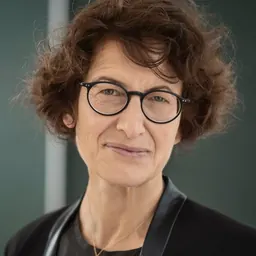
Ruth Nduati was a Kenyan researcher, pediatrician and epidemiologist.
Karithi Ruth Wanjiru Nduati is a Kenyan Pediatrician and Epidemiologist who also teaches at the University of Nairobi College of Health Sciences. She is also currently leading an interdisciplinary program through the University of Nairobi School of Medicine to educate physician-researchers to best implement HIV treatment and prevention methods backed by research. She later went on to complete secondary school and to become a part of the first group of women at the University of Nairobi School of Medicine, which she has stated was in part due to the newly independent Kenyan government's policy changes. Nduati is recognized for her work identifying and preventing mother-to-child-transmission (PMTCT) of HIV/AIDS through breastfeeding.
From September 1991 to October 1994, Nduati traveled to the University of Washington to complete her Masters in Public Health in the Department of Epidemiology. The master's degree program was funded by the Fogarty AIDS International Training Program. Dr. Nduati continued on this path of research to publish research on the prevalence of HIV-1 infected cells in breast milk in collaboration with the University of Washington and the University of Manitoba. This 1995 research provided insight into the high level of HIV-1 infected cells and HIV-1 DNA that infants may ingest through breast milk.
In 1997, she co-authored “Communicating with Adolescents about AIDS: Experience from Eastern and Southern Africa” with Wambui Kiai where she considers the impact of culture in developing and implementing effective prevention programs. Specifically, the book addresses Eastern and Southern Africa’s efforts to influence the sexual behaviors of the youth by diving into multiple factors and nuances of HIV transmission prevention programs, their successes and their shortcomings. The results showed that there was a significant decrease in HIV-1 mother-to-child-transmission (MTCT) in the first few months. The results published in the study contradicted against the statements made by the WHO and UNICEF in 1992 and 1997 that encouraged breastfeeding over formulas and artificial feeding. The 2000 and 2001 article published by Nduati had numerous implications in public policy in Sub-Saharan Africa. At the time, the presented research was in conflict with the decision to not disclose a patient's HIV status due to patient privacy issues.
In June 2006, Nduati attended a Conference on Childhood and AIDS hosted by UNICEF in Paris, France, where she stated that a larger, united program is needed to address educational, nutritional, and psychological problems affecting children orphaned by HIV/AIDS. Dr. Nduati states, “We’re still spending a lot of time describing their status, describing what’s happening to them, and very little efforts into programs that really work… on the grand public health scale”.
Many of her research projects were utilized to supplement an internationally published report about the known information of HIV transmission through breastfeeding published in 2004 with the collaboration of UNICEF, UNAIDS, WHO, and UNFPA.
Current work Nduati teaches at the University of Nairobi as a senior lecturer while also serving as an External Advisory Board member for the University of Washington's Department of Global Health.
Nduati is also working to address the low rate of condom usage and its impact on HIV transmissions in teenagers, citing younger individuals’ not fully formed decision-making portions of the brain to explain the low safe-sex behaviors in this population.
In the COVID-19 pandemic, Nduati is currently working as a volunteer physician at the Kenyatta National Hospital in Nairobi, Kenya, advocating for proper hand washing and for wearing masks to limit community spread of the COVID-19 virus.
Awards Nduati and Dalton Wamalwa were co-awarded the NIH Fogarty grant along with a PEPFAR grant to reduce the prevalence of MTCT of HIV in Kenya by improving current methods to better address HIV treatment and related issues. The training program is part of the Health-Professional Education Partnership Initiative (HEPI), which serves as a continuation of the Medical Education Partnership Initiative (MEPI), to focus more on the research aspect of medicine along with physician training.
Don’t just read it —
keep it.
Full-length biographies made to live with: read them, listen on the way to work, watch them tonight.
- E-book
- Audio
- Video
Instant download · yours to keep · every purchase keeps this site free
Important facts
Related people
Same field, nearest in time





Frequently asked questions
Who was Ruth Nduati?
Kenyan pediatrician and epidemiologist
What was Ruth Nduati's occupation?
Ruth Nduati was a researcher, pediatrician and epidemiologist.
What nationality was Ruth Nduati?
Ruth Nduati was Kenyan.
Sources & further reading
Cite this page
APA: Biography.guide. (2026). Ruth Nduati. https://biography.guide/ruth-nduati/
MLA: "Ruth Nduati." Biography.guide, https://biography.guide/ruth-nduati/.
Chicago: "Ruth Nduati." Biography.guide. https://biography.guide/ruth-nduati/.
Data last updated: 2026-09-20 · Spot an error? Report a correction.
Page generated 2026-09-27 05:30 UTC