
Rustam ibn Baradu
Military commander for the Abbasid Caliphate
About Rustam ibn Baradu
Lived 801 – 901 (aged 99–100). Rustam ibn Baradu was an Arab.
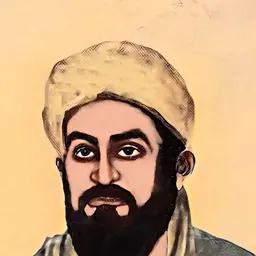
Rustam ibn Baradu or Rustum ibn Bardu, surnamed al-Farghani ("from Farghana"), was a military commander for the Abbasid Caliphate and the governor (wali) of Tarsus from August 905 to 912/3.
Life
Rustam was appointed to the post of governor of Tarsus and of the Cilician border zone with the Byzantine Empire on 20 August 905. In this capacity he supervised a prisoner exchange with the Byzantines on the Lamos River soon after. The exchange had already been arranged by his predecessor, Abu'l-Asa'ir Ahmad ibn Nasr, and began on 27 September, but was interrupted after four days after only about 1,200 Arab prisoners had been exchanged, with the Arabs blaming the Byzantines for violating the truce terms.
In late October 906, he accompanied the general Ahmad ibn Kayghalagh in an invasion of Byzantine territory. The Abbasid army captured the town of Salandu (Selinus) and advanced even up to the Halys River, where they met and defeated a Byzantine force, capturing 5,000 prisoners according to al-Tabari. At about this time (ca. 905/907), he concluded a written treaty with the Byzantine envoy Leo Choirosphaktes, according to which the two sides would continue fighting for two more years but conclude a truce and carry out a prisoner exchange on the third.
When the Byzantine general Andronikos Doukas, falling victim to the machinations of the eunuch Samonas and facing charges of insubordination against emperor Leo VI the Wise, sought refuge in the fortress of Kabala, the emperor sent the general Gregoras Iberitzes to convince Andronikos and his relatives and followers to surrender, but the latter sought the aid of the Arabs of Tarsus. Rustam left Tarsus in February/March 907 with his troops. He reached Kabala, bringing back both Andronikos and his son Constantine Doukas to Arab territory, and torched Iconium on his way.
In summer 908, Rustam supervised another prisoner exchange at the Lamos River, with ca. 2,800–3,000 Muslim men and women ransomed. He is last mentioned in 911/12, when, alongside the Byzantine renegade Damian of Tarsus, he led an unsuccessful siege of the stronghold of the Armenian military leader Melias, who had entered Byzantine service in the Abbasid–Byzantine borderlands. Eventually, the two Muslim commanders broke off the siege and instead raided the suburbs of the fortress of Kyzistra. He was succeeded in 912/3 by Bishr al-Afshini.
Don’t just read it —
keep it.
Full-length biographies made to live with: read them, listen on the way to work, watch them tonight.
- E-book
- Audio
- Video
Instant download · yours to keep · every purchase keeps this site free
Important facts
People in Rustam ibn Baradu's life
Named in this biography and alive at the same time



Contemporaries
People whose lives overlapped Rustam ibn Baradu's




Frequently asked questions
Who was Rustam ibn Baradu?
military commander for the Abbasid Caliphate
When was Rustam ibn Baradu born?
Rustam ibn Baradu was born in 801.
When did Rustam ibn Baradu die?
Rustam ibn Baradu died in 901.
What nationality was Rustam ibn Baradu?
Rustam ibn Baradu was Arab.
Sources & further reading
· Wikipedia: Rustam ibn Baradu
Cite this page
APA: Biography.guide. (2026). Rustam ibn Baradu. https://biography.guide/rustam-ibn-baradu/
MLA: "Rustam ibn Baradu." Biography.guide, https://biography.guide/rustam-ibn-baradu/.
Chicago: "Rustam ibn Baradu." Biography.guide. https://biography.guide/rustam-ibn-baradu/.
Data last updated: 2026-09-20 · Spot an error? Report a correction.
Page generated 2026-09-27 05:01 UTC