
About Rupert Crawshay-Williams
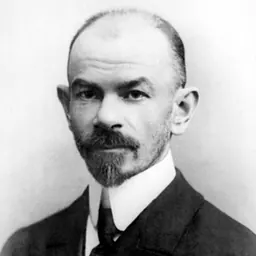
Lived 1908 – 1977 (aged 69). Rupert Crawshay-Williams was a philosopher.
Rupert Crawshay-Williams (23 February 1908 – 12 June 1977) was a music critic, teacher, writer, and philosopher.
Life Rupert Crawshay-Williams was born in London on 23 February 1908. he was the great-grandson of Thomas Henry Huxley. Crawshay-Williams was educated at Repton School and Queen's College, Oxford. who was later described as "a perfect companion for Rupert." Like Russell, Crawshay-Williams was an "outspoken humanist" and an Honorary Associate of the Rationalist Press Association. Crawshay-Williams' sister, Lady Greenwood, was reported to have said "They had no children and didn't want to trouble anyone," and the Deputy Coroner said, "They were a devoted couple, and there is no evidence that they were of unsound mind." A verdict of suicide was recorded.
Philosophy Following the Second World War, Crawshay-Williams focused largely on philosophy. His first book, The Comforts of Unreason, was published in 1947. According to Michael Potter, this was "a light and witty exposé of the human inclination towards deception, self-deception in particular". Potter adds:The Comforts of Unreason identifies and catalogues forces that lead minds astray – fallacious reasoning, euphemism, propaganda, and unacknowledged desires. Crawshay-Williams followed Russell and W. K. Clifford in emphasizing the necessity of basing beliefs on available evidence. Crawshay-Williams' best-known work is 1957's Methods and Criteria of Reasoning (1957), in which he attempted to explain "why so many theoretical and philosophical controversies seem to be intractable" (Potter). He is best remembered today as influential in the fields of argumentation theory, rhetoric, and communications studies, and on the work of Stephen Toulmin, Lucy Olbrechts-Tyteca, and Chaim Perelman.
Works
The Comforts of Unreason: A Study of the Motives Behind Irrational Thought (1947)
Methods and Criteria of Reasoning: An Inquiry into the Structure of Controversy (1957) Russell Remembered (1970)
Don’t just read it —
keep it.
Full-length biographies made to live with: read them, listen on the way to work, watch them tonight.
- E-book
- Audio
- Video
Instant download · yours to keep · every purchase keeps this site free
Important facts
People in Rupert Crawshay-Williams's life
Named in this biography and alive at the same time



Related people
Same field, nearest in time


Contemporaries
People whose lives overlapped Rupert Crawshay-Williams's


Frequently asked questions
Who was Rupert Crawshay-Williams?
British music critic and philosopher (1908–1977)
When was Rupert Crawshay-Williams born?
Rupert Crawshay-Williams was born on 23 February 1908.
When did Rupert Crawshay-Williams die?
Rupert Crawshay-Williams died on 12 June 1977.
What was Rupert Crawshay-Williams's occupation?
Rupert Crawshay-Williams was a philosopher.
Sources & further reading
· Wikipedia: Rupert Crawshay-Williams
· DBpedia: Rupert Crawshay-Williams
Cite this page
APA: Biography.guide. (2026). Rupert Crawshay-Williams. https://biography.guide/rupert-crawshay-williams/
MLA: "Rupert Crawshay-Williams." Biography.guide, https://biography.guide/rupert-crawshay-williams/.
Chicago: "Rupert Crawshay-Williams." Biography.guide. https://biography.guide/rupert-crawshay-williams/.
Data last updated: 2026-09-20 · Spot an error? Report a correction.
Page generated 2026-09-27 05:19 UTC