
About Rupert Bunny
Lived 1864 – 1947 (aged 82). Rupert Bunny was an Australian painter.
Rupert Charles Wulsten Bunny (29 September 186425 May 1947) was an Australian painter.
Early life and education Bunny was the third son of Brice Frederick Bunny, a British Victorian county court judge, and his German mother, Marie Hedwig Dorothea Wulsten. He was born in St Kilda, Melbourne.
During his childhood, Bunny had an extended trip in Europe, which lasted two years. He returned to Australia trilingual, in English, French and German.
In early 1881, Bunny was enrolled into the University of Melbourne, intending to study civil engineering. Instead, Bunny began his artistic training in 1881 to 1883 in Melbourne at the National Gallery School of Design under O.R. Campbell and George Folingsby. He studied under Phillip Calderon at St Johns Wood Art School for 18 months.
Critics give responsibility to his cosmopolitan childhood for his ability to assimilate easily into Parisian society and its artistic circles, unlike many other expatriates.
Career
Bunny had a traditional and academic education in the arts under Calderon and Laurens. The paintings showed an amalgamation of his traditional training, through the technicality, with the more experimental style of the Europeans at the time, seen in the sensibility. Norman Macgeorge (second president), James Ranalph Jackson, Leslie Wilkie, Clara Southern became the first woman to join the Association and the first to serve on its committee. George Bell joined the committee in 1922.
Continually adjusting his oeuvre to reflect the changing styles seen in Europe, especially Paris during the early 20th century, Bunny's artistic style changed again. Sydney Morning Herald art critic John McDonald opined that Bunny "was not a painter of timeless masterpieces, but a versatile professional, ever alert to the changing currents of art fashion." Towards the 1920s, Bunny revisited mythology as his subject, this time in a modernist style. Sharing his studio with Alastair Cary-Elwes, the grandson of an English baronet, Bunny was continually networking. The Depression, his own economic hardship and his wife's death were factors in his relocation to Australia. As Australian art critic John McDonald stated, "It is no exaggeration to say that Bunny had the greatest international reputation of any Australian-born painter". He also exhibited works internationally, including in Australia, America and England. in which he was awarded the gold medal for Best Painting. It showed over 100 of Bunny's works, including monotypes, paintings and drawings.
Exhibitions Source:
Gallery
Don’t just read it —
keep it.
Full-length biographies made to live with: read them, listen on the way to work, watch them tonight.
- E-book
- Audio
- Video
Instant download · yours to keep · every purchase keeps this site free
Important facts
more
Rupert Charles Wolston Bunny, Rupert C. W. BunnyPeople in Rupert Bunny's life
Named in this biography and alive at the same time


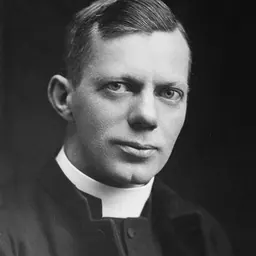

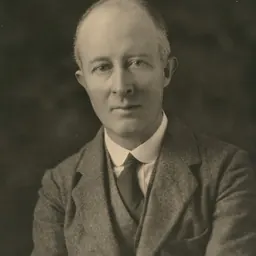

Related people
Same field, nearest in time
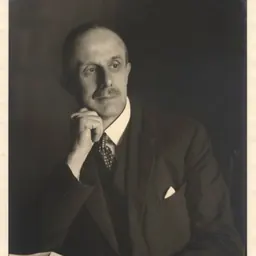
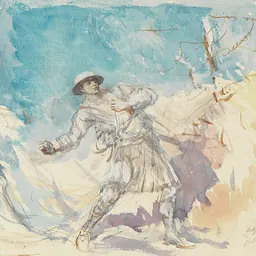
Contemporaries
People whose lives overlapped Rupert Bunny's




Frequently asked questions
Who was Rupert Bunny?
Australian painter (1864-1947)
When was Rupert Bunny born?
Rupert Bunny was born on 29 September 1864 in Melbourne.
When did Rupert Bunny die?
Rupert Bunny died on 25 May 1947 in Melbourne.
What was Rupert Bunny's occupation?
Rupert Bunny was a painter.
What nationality was Rupert Bunny?
Rupert Bunny was Australian.
Sources & further reading
Cite this page
APA: Biography.guide. (2026). Rupert Bunny. https://biography.guide/rupert-bunny/
MLA: "Rupert Bunny." Biography.guide, https://biography.guide/rupert-bunny/.
Chicago: "Rupert Bunny." Biography.guide. https://biography.guide/rupert-bunny/.
Data last updated: 2026-09-20 · Spot an error? Report a correction.
Page generated 2026-09-27 05:27 UTC