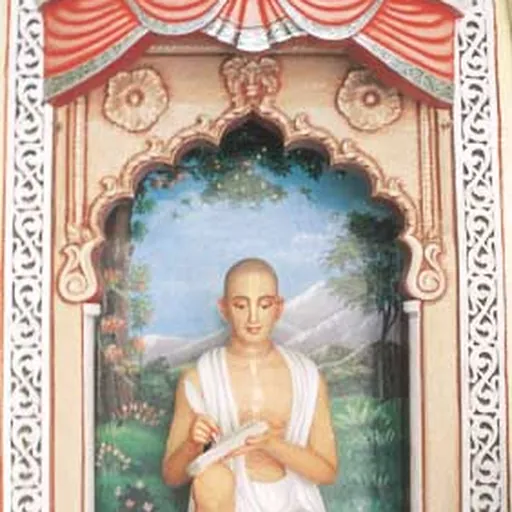
Rupa Goswami
Indian guru, poet and philosopher of the Gaudiya Vaishnava tradition
About Rupa Goswami
Lived 1489 – 1564 (aged 74–75). Rupa Goswami was a philosopher, poet and writer.
Rupa Goswami (, , ; 1489–1564) was a devotional teacher (guru), poet, and philosopher of the Gaudiya Vaishnava tradition. With his brother Sanatana Goswami, he is considered the most senior of the Six Goswamis of Vrindavan associated with Chaitanya Mahaprabhu, an avatar (incarnation) of Krishna in Kali Yuga.
Biography Rūpa Gosvāmī was born in Fateyabad, Bengal in the late 15th century into family of Karnataka origin. He was the younger brother of Sanātana Gosvāmī and the elder brother of Anupama. The birth names of all three brothers are unknown. The three brothers moved to Ramakeli where Sanātana and Rūpa worked in the government of Sulṭān Ḥusayn Šāh under the titles of Sākar Mallik and Dabir Khās.
Sākar Mallik and Dabir Khās began a correspondence with Kr̥ṣṇa Caitanya while working at the court, and when the latter was passing by Ramakeli on the way to Vrindavan the brothers rushed to meet him. The renounced their high statuses and Caitanya initiated them into asceticism under the names Sanātana Gosvāmī, Rūpa Gosvāmī, and Vallabha. On his return journey from Vraja, Caitanya ordered Sanātana and Rūpa to go to Vrindavan, study the devotional scriptures, recover lost religious sites and establish their greatness. It is said that Rupa had a vision of Satyabhama, one of Krishna's queens in Dvaraka, who told him to divide the book into two separate dramas. Thus, Lalitamadhava deals with Krishna's pastimes in Dvaraka, and Vidagdhamadhava narrates Krishna's pastimes in Vrindavana. Stavamala (The Flower Garland of Prayers): This is a compilation of short works, some of which are often published as separate books. Danakelikaumudi (The Lotus-like Tax-collecting Pastimes) (1549): This Bhāṇikā (one-act play) was written in Saka era 1471 (1549) and narrates the danakeli (tax-collecting pastime) between Krishna and the Gopis of Vrindavana. Sri Radha-krsna-ganoddesa-dipika (A Lamp to See the Associates of Radha-Krsna) (1550): In this book, Rupa Goswami lists the associates of Radha and Krishna and describes their characteristics. Mathura-mahatmya (The Glories of Mathura): This book tells the glories of Mathura, in the form of a conversation between Varaha (the boar incarnation of Vishnu) and the Earth Goddess. Rupa Goswami explains various processes of devotional service by quoting statements from various Hindu scriptures and establishes that Mathura vanquishes all one's sinful reactions and awards piety and liberation. Uddhava-sandesa (News of Uddhava): In this work, Rupa Goswami narrates the story from the Bhagavata Purana of Krishna requesting his friend Uddhava to go to Vrindavana and pacify his friends and relations by reminding them of their pastimes with him. Hamsa-dutam (The Swan Messenger): This text tells the story how Lalita, the confident of Radha, sends a messenger in the form of a swan to Krishna in Dwaraka. Sri Krsna-janma-tithi-vidhi: This short work is a paddhati (manual on ritual worship) explaining the process of worshiping the deity of Krishna during the festival of Janmastami, the birthday of Krishna celebrated by Vaishnavas in August/September. Nataka-candrika (The Illuminating Moon of Dramatics) This book explains the rules of Gaudiya Vaisnava dramaturgy. Upadesamrta (The Nectar of Instruction): This short work contains eleven verses of instructions to aspirants on the path of devotion to Krishna. The Upadesamrta was originally a part of the Stavamala.
Don’t just read it —
keep it.
Full-length biographies made to live with: read them, listen on the way to work, watch them tonight.
- E-book
- Audio
- Video
Instant download · yours to keep · every purchase keeps this site free
Important facts
People in Rupa Goswami's life
Named in this biography and alive at the same time
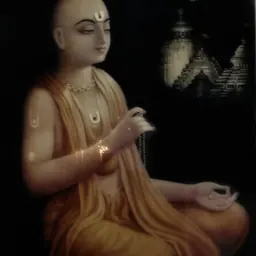

Related people
Same field, nearest in time


Contemporaries
People whose lives overlapped Rupa Goswami's





Frequently asked questions
Who was Rupa Goswami?
Indian guru, poet and philosopher of the Gaudiya Vaishnava tradition (1489-1564)
When was Rupa Goswami born?
Rupa Goswami was born in 1489.
When did Rupa Goswami die?
Rupa Goswami died in 1564 in Vrindavan.
What was Rupa Goswami's occupation?
Rupa Goswami was a philosopher, poet and writer.
Sources & further reading
Cite this page
APA: Biography.guide. (2026). Rupa Goswami. https://biography.guide/rupa-goswami/
MLA: "Rupa Goswami." Biography.guide, https://biography.guide/rupa-goswami/.
Chicago: "Rupa Goswami." Biography.guide. https://biography.guide/rupa-goswami/.
Data last updated: 2026-09-20 · Spot an error? Report a correction.
Page generated 2026-09-27 05:09 UTC