About Rufus Jones
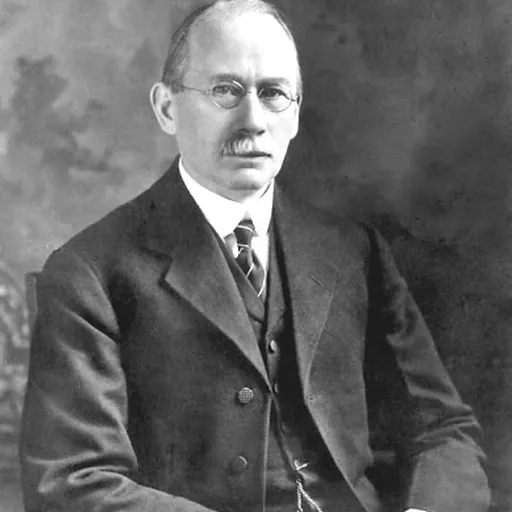
Lived 1863 – 1948 (aged 85). Rufus Jones was an American historian, philosopher, theologian and journalist.
Rufus Matthew Jones (January 25, 1863 – June 16, 1948) was an American Quaker theologian, philosopher, historian, editor, and educator. He taught philosophy and psychology at Haverford College for 41 years and wrote more than 50 books and monographs, chiefly about Quaker history, mysticism, and the religious life. His interpretation of Quakerism as a mystical religion strongly influenced twentieth-century liberal Quaker thought, although later scholars have disputed parts of his historical argument.
Jones was a founder and the first chairman of the American Friends Service Committee (AFSC), organized in 1917 to create non-military service opportunities for conscientious objectors during World War I. He also worked for cooperation among divided branches of American Quakerism and promoted an activist form of spirituality that he called affirmative or positive mysticism.
Early life and education
Jones was born in the Quaker farming community of South China, Maine, the son of Edwin Jones and Mary Gifford Hoxie Jones. He worshipped with his family at the Pond Meeting House and, later, the South China Meeting House. Several relatives were Quaker ministers; his uncle and aunt, Eli and Sybil Jones, were missionaries whose lives became the subject of Jones's first book.
Jones taught at Oakwood Seminary in New York and at Providence Friends School before becoming principal of Oak Grove Seminary in Maine, a position he held from 1889 to 1893. In 1890, South China Monthly Meeting recorded him as a Quaker minister.
Peace and humanitarian work
After the United States entered World War I, Jones helped organize a training program at Haverford for conscientious objectors who wished to undertake civilian relief rather than military service. This Haverford Emergency Unit contributed to the formation of the AFSC in Philadelphia in April 1917. Jones served as the committee's first chairman, overseeing relief and reconstruction work in France and, after the war, food relief in Germany and elsewhere in Europe.
The AFSC and the British Friends Service Council jointly received the 1947 Nobel Peace Prize for their peace and relief work. Contrary to some later accounts, Jones did not accept the prize in Stockholm: Henry Cadbury represented the AFSC at the ceremony in Oslo on December 10, 1947.
International and ecumenical work
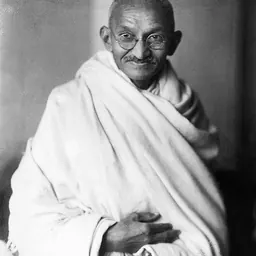
Jones travelled widely as a lecturer and Quaker representative. During a 1926 journey undertaken in connection with the YMCA, he lectured in China and visited Japan, the Philippines, Ceylon, and India. He met Mahatma Gandhi in India and discussed Quakerism and religious service with him.
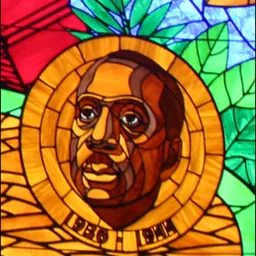
Jones also taught the African American theologian Howard Thurman, who studied mysticism with him at Haverford in the spring of 1929. Thurman later described the period as important to his intellectual and spiritual development; mystical theology became central to his work and, through him, influenced religious currents within the civil rights movement.
Religious thought
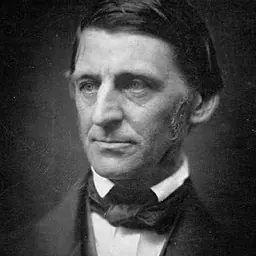
Jones presented religion primarily as lived experience rather than assent to a creed. Drawing on Quaker sources, Christian mysticism, Ralph Waldo Emerson, and the psychology of William James, he argued that direct awareness of God was available within ordinary human experience. He helped popularize the phrase "that of God in every one" as an account of the Quaker Inner Light.
He contrasted a "negative" mysticism of withdrawal and loss of self with "affirmative" mysticism, in which communion with God preserved and transformed the personality. For Jones, genuine mystical experience should issue in ethical action, social service, vitality, and closer relations with other people. He therefore rejected a sharp division between contemplation and reform.
His theology helped shape modern liberal Quakerism, particularly its language of inward religious experience and its linkage of spirituality with humanitarian action. It was not accepted by all Quakers: evangelical Friends objected to his theological modernism, while later historians questioned his claim that early Quakerism arose chiefly from a transhistorical mystical tradition. Sociologist Stephen A. Kent argued that Jones and James treated early Quaker experience too independently of its historical and social setting.
Personal life and death
Jones married Sarah H. Coutant in 1888. Their son, Lowell Coutant Jones, was born in 1892; Sarah died from tuberculosis in 1899, and Lowell died from diphtheria in 1903. Jones married Elizabeth Bartram Cadbury in 1902. Their daughter, Mary Hoxie Jones, later wrote a biography of her father.
Jones died in his sleep at his home in Haverford, Pennsylvania, on June 16, 1948, aged 85. His efforts toward inter-Quaker cooperation helped prepare the ground for later reunifications, including the 1955 reunification of Philadelphia's Hicksite and Orthodox yearly meetings.
Selected works
Jones wrote or edited more than 50 books and numerous articles and pamphlets. Among his principal works are:
Eli and Sybil Jones: Their Life and Work (1889) Social Law in the Spiritual World: Studies in Human and Divine Inter-Relationship (1904) The Double Search: Studies in Atonement and Prayer (1906) Quakerism: A Religion of Life (1908), the first Swarthmore Lecture Studies in Mystical Religion (1909) The Quakers in the American Colonies (1911) Spiritual Reformers in the 16th and 17th Centuries (1914) The Inner Life (1916) The World Within (1918) A Service of Love in War Time: American Friends Relief Work in Europe, 1917–1919 (1920) The Nature and Authority of Conscience (1920), the Swarthmore Lecture The Later Periods of Quakerism (two volumes, 1921) The Church's Debt to Heretics (1924) The Faith and Practice of the Quakers (1927) A Preface to Christian Faith in a New Age (1932) The Trail of Life in the Middle Years (1934) The Flowering of Mysticism (1939) A Small-Town Boy (1941) The Luminous Trail (1947)
Don’t just read it —
keep it.
Full-length biographies made to live with: read them, listen on the way to work, watch them tonight.
- E-book
- Audio
- Video
Instant download · yours to keep · every purchase keeps this site free
Important facts
People in Rufus Jones's life
Named in this biography and alive at the same time



Related people
Same field, nearest in time

Contemporaries
People whose lives overlapped Rufus Jones's


Frequently asked questions
Who was Rufus Jones?
American writer (1863-1948)
When was Rufus Jones born?
Rufus Jones was born on 25 January 1863 in South China.
When did Rufus Jones die?
Rufus Jones died on 16 June 1948 in Haverford.
What was Rufus Jones's occupation?
Rufus Jones was a historian, philosopher, theologian and journalist.
What nationality was Rufus Jones?
Rufus Jones was American.
Sources & further reading
· DBpedia: Rufus Jones (writer)
Cite this page
APA: Biography.guide. (2026). Rufus Jones. https://biography.guide/rufus-jones/
MLA: "Rufus Jones." Biography.guide, https://biography.guide/rufus-jones/.
Chicago: "Rufus Jones." Biography.guide. https://biography.guide/rufus-jones/.
Data last updated: 2026-09-23 · Spot an error? Report a correction.
Portrait: Wikimedia Commons · author & licence
Page generated 2026-09-27 05:06 UTC