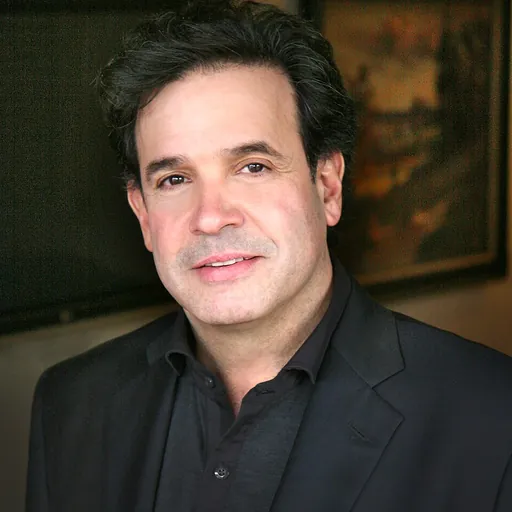
About Rudolph E. Tanzi
Born 1958. Rudolph E. Tanzi is an American neurologist, geneticist and researcher.
Rudolph Emile 'Rudy' Tanzi is the Joseph P. and Rose F. Kennedy Professor of Neurology at Harvard University, and director of the Genetics and Aging Research Unit and director of the Henry and Allison McCance Center for Brain Health at Massachusetts General Hospital (MGH).
Dr. Rudy Tanzi has been investigating the genetics of neurological disease since the 1980s. He co-discovered all three familial early-onset Alzheimer's disease (FAD) genes and several other neurological disease genes including that responsible for Wilson’s disease. His team was the first to use human stem cells to create three-dimensional cell culture organoids of AD, dubbed “Alzheimer's-in-a-Dish”. The 3-D model made drug screening for AD faster and more cost-effective.
He has published over 800 research papers and has received the Metropolitan Life Award and Potamkin Prize, the two highest awards for Alzheimer’s research. He is also a member of the National Academy of Medicine and was on the TIME100 Most Influential People in the World list in 2015.
Early life and education Tanzi is a native of Cranston, Rhode Island. Tanzi received his B.S. in microbiology and B.A. in history from the University of Rochester in 1980. In 1990, he received his Ph.D. in neurobiology at Harvard Medical School, where his doctoral thesis was on the discovery and isolation of the gene that encodes amyloid precursor protein, the precursor to beta-amyloid which is a pathological hallmark of Alzheimer's disease and generally accepted as the central driver of the disease.
Career
At the start of his career in 1980, Tanzi worked as a research technologist for James Gusella at Massachusetts General Hospital. There, he assisted in localizing the Huntington's disease gene; their findings were published in Nature in 1983. This was the first study to localize a disease gene purely based on genetic linkage with genomic variants.
In 1987, based on his doctoral studies at Harvard Medical School, he was the lead author of seven papers published in Science and Nature between 1987 and 1988, describing the initial cloning, mapping, and characterization of the gene encoding the amyloid beta-protein precursor (APP), the first reported Alzheimer’s disease gene. Two other groups reported the cloning of APP at that time. In 1991-1992, Tanzi and Wilma Wasco, discovered the two APP family members, APLP1 and APLP2.
In 1995, Tanzi collaborated with Drs. Peter Hyslop and Jerry Schellenberg to discover the two other EO-FAD genes, presenilin 1 and 2 (PSEN1 and PSEN2). He has published many key studies characterizing the role of the EO-FAD genes in health and disease. All three genes remain among the most highly studied drug targets in the field of AD aimed at reducing beta-amyloid deposition.
In 1993, Tanzi first discovered the gene for the neurodegenerative disease, Wilson's disease; his findings were published in Nature Genetics. In that same year, he contributed to the discovery of the first familial amyotrophic lateral sclerosis (ALS) gene, SOD1, by providing the key genetic and physical mapping data for chromosome 21 used to find the gene defect.
As the leader of the Cure Alzheimer's Fund's Alzheimer's Genome Project, Tanzi several other AD genes, most notably, CD33, reported in 2008 with Lars Bertram, in the American Journal of Human Genetics. In that study, Tanzi reported the first family-based genome-wide association study of AD, which most notably to the identification of the first innate immune microglial AD gene, CD33, which encodes a cell-surface receptor on monocytes and microglia. In 2013, Tanzi and Dr. Ana Griciuc first reported in Neuron that increased expression of CD33 in microglial cells in AD brain and showed that a protective CD33 gene variant was associated with reductions in CD33 expression and Abeta levels in AD brain. Importantly, they showed CD33 inhibits microglial phagocytosis and clearance of Abeta and induces pro-inflammatory cytokine release leading to neuroinflammation. They also elucidated the molecular mechanism by which sialic acid binds to CD33 to induce neuroinflammation.
Over the past three decades, Tanzi has also contributed to the development of novel therapeutics for AD. In 2000, Tanzi and the late Dr. Steven Wagner discovered a class of Alzheimer’s drugs that they termed "gamma secretase modulators (GSM)". GSM's reverse the Abeta42:Abeta40 ratio and thereby prevent amyloid plaques. Notably, they do not inhibit gamma-secretase. Tanzi and Wagner have published several papers on these compounds. Their GSM is now slated for AD clinical trials in 2026 with Acta Pharmaceuticals.
In 2014, Tanzi, and his ex-trainees, Doo Yeon Kim and Se Hoon Choi, were the first to use human stem cells to create three-dimensional cell culture organoids of AD, dubbed by The New York Times as “Alzheimer's-in-a-Dish”. This model was the first to recapitulate all three key AD pathological hallmarks in vitro, and, most importantly, resolved a decades-long debate as to whether Abeta pathology causes the formation of neurofibrillary tangles. Using this system, they were the first to definitively show that amyloid plaques directly cause neurofibrillary tangles, something that could not be shown in mouse models of early-onset familial AD gene mutations in APP and the presenilins (owing to differences in mouse and human isoforms of the Tau protein, the principal component of neurofibrillary tangles). This 3-D cell culture model/human brain organoid system of AD has also made drug screening considerably faster and more cost-effective. Most recently, using a modified 3-D human stem cell-derived neural-glial cell AD model, Tanzi has helped develop therapies targeted against neuroinflammation in AD.
In another set of groundbreaking studies, Tanzi, working with the late Dr. Robert Moir, investigated whether amyloid beta (Abeta) may play a normal role in the brain. They demonstrated Abeta to be a potent antimicrobial peptide (AMP) in the brain's innate immune system. In 2018, they showed Herpes viruses trigger plaque pathology in AD. Tanzi and Moir refer to this as the “antimicrobial protection hypothesis” of AD. In 2025, Tanzi and Will Eimer reported in Nature Neuroscience that Alzheimer’s-related tau-tangles protect against herpes virus infection in the brain. Based on this, Tanzi has proposed that Alzheimer’s pathology - amyloid plaques, tau-tangles, and neuroinflammation - evolved as an orchestrated host defense system for the brain
In other studies, Tanzi and his trainee, Zhongcong Xie, published several seminal papers providing the first evidence that the widely used general inhalant anesthetic, isoflurane, induces Abeta generation, apoptosis, and neurodegeneration in the mouse brain and post-operative CSF of patients. This has gradually led to a dramatic reduction in the clinical use of isoflurane in the operating room, especially in elderly patients and Alzheimer's patients.
Music
In musical pursuits, Tanzi has served as a studio keyboard player for Joe Perry and Aerosmith. He plays keyboards on the albums: Aerosmith: Music from Another Dimension by Aerosmith and Joe Perry's Switzerland Manifesto and Switzerland Manifesto MKII He has also performed with the legendary opera star, Renee Fleming.
Awards and honors
Tanzi has received numerous awards, including the two highest awards for Alzheimer's disease research: The Metlife Foundation Award for Medical Research in Alzheimer's Disease Award and The Potamkin Prize. He was included on the list of the "Harvard 100 Most Influential Alumni", and was chosen by the Geoffrey Beene Foundation as a “Rock Star of Science”. In 2015, he was named by Time to the Time 100 Most Influential People in the World list. In 2018, Tanzi was inducted into the Rhode Island Heritage Hall of Fame. He was also inducted into the Cranston Hall of Fame in 2000. Tanzi was awarded an honorary doctorate from The University of Rhode Island on May 17, 2015.
Selected publications
Books
Decoding Darkness: The Search for the Genetic Causes of Alzheimer's Disease. with Ann B, Parson. New York: Perseus Publishing, 2000. Super Brain: Unleashing the Explosive Power of Your Mind to Maximize Health, Happiness, and Spiritual Well-Being. New York: Harmony Books, Random House, 2012. Super Genes: Unlock the Astonishing Power of Your DNA for Optimum Health and Well-Being. New York: Harmony Books, Random House, 2015. The Healing Self: A Revolutionary New Plan to Supercharge Your Immunity and Stay Well for Life. New York: Harmony, Random House, 2018.
Articles
Don’t just read it —
keep it.
Full-length biographies made to live with: read them, listen on the way to work, watch them tonight.
- E-book
- Audio
- Video
Instant download · yours to keep · every purchase keeps this site free
Important facts
People in Rudolph E. Tanzi's life
Named in this biography and alive at the same time


Related people
Same field, nearest in time





Contemporaries
People whose lives overlapped Rudolph E. Tanzi's



Frequently asked questions
Who is Rudolph E. Tanzi?
neurologist
When was Rudolph E. Tanzi born?
Rudolph E. Tanzi was born in 1958 in Providence.
What is Rudolph E. Tanzi's occupation?
Rudolph E. Tanzi is a neurologist, geneticist and researcher.
What nationality is Rudolph E. Tanzi?
Rudolph E. Tanzi is American.
Sources & further reading
Cite this page
APA: Biography.guide. (2026). Rudolph E. Tanzi. https://biography.guide/rudolph-e-tanzi/
MLA: "Rudolph E. Tanzi." Biography.guide, https://biography.guide/rudolph-e-tanzi/.
Chicago: "Rudolph E. Tanzi." Biography.guide. https://biography.guide/rudolph-e-tanzi/.
Data last updated: 2026-09-21 · Spot an error? Report a correction.
Portrait: Wikimedia Commons · author & licence
Page generated 2026-09-27 05:00 UTC