
Rudolph Carl von Ripper
Austro-Hungarian-born American artist and soldier
About Rudolph Carl von Ripper
Lived 1905 – 1960 (aged 55). Rudolph Carl von Ripper was a Hungarian, Austrian and American copper engraver, painter, illustrator, soldier and intelligence officer.
Rudolph Charles von Ripper (born Rudolf Karl Hugo von Ripper; 29 January 1905 – 9 July 1960) was an Austrian-born American surrealist painter and illustrator, soldier and Office of Strategic Services (OSS) agent.
Born into Austro-Hungarian nobility, he left home after his father's death and studied at Kunstakademie Düsseldorf before joining the French Foreign Legion in 1925, with whom he fought in the Great Syrian Revolt. After deserting, he travelled to Berlin where he married designer and became part of Weimar culture, before leaving for Mallorca when the Nazis took power. In 1933 he returned to Berlin, where he was caught by the Gestapo with anti-Nazi publications and tortured in concentration camps until the Austrian government secured his release. He returned to Mallorca, where he created his most notable work, Écrasez l'infâme, before volunteering in 1936 to fight on the Republican side in the Spanish Civil War.
After being wounded in action he travelled to the United States, where he painted. Time magazine featured his art on its cover on two occasions, including the issue that named Adolf Hitler as 1938's Man of the Year. After the US joined World War II he applied to join the US Army, and after an initial rejection was accepted in late 1942 as a laboratory technician, but when the War Art Unit was created he was sent to North Africa as an Artist Correspondent. After that unit was defunded he transferred to the 34th Infantry Division as an intelligence officer, and took part in the Allied invasion of Italy, receiving promotion to lieutenant, a Silver Star with oak leaf cluster and a Purple Heart. He continued to paint, making sketches on the front lines then completing works while behind the lines or recovering from injuries.
Late in the war he was recruited by the Office of Strategic Services and parachuted behind German lines. After the war ended he continued to work for the OSS locating Nazi fugitives, until late 1945 when he was demobilised with the rank of captain; though some commentators believe that he continued to work for the Central Intelligence Agency. Having divorced Sternheim, he married Evelyn Leege and returned with her to Mallorca, where they became known for hosting glamorous parties until his sudden death in 1960. His work was largely forgotten after his death, but has undergone a reassessment since the discovery of his papers in the 1990s.
Life
Early life
Rudolf Karl Hugo von Ripper was born in 1905 in Kolozsvár (Klausenburg), Kingdom of Hungary, Austria-Hungary (now Cluj-Napoca, Romania). He was the son of Major General Eduard Maria Ritter von Ripper (1857-1918), an Austrian noble and general who was aide-de-camp to Charles I of Austria, and Countess Clara von Salis-Samaden. He was born with strabismus, giving him very little vision in his right eye.
Paris and the French Foreign Legion
In 1923, von Ripper moved to Paris, where he painted, until he ran out of funds and moved to Lyon to seek work. In 1925, aged 19, he joined the French Foreign Legion for a five-year tour of duty. He was posted to Sidi El Hani in the French protectorate of Tunisia for training, then deployed against the Druze in the Great Syrian Revolt of 1925. and for a time there was a plan for a ménage à trois; however, this did not come about, and Sternheim and von Ripper married on 17 December 1929.
The couple settled in Berlin, where they were part of the Weimar culture of the city in the early 1930s. He was taken to the office of Gestapo chief Rudolf Diels—who he had known socially in pre-Nazi Berlin—and accused of high treason for his production of anti-Nazi cartoons and possession of anti-Nazi literature. Von Ripper recreated the drawings as etchings on copper plates, which were published in Paris in a limited edition in 1938 under the title Écrasez l'infâme (To Crush Tyranny), a reference to Voltaire. Critics regard this suite of 16 prints as von Ripper's masterwork. In 1939, he earned a residency at the Yaddo artists' community, before moving to New Canaan, Connecticut where he established an art studio in a century-old barn.
The Army Artist Unit was suddenly dissolved in May 1943, after coming under scrutiny from Congress and criticism from the press corps. Siporin's diary records that the decision came as a complete surprise to them and was described by von Ripper as "incredible". After enquiring about either obtaining a release from the army due to his age or transferring to intelligence work, von Ripper transferred to the Intelligence Section to interrogate prisoners. In Italy, he served as acting intelligence officer of the 2nd Battalion of the 168th Infantry Regiment. He also led patrols against Nazi positions, either with squads of soldiers or alone.
In a later sortie, he was ambushed and wounded in his right hand, left leg and face by machine gun bullets. He was taken to Naples to recover, where he continued to work on paintings based on his front line sketches. He parachuted into Austria early in 1945 to organize resistance and inform the OSS about the situation.
Immediately after the end of the war in Europe, von Ripper was in Paris, where he re-encountered his long-separated wife Mopsa, who had been interred in the Ravensbrück concentration camp, and the two arranged to divorce.
He was then involved in finding Gestapo and Nazi officials hiding in Austria.
He left the OSS in late 1945 with the rank of captain, His final OSS evaluation form assessed him as "Outstanding in fieldwork but too restless for staff work". He earned two Guggenheim Fellowships for fine art painting, in 1945 and 1947. He returned to Europe in 1946 and taught at the Academy of Fine Arts in Vienna, where he was involved with the Art-Club artists' association, often raising funds for their activities. In 1947, a portfolio of thirty of von Ripper's etchings was published in New York in 200 numbered editions, under the title With the 34th Infantry Division in Italy with a foreword from Major General Charles W. Ryder. The same year, his wartime painting Smoke Screen at Anzio Beachhead was lent by the Department of Defence to hang in the United States Capitol.
In 1950, Rudolph and Evelyn moved to a villa called Ca'n Cueg (House of the Frogs) near Pollença on Mallorca, despite the island still being under the Francoist regime that von Ripper had fought against in the 1930s. He also continued to create art, and staged an exhibition of paintings, etchings, tapestries, rugs and jewellery in Madrid in 1958, which was attended by the city's artistic and social elite including US ambassador John Davis Lodge.
In 1960, returning from a four-month trip, von Ripper was arrested by Spanish police and charged with smuggling. His wartime comrade C. L. Sulzberger, who had cautioned him against returning to Mallorca, believed that this might be the Spanish regime seeking revenge against him.
Legacy
While von Ripper's artwork, especially his pre-war and wartime work, was considered significant during his lifetime, after his death it fell from prominence.
Don’t just read it —
keep it.
Full-length biographies made to live with: read them, listen on the way to work, watch them tonight.
- E-book
- Audio
- Video
Instant download · yours to keep · every purchase keeps this site free
Important facts
People in Rudolph Carl von Ripper's life
Named in this biography and alive at the same time


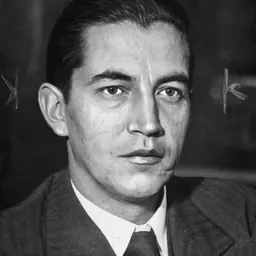


Related people
Same field, nearest in time


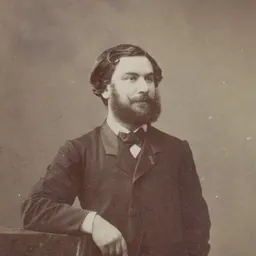
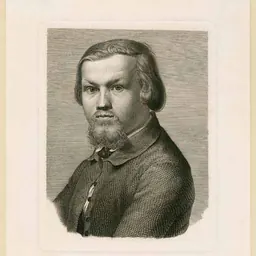

Contemporaries
People whose lives overlapped Rudolph Carl von Ripper's




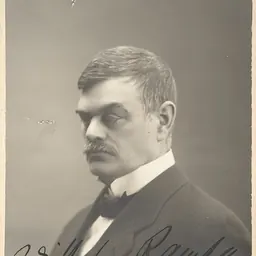

Frequently asked questions
Who was Rudolph Carl von Ripper?
Austro-Hungarian-born American artist and soldier (1905-1960)
When was Rudolph Carl von Ripper born?
Rudolph Carl von Ripper was born on 29 January 1905 in Cluj-Napoca.
When did Rudolph Carl von Ripper die?
Rudolph Carl von Ripper died on 9 July 1960 in Pollença.
What was Rudolph Carl von Ripper's occupation?
Rudolph Carl von Ripper was a copper engraver, painter, illustrator, soldier and intelligence officer.
What nationality was Rudolph Carl von Ripper?
Rudolph Carl von Ripper was Hungarian, Austrian and American.
Sources & further reading
· Wikipedia: Rudolph Carl von Ripper
Cite this page
APA: Biography.guide. (2026). Rudolph Carl von Ripper. https://biography.guide/rudolph-carl-von-ripper/
MLA: "Rudolph Carl von Ripper." Biography.guide, https://biography.guide/rudolph-carl-von-ripper/.
Chicago: "Rudolph Carl von Ripper." Biography.guide. https://biography.guide/rudolph-carl-von-ripper/.
Data last updated: 2026-09-25 · Spot an error? Report a correction.
Page generated 2026-09-27 05:12 UTC